
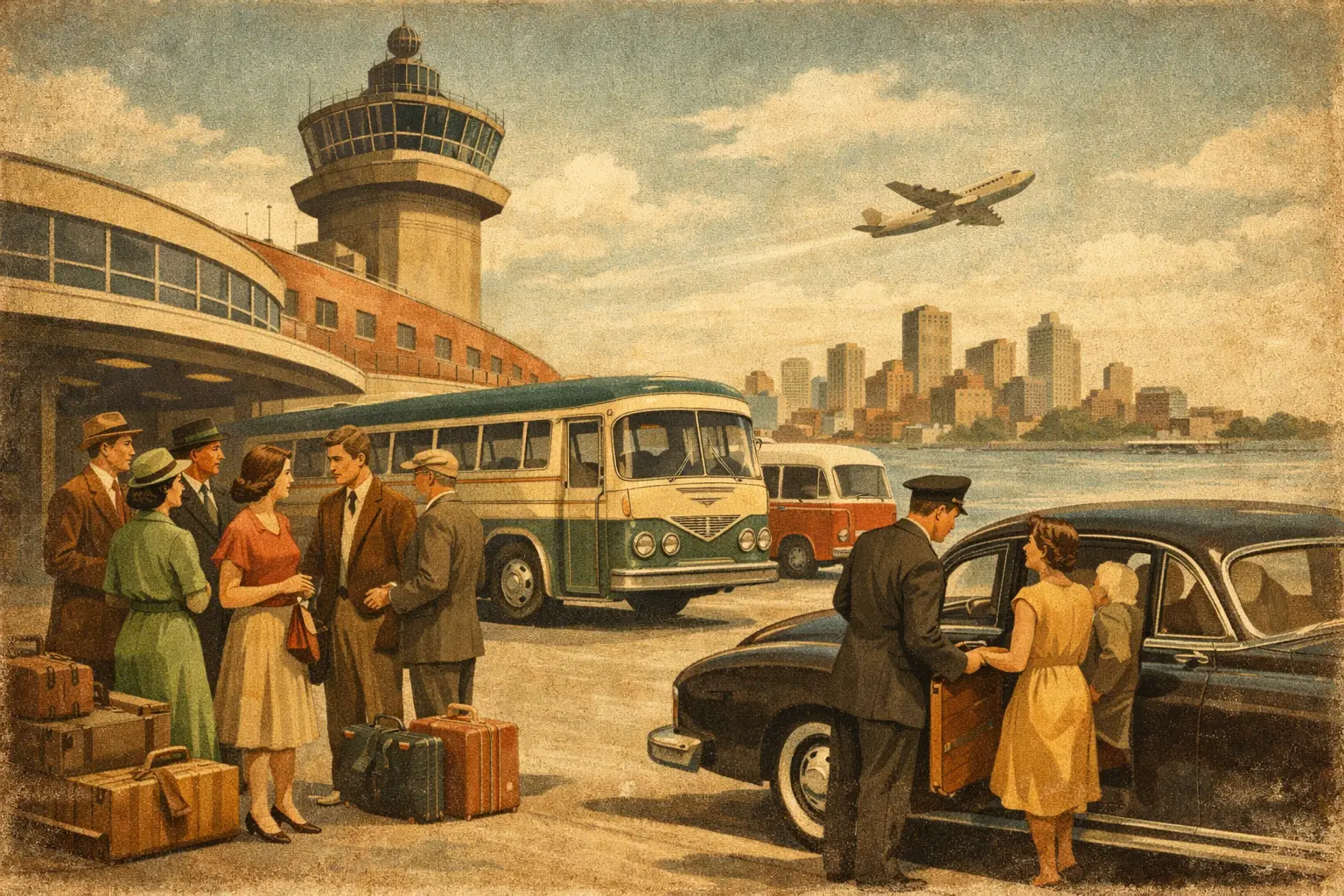
A delayed flight into Logan can throw off an entire schedule. One late pickup can ripple into missed hotel check-ins, a wedding timeline that starts behind, or a corporate group standing curbside with luggage and no clear plan. That is why a Boston airport transfer guide matters most before travel day, not after something goes wrong.
For solo travelers, airport transportation is usually a simple decision between a rideshare, taxi, or public transit. For groups, the math changes fast. Passenger count, baggage volume, terminal coordination, flight tracking, traffic through Boston, and the importance of arriving together all affect the right choice. The best transfer plan is not always the cheapest on paper. It is the one that fits your group size, your schedule, and your tolerance for risk.
How to use this Boston airport transfer guide
The easiest way to choose airport transportation is to start with the outcome you need. If your priority is getting an executive to a hotel quickly, a sedan or SUV may be the right fit. If you are moving a wedding party, student group, sports team, or conference attendees, one professionally scheduled vehicle often solves problems that multiple app-based cars create.
The key question is not just how many people are traveling. It is how they need to travel. Do they need to arrive at the same time? Do they have oversized luggage or equipment? Is there a narrow pickup window? Are minors involved? Is the destination downtown Boston, Cambridge, or a regional venue where reliable scheduling matters more than flexibility?
Those details shape the vehicle and the service level.
Choosing the right airport transfer by group size
For 1 to 3 passengers, an executive sedan is usually the most practical option when speed and professionalism matter. This works well for VIP guests, senior staff, or couples who want direct service without waiting on other travelers. An SUV makes more sense when travelers have several large bags or want a little more room after a long flight.
For 4 to 14 passengers, a Sprinter-style van tends to be the sweet spot. It keeps the group together, reduces the number of pickup points, and feels more organized than splitting people across several rideshares. This option is especially useful for family travel, small corporate teams, and wedding parties.
For 15 to 40 passengers, a minibus becomes the more efficient choice. This is where planners often save time even if the upfront cost looks higher than booking multiple smaller vehicles. One coordinated pickup, one driver, and one route means fewer moving parts. If your group is headed to a hotel block, campus, office, or event venue, that simplicity matters.
For larger groups, a full-size motorcoach is often the right answer. This is the category for tour groups, school travel, conference movements, and events where everyone needs to arrive together and on time. The luggage capacity and onboard comfort can make a meaningful difference, especially after a flight.
What travelers often underestimate at Logan
Boston Logan is busy, compact, and highly timing-sensitive. That creates a few practical issues that out-of-town planners do not always anticipate.
First, terminal pickups are rarely as simple as “meet outside.” Flight arrival time is only the starting point. Deplaning, baggage claim delays, customs processing for international travelers, and the time it takes a group to gather can easily add 30 to 60 minutes. If you are coordinating multiple arrivals, that window gets wider.
Second, Boston traffic can turn a short-distance transfer into a schedule problem. A route into downtown may look quick on a map but behave very differently during rush hour, event traffic, or bad weather. A professional airport transfer plan accounts for that. It does not assume ideal conditions.
Third, luggage changes everything. Twelve passengers with carry-ons fit very differently than twelve passengers with checked bags, garment bags, instrument cases, or sports gear. If you book only by seat count, you can end up with the wrong vehicle.
Rideshare, taxi, shuttle, or private charter?
There is no single best option for every group, but there is usually a best fit.
Rideshares work for individuals and some small parties, especially when the schedule is flexible. The trade-off is consistency. Surge pricing, driver availability, vehicle size mismatch, and split arrivals can all create friction. For an informal trip, that may be acceptable. For a wedding, school group, or executive itinerary, it usually is not.
Taxis offer a familiar point-to-point option and can be useful for last-minute solo travel. They are less effective for larger groups or any itinerary that needs advance coordination, multiple stops, or a specific service standard.
Shared hotel or airport shuttles can lower cost, but they are built around pooled routes and fixed timing. That can work if convenience matters more than control. It is less appealing when your group has a firm arrival deadline or wants direct service.
Private chauffeured vehicles and charter buses cost more than the lowest-budget options, but they provide a different level of predictability. You know the vehicle type, the pickup plan, and who is responsible for the trip. For planners, that reduction in uncertainty is often worth more than the price difference.
When private airport transfers make the most sense
A private transfer is usually the right call when transportation failure would create larger costs. Weddings are a clear example. If family members, bridal party participants, or out-of-town guests are delayed, the event timeline feels it immediately.
Corporate groups face a similar issue. If attendees are arriving for meetings, training sessions, client events, or conferences, the transfer is part of the business experience. A late or disorganized pickup reflects poorly before the agenda even begins.
Schools, universities, and youth organizations have another layer to consider: safety and supervision. Keeping students or minors together with a vetted professional driver and a planned route is simply easier to manage than piecing together several independent vehicles.
Large leisure groups, church outings, casino trips, and sports travel also benefit from a single transportation plan. Once your group reaches a certain size, coordination becomes more valuable than improvisation.
Booking tips that prevent airport transfer problems
The best airport transfers are usually built on details shared in advance. Passenger count is only the start. A strong reservation includes flight numbers, terminal information, destination address, estimated baggage load, any accessibility needs, and a realistic buffer for delays.
It also helps to decide who is in charge on travel day. One group leader should be the main contact for the driver and the transportation company. That keeps communication clean when travelers are landing at different times or moving through baggage claim.
If your group is large, ask yourself whether one pickup is actually enough. In some cases, staggered arrivals make more sense than forcing everyone into a single wait window. In others, holding the group and departing together is still the better operational choice. It depends on timing, destination urgency, and how important it is for everyone to travel as one unit.
This is also where vehicle cleanliness and driver professionalism matter more than many people expect. After a flight, travelers notice whether the vehicle is clean, whether the pickup feels organized, and whether the driver is calm and prepared. Those basics shape the entire first impression.
Airport transfer planning for events and regional travel
Not every Logan pickup ends in Boston. Many groups are heading to venues, hotels, campuses, and retreat sites across the region. That is where airport transfer planning becomes part of broader event logistics.
If your destination is outside the city, a scheduled charter often becomes even more practical. Long-distance pricing can be more predictable than piecing together multiple one-way rides, and the group stays on the same itinerary. For New England travel, that is especially useful when guests are landing in Boston and continuing on to destinations in New Hampshire or Rhode Island.
For planners managing a full event, airport transfers should also connect cleanly with the rest of the transportation plan. If arrivals feed into hotel shuttles, rehearsal movements, campus schedules, or return departures, it helps to work with one provider that can coordinate the broader itinerary. That is where a company like Charter a Coach is often a better fit than mixing several transportation services with different standards and communication channels.
What a good quote should include
A reliable quote should feel clear, not vague. You should know what type of vehicle is being reserved, what service window is covered, and how timing is handled. If the pickup includes meet-and-greet coordination, waiting time assumptions, or multiple stops, those details should be discussed upfront.
Transparent pricing is not just about cost. It is about reducing surprises. A lower estimate that leaves out the practical realities of airport pickup is not actually the better deal if it creates stress on travel day.
The right airport transfer plan is the one that matches your group, your luggage, your timing, and your margin for error. If the trip matters, treat ground transportation like part of the event itself, not an afterthought. A smooth arrival gives everyone the same message right away: the day is under control.