If you are asking how many seats on a motorcoach, you are probably already doing the real math behind the trip – who is riding, how much space they need, and what happens if the count is off by even a few passengers. That question matters more than most planners expect, because the right vehicle size affects comfort, luggage capacity, timing, and cost.
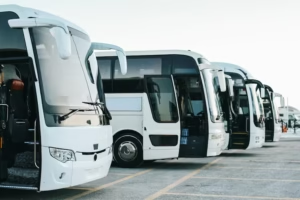
For most group trips, a full-size motorcoach seats between 40 and 56 passengers. That is the range most planners will see when booking charter transportation for weddings, corporate outings, school travel, sports teams, and long-distance group trips. The most common maximum is 56 seats, but that number is not universal. Vehicle model, interior layout, and onboard features all play a role.
How many seats are on a motorcoach in real-world bookings?
The short answer is that most motorcoaches are built for larger groups, usually in the 50-plus range. A standard highway coach often seats 54, 55, or 56 passengers. Some configurations come in closer to 40 to 50 seats, especially if the layout prioritizes extra legroom, ADA accommodation, or other interior modifications.
That is why experienced planners do not stop at the advertised seat count. They look at the full trip setup. A vehicle may technically hold 56 passengers, but if your group includes extra equipment, oversized personal items, or travelers who need more space to board comfortably, the best fit may be a different vehicle or a different seating plan.
For a straightforward guest shuttle or business transfer, the highest-capacity motorcoach usually works well. For a multi-day tour or airport movement with a lot of luggage, seat count alone does not tell the full story.
What changes the number of seats on a motorcoach?
Several factors can shift capacity, even within the same vehicle category.
Interior configuration
Not every motorcoach is laid out exactly the same. Some coaches are designed to maximize passenger count. Others give up a few seats to create more comfort, better spacing, or specialized access. Reclining seats, onboard restrooms, and front-facing design are common, but exact spacing between rows can vary.
That is one reason one coach may seat 56 while another seats 50 or 52. The difference is often not about the exterior size of the bus. It is about how the interior was configured.
Luggage needs
A motorcoach can carry passengers and luggage well, but baggage still affects planning. If everyone is bringing a small personal item for a short local shuttle, you can usually focus on seat count first. If the trip involves airport pickups, overnight bags, trade show materials, wedding supplies, or sports equipment, you need to think beyond the seats.
This does not always reduce the official seat number, but it can change which vehicle is practical. A packed luggage bay can slow boarding, create loading issues, or make a full passenger load less comfortable to manage.
Passenger type
A corporate group headed to a meeting usually boards differently than a youth group, wedding party, or senior travel group. Some groups move quickly and travel light. Others need more time, more storage, and easier loading conditions. If your group includes mobility concerns, chaperones, coolers, instruments, or team gear, the ideal coach setup may look different from the brochure maximum.
Trip length
For a 20-minute shuttle, planners may feel comfortable filling nearly every seat. For a multi-hour or multi-day trip, comfort matters more. Groups often prefer a little breathing room, especially when people are traveling with coats, bags, or work materials.
Motorcoach capacity versus other charter vehicle sizes
One of the biggest planning mistakes is assuming every large group needs a motorcoach. Sometimes it does. Sometimes a minibus or Sprinter is the better operational choice.
A full-size motorcoach is typically the right fit when your group is in the 40 to 56 passenger range, especially if the trip includes highway travel, regional movement, or longer ride times. It is built for comfort and capacity.
A minibus is often a better fit for groups of 24 to 40 passengers. It works well for shorter transfers, wedding guest shuttles, employee movement, and event transportation where a full-size coach would be more than you need.
A Sprinter van is usually best for 10 to 14 passengers and works well for airport runs, VIP movements, and small executive groups.
The practical question is not just how many seats on a motorcoach. It is whether your group should be on a motorcoach at all. If you have 32 passengers, booking a 56-passenger coach may not be the most efficient option unless luggage, comfort, or route conditions make it worth it.
When a 56-seat motorcoach is the right choice
A large motorcoach makes the most sense when your trip has enough people to justify the space and enough travel time to benefit from a true highway coach.
Wedding transportation is a good example. If you are moving guests between a hotel, ceremony, and reception, a full-size coach can simplify the schedule and reduce parking stress. The same is true for school trips, corporate events, and church outings where keeping everyone together matters.
It is also a strong fit for long-distance travel across New England. If your group is traveling from Boston to a conference, campus, resort, or airport hub, the comfort and storage of a motorcoach can make the day run more smoothly. Fewer vehicles also means fewer moving parts, which is often the difference between a clean itinerary and a stressful one.
When not to book based on seat count alone
A coach that technically fits everyone is not always the best coach for the job.
If your headcount is 50, a 56-passenger motorcoach may sound perfect. But if those 50 passengers are each bringing checked luggage for an airport transfer, or if the route includes multiple stops with tight timing, you may need to review the plan more carefully. Likewise, if your group count is still changing, booking too close to the limit can create avoidable problems.
This is where a reliable transportation partner adds real value. Good planning is not just matching a number to a vehicle. It is looking at the itinerary, timing, pickup flow, baggage, and rider experience before the trip is confirmed.
How to choose the right motorcoach size for your group
Start with your confirmed passenger count, then add context. Ask yourself how many riders are definite, how many are possible, what each person is bringing, and how long they will be on board.
If your count is close to the vehicle maximum, leave a cushion when possible. That extra space can help with last-minute additions, seating flexibility, and overall comfort. For weddings and private events, planners often appreciate having a few extra seats instead of filling every row. For school and corporate travel, a little margin can make boarding more organized and keep the schedule tighter.
It also helps to think through the route. A long highway run is different from a short city shuttle. A same-day meeting is different from a weekend tournament. If there is luggage, equipment, signage, or event materials involved, mention that early in the quote process.
At Charter a Coach, this is exactly where trip planning becomes easier. Matching the right vehicle to the passenger count is only part of the job. The real goal is making sure the group moves on time, boards efficiently, and arrives without surprises.
FAQs about how many seats on a motorcoach
Is a motorcoach always 56 seats?
No. While 56 is a common maximum for a full-size motorcoach, some coaches seat closer to 40, 50, 52, 54, or 55 depending on layout and features.
How many passengers fit comfortably on a motorcoach?
That depends on the trip. For short transfers, groups often use the full seat count. For longer trips, many planners prefer a little extra room if the budget and fleet options allow.
Does luggage reduce how many people can ride?
Not always on paper, but it can affect what is practical. Heavy luggage demand may influence the best vehicle choice, especially for airport trips or multi-day travel.
What if my group size is under 40?
A minibus may be the better fit. It can be more efficient for smaller groups while still providing private, professionally managed transportation.
A seat count is a starting point, not the whole decision. The best trips are built around the full picture – passenger total, comfort, timing, luggage, and route. When those details are handled upfront, the ride feels simple for everyone on board, which is exactly how group transportation should work.