A campus visit can go from smooth to stressful in one missed pickup. A family arrives late from the airport, a student group gets split between vehicles, or a tour starts before everyone reaches the admissions office. If you are figuring out how to organize campus visit transportation, the goal is simple: keep every arrival, transfer, and departure on time so the visit feels well run from the first mile.
For admissions teams, event coordinators, and school staff, transportation is not a side detail. It shapes the first impression. When vehicles are clean, drivers are professional, and the schedule holds, visitors notice. When the plan is loose, the entire campus experience can feel disorganized, even if the academic program is excellent.
Start with the visit format, not the vehicle
The best transportation plan starts with the structure of the visit itself. Before you think about bus size or pickup windows, define what kind of event you are running. A one-family private tour has very different needs than an admitted-student day with hundreds of guests, or a counselor fly-in with airport transfers, hotel pickups, and multiple campus stops.
This is where many planners lose time. They start by asking, “What vehicle do we need?” The better question is, “What movements need to happen, in what order, and how much flexibility do we need?” Once that is clear, vehicle selection becomes easier.
If your event includes airport arrivals, hotel shuttles, off-site dining, athletics facilities, or satellite campuses, map each movement as a separate leg. That gives you a more realistic picture of timing and capacity. It also helps you spot pressure points early, especially if guests are arriving from different places at the same time.
How to organize campus visit transportation around real arrival patterns
On paper, a visit day can look clean and simple. In practice, people rarely arrive in one tidy wave. Some drive themselves. Some come in from the airport. Some are local and only need a short shuttle between parking and the welcome center. Others may need full-day transportation because the itinerary stretches beyond the main campus.
The safest approach is to group guests by arrival pattern instead of treating everyone the same. Families flying in often need tighter scheduling, buffer time for delays, and direct communication on where to meet their driver. Local attendees may need parking overflow support or a shuttle loop from remote lots. School groups usually need one coordinated move, but they also need clear loading instructions and enough time for roll call.
This is where reliability matters more than ambition. It is tempting to build a tight schedule to reduce wait times, but campus visits are full of variables. Flights run late. Check-ins take longer than expected. Visitors stop to ask questions. A plan with a little breathing room usually performs better than one that looks efficient but collapses under minor delays.
Match the vehicle to the experience
Vehicle choice affects more than capacity. It affects how professional the day feels, how easy loading is, and whether your schedule stays intact.
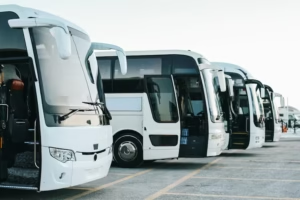
For small VIP visits, executive sedans or SUVs can make sense when you are moving a speaker, senior administrator, or a family receiving a personalized admissions experience. For small groups, a Sprinter-style vehicle often gives you flexibility without feeling oversized. If you are transporting 20 to 40 attendees on a fixed route, a minibus is usually the practical middle ground. For large admitted-student programs or multi-stop group tours, a full-size motorcoach may be the better fit, especially if luggage or long-distance travel is involved.
There is always a trade-off. Booking too small creates crowding, delays, and extra trips. Booking too large can feel wasteful if your route is short and access is tight. The right answer depends on passenger count, baggage needs, road conditions, and how formal the visit should feel.
If your campus includes older roads, narrow loading areas, or limited turnaround space, confirm site access before finalizing vehicle size. This matters on compact urban campuses in places like Boston and Cambridge, where a vehicle that works perfectly for highway travel may need a different loading strategy once it reaches campus.
Build the schedule backward from the first must-hit moment
A good transportation schedule is built backward. Start with the first moment the visit absolutely cannot miss, such as the admissions welcome, opening presentation, or campus tour departure. Then work in reverse through check-in, unloading, travel time, and pickup windows.
This method keeps transportation aligned with the visitor experience instead of treating it as a standalone service. If the welcome begins at 9:00 a.m., do not ask only how long the drive takes. Ask when guests need to be on site to park, unload, get bearings, and settle in without rushing.
Add buffer time anywhere the plan depends on outside variables. Airports need more cushion than hotels. Multi-vehicle loading needs more cushion than a single pickup. Rainy weather, luggage handling, and first-time visitors all slow things down.
One practical rule: protect your first event of the day with the biggest buffer. Once visitors are on campus and moving as a group, the schedule becomes easier to control. The risk is highest before that first arrival.
Communication matters as much as routing
Even a strong transportation plan can fail if guests do not know where to go. The more people involved, the more important your communication becomes.
Every rider should know three things clearly: where to meet, when to be there, and who to contact if plans change. That sounds basic, but it is often where confusion starts. Vague pickup descriptions, missing phone numbers, or last-minute text updates can create avoidable delays.
For larger visit programs, assign one transportation contact on your team and one on the carrier side. That reduces crossed wires and gives drivers a direct line to someone who understands the full itinerary. If a flight is delayed or a tour runs long, decisions can be made quickly without forcing guests to improvise.
This is also where professional service pays off. Clean vehicles and courteous drivers matter, but so does operational discipline. A driver who arrives early, confirms names and destinations, and understands the route helps protect your schedule without adding stress to your team.
Plan for the gaps between major movements
Many campus transportation plans cover the big legs and forget the smaller transitions. Those smaller moments are often where the day starts slipping.
Think about the walk from the drop-off zone to check-in. Think about what happens if one session ends late and another starts across campus. Think about guests with mobility needs, weather exposure, and where vehicles can wait without causing congestion.
If your visit includes residence halls, athletic venues, research facilities, or partner locations off the main campus, those transitions need the same attention as airport pickups. A strong plan keeps people moving with minimal guesswork.
For some events, a continuous shuttle loop works better than a fixed one-time schedule. For others, dedicated departures are more efficient and easier to manage. It depends on whether attendees are following one shared itinerary or moving in smaller groups.
Have a backup plan before you need one
If you want to know how to organize campus visit transportation like an experienced planner, this is the difference: assume something will change.
Your backup plan does not need to be dramatic. It needs to be usable. Know what happens if arrivals run late, if weather slows loading, or if attendance exceeds your latest headcount. Have a decision point for when to hold a vehicle, when to send it, and who has authority to make that call.
This is especially important for high-stakes admissions events, school tours, and group visits where one missed transfer can affect dozens of people at once. A transportation partner with professional drivers, reliable dispatch support, and clear scheduling can make those adjustments without turning the day into a scramble.
Work with one source of truth
The cleanest campus visit operations run from one confirmed itinerary. Not one version in email, another in a spreadsheet, and a third in someone’s notes. One version.
That itinerary should include passenger counts, pickup addresses, contact names, dates, times, vehicle assignments, and any special instructions such as accessibility needs or luggage volume. If there are updates, they should flow through one point of contact so everyone is working from the same information.
For teams managing multiple visit days, this single change prevents a surprising number of errors. It keeps admissions, event staff, and transportation providers aligned. It also makes post-event review easier, which matters if you are trying to improve turnout, timing, or guest satisfaction over time.
A well-run campus visit should feel calm to the people attending it, even if there is a lot happening behind the scenes. That is usually the sign that transportation was planned correctly. When the schedule is realistic, the vehicles fit the job, and the communication is clear, visitors can focus on the campus instead of the logistics. And that is exactly where their attention should be.