
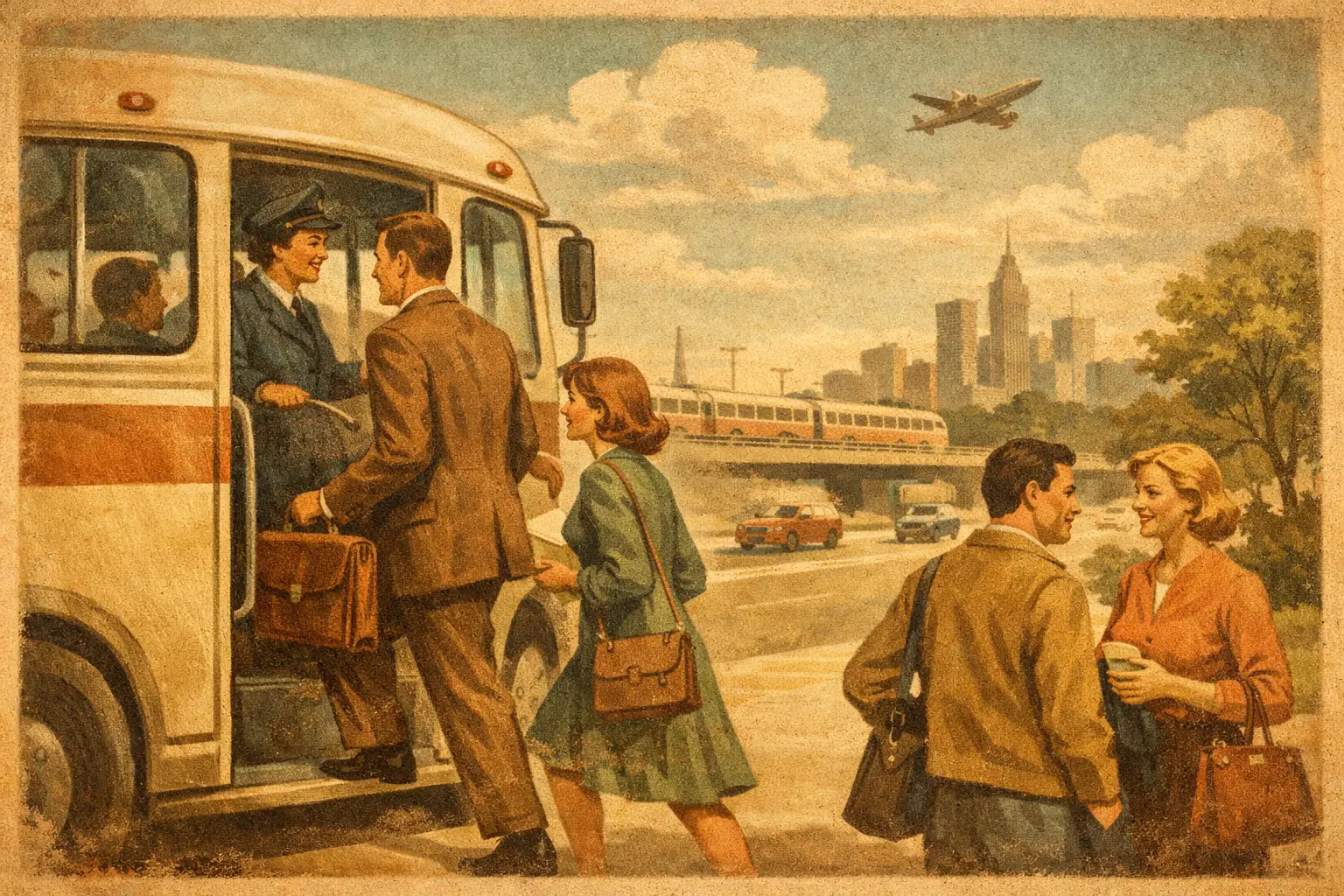
A late arrival can disrupt more than one employee’s morning. When a team depends on crowded parking lots, inconsistent public transit, or long drives through Boston-area traffic, the result can be missed meetings, uneven shift coverage, and unnecessary stress. An employee commuter shuttle program gives employers a practical way to create a more reliable trip between where employees live, park, or connect by rail and where they work.
This is not a one-size-fits-all transportation benefit. The right program is built around actual commuting patterns, work schedules, passenger counts, and the service expectations employees need to trust. When those pieces are planned carefully, a shuttle can improve the workday before employees reach the front door.
What Is an Employee Commuter Shuttle Program?
An employee commuter shuttle program is employer-arranged transportation that brings workers to and from a workplace on a scheduled basis. It may operate from a commuter rail station, a park-and-ride lot, a satellite office, a downtown pickup point, or several residential areas with concentrated demand.
Unlike public transportation, the service is designed around a specific workforce and a defined destination. Unlike a one-time corporate charter, it runs on a repeating schedule, whether that means every weekday, selected office days, seasonal shifts, or a limited pilot period.
The main goal is simple: make the commute more predictable. For some employers, that means reducing the final-mile gap between a train station and an office campus. For others, it means helping staff reach a distribution center, hospital, manufacturing site, or corporate office where parking is limited or transit access is weak.
Why Employers Offer Commuter Shuttles
A shuttle is often considered when a commute becomes a business problem, not just a personal inconvenience. Hiring can be harder when a workplace is difficult to reach. Attendance can suffer when shift changes do not align with transit schedules. And a parking shortage can quickly become an expensive facilities issue.
A well-run shuttle program can support recruiting and retention by giving employees another dependable way to get to work. It can also reduce the pressure on parking lots, create a more orderly arrival window, and make office days more practical for hybrid teams.
For employers in Greater Boston, Cambridge, New Hampshire, and Rhode Island, the value frequently comes down to traffic and access. A direct, scheduled ride can be more useful than asking employees to manage multiple connections, pay for parking, or navigate an unfamiliar campus after a long train ride.
That said, a shuttle is not automatically the right answer for every organization. If employees are widely dispersed, work irregular hours, or have low interest in shared transportation, the cost per rider may not justify a dedicated route. A pilot program and clear ridership data help leaders make that decision with confidence.
Build the Employee Commuter Shuttle Program Around Demand
The strongest programs begin with commuting information, not a vehicle selection. Survey employees about where they start their trips, when they need to arrive, how often they would use a shuttle, and what prevents them from using existing transportation options.
Look for clusters rather than trying to serve every address. A station-to-office route may serve a large number of commuters with one dependable stop. A park-and-ride route can work well when employees travel from several suburbs but can meet at a convenient location. In some cases, two smaller routes are more effective than one long route with too many stops.
Set arrival times before departure times
Start with the time employees must be on site, then work backward. Account for the walk from the drop-off point to the building, security procedures, elevator time, and a reasonable buffer for traffic. If a shift begins at 8:00 a.m., a shuttle that reaches the curb at 8:00 is already late.
The same principle applies in the afternoon. Departure times should reflect when employees are genuinely ready to leave, not simply when the workday is scheduled to end. A five- or ten-minute wait may be manageable. A daily 25-minute wait can quickly discourage participation.
Keep stops useful and limited
Every additional stop can attract more riders, but it also adds time and uncertainty. A route with too many pickups often becomes less appealing to everyone on board. Choose stops that are safe, easy for a bus to access, well lit when possible, and straightforward for drivers to enter and exit.
For a rail connection, confirm which train arrivals matter most. For a parking pickup, ensure the lot has permission for shuttle use and enough space for passengers to wait without creating congestion. Small operational details like these determine whether the service feels organized or frustrating.
Match the Vehicle to the Route
Vehicle choice affects comfort, budget, and how easy the program is to operate. A 10-14 passenger Mercedes Sprinter can be a smart fit for a small executive team, a late-shift route, or an initial pilot. A minibus typically serves 24-40 passengers and works well for station connections or medium-sized office groups. For larger commuter populations, a full-size motorcoach can carry up to 56 passengers while reducing the number of vehicles needed at peak times.
The largest vehicle is not always the best choice. An oversized coach on a lightly used route can raise costs without improving the rider experience. Conversely, a consistently full shuttle leaves no room for new participants and can create uncomfortable conditions. Review ridership regularly and adjust capacity when the numbers justify it.
Clean vehicles, climate control, comfortable seating, and professional drivers matter on a recurring route. Employees notice consistency. The shuttle should feel like a dependable part of their workday, not an improvised backup plan.
Make Reliability Visible to Employees
People will only change a commuting habit if they trust the alternative. That means publishing a clear schedule, pickup locations, rider expectations, and a reliable point of contact for service questions. Employees should know where to stand, when to arrive, whether seats require registration, and what happens if they miss the vehicle.
Communication also matters when conditions change. Weather, major events, road construction, and rail delays can affect a route. A transportation provider with professional chauffeurs and live operational support can help the employer respond quickly, but employees still need timely updates. A simple alert process prevents confusion and reduces calls to HR or reception.
It is also wise to establish basic rider policies from the start. Address cancellation procedures, respectful behavior, food and beverage rules, and whether guests are permitted. These guidelines do not need to be complicated. They simply help keep shared transportation safe, clean, and predictable.
Measure the Program After Launch
Launching a route is the beginning of the work, not the finish. Track ridership by day and time, no-show patterns, recurring delays, employee feedback, and parking demand. If Monday and Friday ridership is much lower in a hybrid workplace, a Tuesday-through-Thursday schedule may be more efficient. If one stop produces only a few riders but adds significant drive time, it may be worth consolidating.
A monthly review is usually enough to identify early adjustments. Keep an eye on cost per ride, but do not judge success by that number alone. Consider the operational value of more dependable staffing, easier recruiting, reduced parking demand, and employees arriving less stressed.
For many employers, beginning with a 60- or 90-day pilot is the practical choice. It creates a defined period to test route demand, confirm schedules, and collect honest employee feedback before committing to a longer-term arrangement.
Choosing a Transportation Partner
A commuter shuttle requires more than a vehicle arriving at a pickup point. It requires a provider that can manage recurring schedules, match vehicle capacity to demand, maintain clean equipment, and place safety and punctuality ahead of shortcuts.
Ask how the provider handles route planning, schedule changes, driver coverage, vehicle substitutions, and urgent support. Confirm that quotes clearly reflect the planned service, including recurring hours, mileage, wait time, and any special routing needs. Transparent planning makes it easier to budget and avoids surprises after service begins.
Charter a Coach helps New England employers build custom shuttle arrangements around their teams, schedules, and pickup locations. From a smaller commuter connection to a high-capacity daily office route, the focus should remain on dependable execution: professional drivers, clean vehicles, clear scheduling, and on-time arrivals.
The best commuter program does not ask employees to work harder to get to work. It removes a daily obstacle, one reliable pickup at a time.