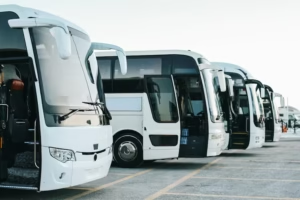
A full parking lot can turn a well-planned event into a late start within minutes. To coordinate venue shuttles effectively, planners need more than a vehicle and a pickup address. They need a schedule that accounts for guest behavior, venue access, traffic patterns, loading time, and a clear plan for the final ride home.
Whether you are moving wedding guests from a hotel, employees from an off-site lot, or attendees between a conference hotel and a reception venue, transportation should feel organized from the passenger perspective. Behind the scenes, that means building enough time into the plan, assigning the right vehicle capacity, and giving drivers the details they need to arrive prepared.
Start With the Guest Journey, Not the Bus
The best shuttle plan begins at the point where guests make decisions. Where are they staying or parking? How easy is it to find the pickup location? What time must they be through the venue doors, not merely pulled up to the curb?
Map the trip as a guest would experience it. Include the walk from the hotel lobby or parking area to the loading zone, the time needed to board, the drive itself, and the walk from the drop-off point to the event entrance. A shuttle scheduled to arrive at the venue at 5:00 p.m. may not have guests seated for a 5:15 ceremony, especially if the venue has a long driveway, security check-in, stairs, or a large property.
For weddings, work backward from the ceremony or reception start time. For corporate events, work backward from the first presentation, badge pickup, or breakfast service. Give the final inbound shuttle enough buffer that a traffic slowdown does not put every guest on the same late arrival clock.
Confirm Venue Access Before You Build the Schedule
Not every venue can accommodate every vehicle at every hour. A 56-passenger motorcoach needs more turning space and curb access than a 12-passenger Sprinter. A historic property, downtown hotel, waterfront site, or campus venue may have designated bus entrances, narrow drives, limited staging space, or restrictions on idling.
Ask the venue practical questions early: where can shuttles load and unload, where can they wait between runs, who will direct vehicles on arrival, and whether there are time restrictions for bus access. If the venue requires shuttles to use a specific gate or service entrance, share that instruction in writing with the transportation provider.
This step matters particularly in Boston and other dense New England locations, where one-way streets, construction, pedestrian traffic, and limited curb space can change the best route. A precise entrance address is more useful than a general property address. If guests are being dropped at one door and picked up at another, document both locations.
Build a staging plan
A vehicle should not be left circling the block while guests are waiting. When possible, identify a nearby staging area where shuttles can wait between scheduled departures. The location should be legal, safe, and close enough for the driver to return to the loading area on time.
For larger events using multiple vehicles, decide the order in which shuttles enter the pickup zone. This prevents drivers from competing for the same curb and helps event staff direct guests to the next available vehicle.
Match Capacity to Your Real Passenger Count
Vehicle selection is not only about maximum seats. It is about how many people will actually ride during the busiest window, how much luggage or equipment they have, and whether accessibility needs affect boarding time.
A wedding may have 150 invited guests, but only 70 may be staying at the host hotel. A corporate meeting may have 80 attendees, yet 25 will drive directly to the venue. Estimate ridership by pickup point rather than assuming every attendee will use the shuttle. Then leave room for uncertainty. A completely full bus can slow boarding and leave no flexibility for unexpected guests.
A motorcoach can carry up to 56 passengers and is often a strong fit for high-volume hotel-to-venue service or longer regional trips. Minibuses work well for mid-sized groups, recurring loops, and venues with tighter access. Mercedes Sprinters are useful for smaller guest groups, VIP movement, or a backup run when the main shuttle schedule has ended. Executive sedans and SUVs can support speakers, wedding parties, or guests who need a separate arrival time.
It depends on the event flow. One large coach may be more efficient when everyone departs from one hotel at the same time. Two smaller vehicles can be better when pickups are spread across multiple locations or the venue can only load one vehicle at a time.
Set Departure Times That Account for Human Behavior
Guests rarely arrive at the pickup point exactly when they are told. Some will be early. Others will come down from their rooms at the departure time. A practical schedule recognizes both groups without making punctual guests wait too long.
For a single outbound trip, communicate a recommended arrival time 10 to 15 minutes before the bus departs. State the departure time separately and clearly. For example, guests should know that boarding begins at 4:30 p.m. and the shuttle leaves at 4:45 p.m. That is easier to follow than a vague instruction to meet in the lobby around 4:30.
For continuous service, use a repeatable cadence. A shuttle leaving every 20 or 30 minutes is easier for guests and event staff to understand than a long list of uneven times. Build in recovery time between runs so one delayed trip does not disrupt the rest of the evening.
Return service deserves the same attention as arrivals. At weddings and evening events, guests leave at different times. Consider an early return for older guests, families, and anyone who does not plan to stay until the end, followed by scheduled departures near the close of the event. Avoid promising an open-ended shuttle if the plan and budget support only a limited service window.
Give Guests One Clear Set of Instructions
A strong shuttle plan can fail if guests do not know where to go. Put transportation details in the places people will actually check: the event website, invitation insert, registration email, hotel welcome materials, and day-of text message or group communication.
Each instruction should answer five questions: where to meet, when to arrive, when the shuttle leaves, where it will drop off, and when return service begins. Include a simple note that departure times are firm when the schedule requires it.
Avoid loading guests with operational details they do not need. They do not need a route description or driver phone number. They do need to know whether they can leave a car overnight, whether the bus is wheelchair accessible, and what to do if they miss a departure.
Assign an on-site transportation contact
Designate one person who can make decisions and communicate with the driver or dispatch team. This might be a wedding planner, venue coordinator, office manager, or event captain. Share that person’s phone number before the event, along with a backup contact.
That contact should not be responsible for driving guests, tracking every attendee, and managing the event program at the same time. Their role is to handle exceptions: a changed loading location, a guest who needs an earlier ride, a delayed program, or a last-minute venue instruction.
Plan for the Exceptions That Cause Delays
The predictable problems are usually manageable when addressed in advance. Traffic can build near a stadium, concert, or convention center. Rain can make boarding slower. A hotel may have another group leaving at the same time. Guests may bring more bags than expected after an airport transfer or overnight stay.
Discuss these conditions when requesting a quote. A transportation provider can recommend earlier pull times, additional vehicles, or a different pickup arrangement when the itinerary calls for it. Professional drivers also need complete trip details, including venue instructions, contact information, pickup windows, and any special access requirements.
For events with strict start times, consider a contingency vehicle or an added early run. It may not be necessary for every event, but it can be worthwhile when a delayed arrival would affect a ceremony, keynote, campus tour, or airport departure. The trade-off is cost versus the risk of a transportation gap. For high-visibility events, the extra capacity often protects the entire program.
Work With a Provider That Treats Timing as the Product
The vehicle matters, but execution matters more. Clean, modern vehicles and professional chauffeurs create a better guest experience, yet their real value is operational: arriving on time, following the correct access plan, maintaining a safe loading process, and responding quickly when the schedule changes.
Charter a Coach helps New England planners build itinerary-based transportation plans for weddings, corporate events, campus travel, airport groups, and private occasions. The right quote should reflect passenger count, vehicle needs, pickup locations, service hours, and the event’s actual timing pressure – not just the distance between two addresses.
A well-coordinated shuttle gives guests a simple promise: they know where to stand, when the vehicle leaves, and how they will get back. When that promise is kept, your venue begins on time and your guests can focus on the reason they came.