
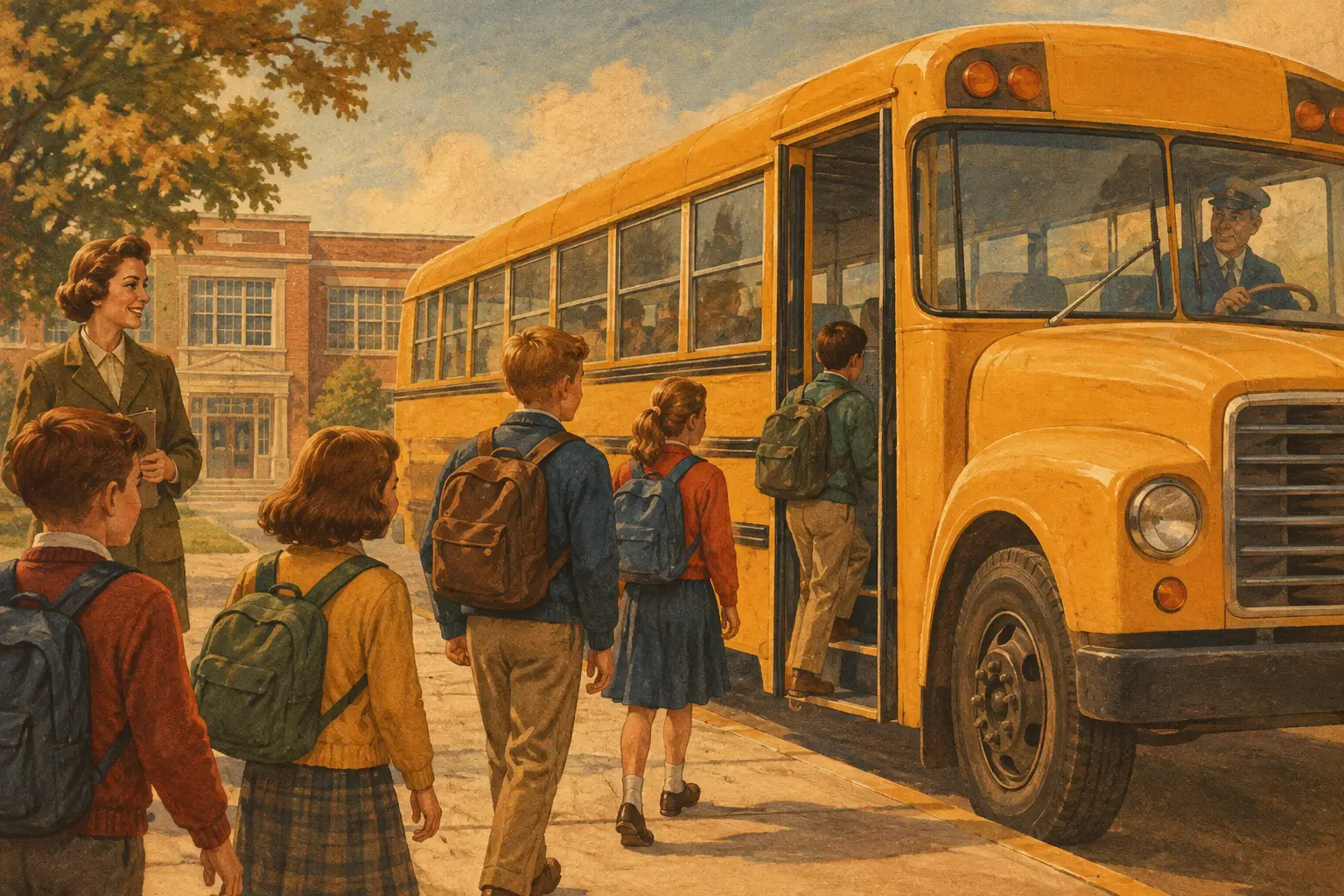
A field trip can be perfectly planned until transportation arrives late, lacks enough seats, or cannot access the venue on schedule. So, can schools rent private buses? Yes. Public and private schools, colleges, camps, booster clubs, and school activity groups can charter private buses for planned travel, provided the trip follows the organization’s approval and purchasing requirements.
For many school trips, a private bus rental is the practical alternative to using district-owned buses or asking families to coordinate carpools. It puts the route, pickup times, passenger count, and driver arrangements into one managed plan. The result is better accountability for staff and a more comfortable, organized ride for students.
Can Schools Rent Private Buses for Any Trip?
Schools commonly rent private buses for field trips, athletic competitions, college visits, performing arts events, academic competitions, airport transfers, and multi-day travel. A charter can also work well for staff development days, campus shuttles, and transportation when a district vehicle is unavailable or not suited to a longer route.
The right answer depends on your school or district’s internal rules. Some organizations require transportation to be booked through a central office, purchasing department, or approved-vendor list. Others allow a principal, activities director, coach, or trip leader to arrange service after receiving authorization. Before requesting a quote, confirm who can approve the expense, whether a purchase order is needed, and what documentation must be provided.
A private charter is not a fixed-route school bus service. It is reserved for your group’s itinerary. That means the vehicle can be scheduled around your departure window, venue entry time, meal stop, return plan, and any required rest or driver break periods.
Why Schools Choose a Private Bus Charter
The biggest advantage is control. When dozens of students, chaperones, instruments, uniforms, or luggage need to arrive together, one coordinated vehicle plan is usually easier to manage than several smaller vehicles. Teachers can take attendance before departure, chaperones can stay with assigned groups, and the entire party arrives at the same location at roughly the same time.
Private buses can also offer a better fit for the trip. A motorcoach may be appropriate for a full grade-level outing, a long-distance tournament, or an overnight trip where luggage space, reclining seats, and an onboard restroom make the ride more manageable. A minibus can be a smart choice for a smaller club, debate team, or museum visit. For compact VIP movements, such as a small group of administrators or guest speakers, an executive vehicle may make more sense.
This flexibility matters because booking too large a vehicle can waste budget, while booking too small can create a second transportation problem. A dependable charter provider will ask about passenger count, bags, special equipment, pickup conditions, and itinerary before recommending a vehicle.
Safety Starts Before the Bus Arrives
For school transportation, safety is not an add-on. It should shape the entire booking process. Work with a company that uses professional commercial drivers and maintains its vehicles to applicable safety standards. Ask how the operator handles driver qualifications, insurance documentation, maintenance, dispatch communication, and emergency procedures.
Your school may have additional requirements, especially for student travel. These can include certificates of insurance, vendor forms, background screening requirements, driver information, emergency contact procedures, and proof that the company is properly authorized for charter operations. Request these materials early, not a few days before departure. Administrative reviews can take time, and last-minute paperwork is a common reason otherwise simple trips become stressful.
Staff also have a role. Prepare a clear roster, assign chaperones, establish student conduct expectations, and share a day-of contact number with the transportation provider. If a student requires accommodations, let the company know during planning rather than at pickup. The more complete the information, the more confidently the trip can be executed.
How to Choose the Right Bus Size
Passenger count is the starting point, but it is not the only consideration. A group of 50 students traveling with backpacks may fit differently than 50 athletes carrying duffels, coolers, and equipment. A band or theater group may need additional storage for instruments, costumes, or props.
For larger groups, a full-size motorcoach can accommodate up to 56 passengers and is often the most efficient option for highway travel or full-day trips. Minibuses typically serve groups of about 24 to 40 passengers and are useful when parking is limited or the group is smaller. Mercedes Sprinters are better suited to small groups of roughly 10 to 14 passengers, not an entire class.
Do not assume the seating capacity tells the whole story. Give the charter team an honest headcount that includes teachers, coaches, aides, and chaperones. Explain what will be stored underneath or brought into the cabin. A vehicle recommendation should account for people and gear, not just the number printed on a seating chart.
Build an Itinerary That Protects the Schedule
A school trip itinerary should include more than the destination address. Provide the exact pickup location, requested arrival time, departure time, venue instructions, return plan, and all planned stops. If the bus needs to wait onsite, say so. If the group will be dropped off and collected later, provide the pickup location and a reliable contact who can confirm when the group is ready.
Build in time for loading, attendance, traffic, venue security, and student transitions. A 9:00 a.m. museum reservation does not mean a bus should arrive at 9:00 a.m. It may need to be at the curb earlier so the group can unload, gather, and enter on time.
For travel around Boston, Cambridge, Rhode Island, or New Hampshire, planners should also consider curb access, school-zone pickup restrictions, and event traffic. A professional driver can manage the road, but the transportation plan still needs realistic timing. Share venue instructions in advance, particularly if buses must use a designated loading area or avoid a narrow entrance.
Understand What Affects the Charter Price
Private bus rentals are typically quoted by itinerary rather than a flat per-student rate. Cost can vary based on vehicle type, trip duration, total mileage, date, pickup location, parking, tolls, and whether the itinerary requires an overnight stay for the driver. Peak dates, such as spring field-trip season and major tournament weekends, can affect availability as well.
A clear quote should explain what is included and identify anticipated additional costs. Ask whether parking, tolls, driver lodging, gratuity, or itinerary changes are handled separately. Transparent details help a school compare options fairly and avoid building a budget around an incomplete number.
It is also wise to ask about the deposit, cancellation terms, and final passenger-count deadline. School schedules can shift because of weather, testing, sports results, or venue changes. Understanding the policy upfront gives the trip organizer a clear path if plans change.
A Simple Booking Process for School Groups
Start planning as soon as the date is confirmed, especially for large groups or busy travel months. Share the date, pickup address, destination, desired schedule, passenger count, and luggage or equipment needs. From there, the transportation provider can match the group with an appropriate vehicle and prepare an itinerary-based quote.
Once your school approves the trip, secure the reservation according to the provider’s process and keep the final itinerary in one place. In the week before travel, reconfirm the headcount, onsite contacts, pickup instructions, and any changes to venue access. On the day of the trip, have rosters ready and arrive early enough to load without rushing.
Charter a Coach helps school and university planners coordinate these details with clean, modern vehicles, professional chauffeurs, and responsive support for scheduled New England travel. The goal is straightforward: a bus that is ready when your group is ready.
A successful school trip should be remembered for the game, performance, campus visit, or lesson – not for confusion in the parking lot. When transportation is planned early and managed with care, students and staff can focus on where they are going rather than how they will get there.