
A late arrival at a White Mountains trailhead, a wedding shuttle caught behind leaf-peeping traffic, or a coach that cannot access a downtown Portsmouth hotel can change the tone of an entire trip. This New Hampshire group travel guide is built for planners who need the day to run on time, whether they are moving students, colleagues, wedding guests, athletes, or a private tour group.
New Hampshire rewards good planning. Its compact size makes it possible to combine coast, cities, lakes, and mountains in one itinerary, but its roads, weather, and seasonal demand create real logistics considerations. The best group trips are not simply built around where people want to go. They are built around realistic drive times, vehicle access, pickup windows, and a transportation plan that gives the group room to enjoy the day.
Start With the Purpose of the Trip
Before selecting a route or vehicle, identify what must happen on schedule. A corporate retreat may need quiet, comfortable travel with a hard arrival time for a morning meeting. A school trip needs clear supervision procedures, dependable pickup timing, and enough room for backpacks or equipment. A wedding shuttle plan needs repeatable runs between lodging, ceremony, and reception sites so guests are never left wondering where to go.
This decision shapes the itinerary. A scenic day trip can allow for longer stops and flexible pacing. A flight connection, tournament, or formal event cannot. Build the schedule around the least flexible moment first, then work backward to set departure times, meal stops, and pickup locations.
It also helps to appoint one transportation contact. Drivers should receive a single, current point of contact who can confirm headcounts, handle a delayed guest, and communicate last-minute adjustments. That simple step prevents conflicting instructions when the group is on the move.
Choose Routes With New Hampshire Travel Conditions in Mind
New Hampshire is easy to underestimate on a map. Interstate 93 provides a direct route north from the Boston area toward Franconia Notch and the White Mountains, while Route 16 serves destinations around the Lakes Region, North Conway, and Mount Washington Valley. Those corridors are practical, but weekends and holidays can substantially change travel time.
Plan extra time during peak seasons
Fall foliage weekends bring heavy traffic to mountain towns, scenic overlooks, and popular restaurants. Summer traffic builds around Lake Winnipesaukee, Hampton Beach, and family attractions. Winter conditions can add time even when major highways have been cleared, particularly when the final miles involve local roads, hotel driveways, or mountain access roads.
For time-sensitive events, avoid scheduling arrival at the exact start time. A dependable plan includes an arrival buffer, especially for an unfamiliar venue or a group that must unload luggage, check in, or walk to a meeting room. For a wedding, that may mean scheduling guest arrival 30 to 45 minutes before the ceremony. For a campus visit or business program, it may mean arriving early enough for check-in and restroom breaks.
Keep mountain roads and vehicle access separate
A destination may be perfect for a group without being suitable for every vehicle at every entrance. Narrow roads, steep grades, limited turnaround space, and seasonal parking restrictions are common near mountain inns, trailheads, and rural event venues. Ask venues where a motorcoach or minibus should enter, unload, stage, and depart. Do not assume the guest parking lot can accommodate a larger vehicle.
When access is limited, a smaller vehicle or a planned shuttle transfer may be the better choice. The right solution depends on passenger count, luggage, and whether the group needs one continuous ride or several loops between nearby locations.
Build an Itinerary People Can Actually Enjoy
A group itinerary should have structure without feeling rushed. New Hampshire offers excellent combinations: Portsmouth and the Seacoast for meetings or celebrations, the Lakes Region for reunions and team outings, and the White Mountains for retreats, school excursions, and outdoor-focused travel. Trying to cover all of them in a single day usually turns a good trip into a long ride with short stops.
For day trips, choose one main destination and one secondary stop. A Boston-area group heading north might plan a primary activity in North Conway with a meal break and a scenic stop, rather than committing to multiple attractions across the region. For multi-day charters, keep lodging close to the first activity each morning. That reduces repeated loading, late departures, and driver downtime.
Meal planning deserves the same attention as the main event. Groups of 30 or 50 cannot make a quick, unannounced stop at every restaurant. Confirm group reservations, parking availability, and service timing in advance. If the schedule is tight, arrange boxed lunches or build in a designated rest stop instead of relying on an impromptu meal break.
Match the Vehicle to the Group, Not Just the Headcount
Passenger count is the starting point, not the full answer. A group of 14 traveling to a conference with rolling luggage has different needs than 14 wedding guests traveling a short distance. A team carrying sports gear may need more storage than a similarly sized sightseeing group. Ask early about luggage, mobility needs, equipment, and whether the vehicle will remain with the group all day.
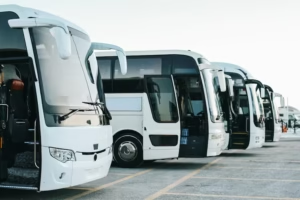
A Mercedes Sprinter is often a strong fit for smaller executive movements and airport transfers, typically carrying 10 to 14 passengers. Minibuses can work well for wedding shuttles, local events, and medium-sized groups of roughly 24 to 40 people. For larger groups, overnight trips, and luggage-heavy itineraries, a full-size motorcoach with capacity for up to 56 passengers provides the most room and reduces the risk of splitting the group unnecessarily.
There is a trade-off. Larger coaches offer capacity and comfort, but they require appropriate access and staging space. Smaller vehicles are more flexible around tight properties, but may require multiple runs. A professional transportation provider can review the itinerary and recommend the practical option before the day of travel.
Plan Pickup and Drop-Off Details Early
The first and final 15 minutes of each movement often determine whether the schedule stays intact. Provide exact pickup addresses, preferred entrances, loading instructions, and the name of an on-site contact. For hotels, identify the coach-friendly entrance rather than the address listed for individual guests. For airports, confirm the terminal, flight schedule, and whether travelers will have checked bags.
At Boston Logan or other busy transportation hubs, group movement requires extra coordination. Flight delays, terminal congestion, and staggered arrivals can affect the pickup plan. Build in a communication process: travelers should know where to wait, who to contact, and when the vehicle will depart. For larger groups, a designated trip leader can keep the driver updated while passengers collect luggage.
For weddings and events, write shuttle times in a format guests can understand. Include the pickup location, departure time, return-trip window, and whether seats are first-come, first-served. “Shuttle available after the reception” is vague. “Return shuttles depart the venue at 9:30, 10:30, and 11:30 p.m.” is actionable.
Prioritize Safety and Clear Communication
A polished itinerary is only useful when the transportation operation behind it is dependable. Confirm the provider’s experience with your trip type, the vehicle size being reserved, and the details included in the quote. Transparent pricing matters because it lets planners compare the actual scope of service, including itinerary length, wait time, mileage, and any required additional vehicles.
Professional, vetted chauffeurs bring more than driving skill. They help manage safe loading, follow the planned route, adapt to traffic conditions, and keep the group moving with calm, clear communication. Clean, well-maintained vehicles also matter, particularly for corporate guests, student groups, and wedding parties where the travel experience reflects on the organizer.
Share a final itinerary with all stakeholders a few days before departure. It should include pickup times, addresses, passenger contact expectations, venue instructions, and emergency numbers. Then confirm the details again if weather, flights, or attendance changes. Charter a Coach can provide customized group transportation across New Hampshire and the wider New England region, matching the vehicle and service plan to the itinerary rather than forcing your trip into a fixed route.
A Simple Booking Timeline for Group Travel
For high-demand dates, particularly foliage season, summer weekends, and winter holiday periods, reserve transportation as soon as the event date and estimated headcount are known. Vehicle availability can tighten quickly when several weddings, school trips, or corporate programs are happening in the same region.
At the quoting stage, provide the complete picture: date, passenger count, pickup and drop-off locations, every planned stop, approximate timing, luggage needs, and any special access concerns. After booking, update the provider as details become final. A small schedule change is easier to manage early than on the morning of departure.
New Hampshire is at its best when the group can focus on the mountain view, the meeting, the celebration, or the game instead of wondering whether transportation will show up. Give the logistics the same care as the destination, and every traveler arrives ready for what they came to do.