
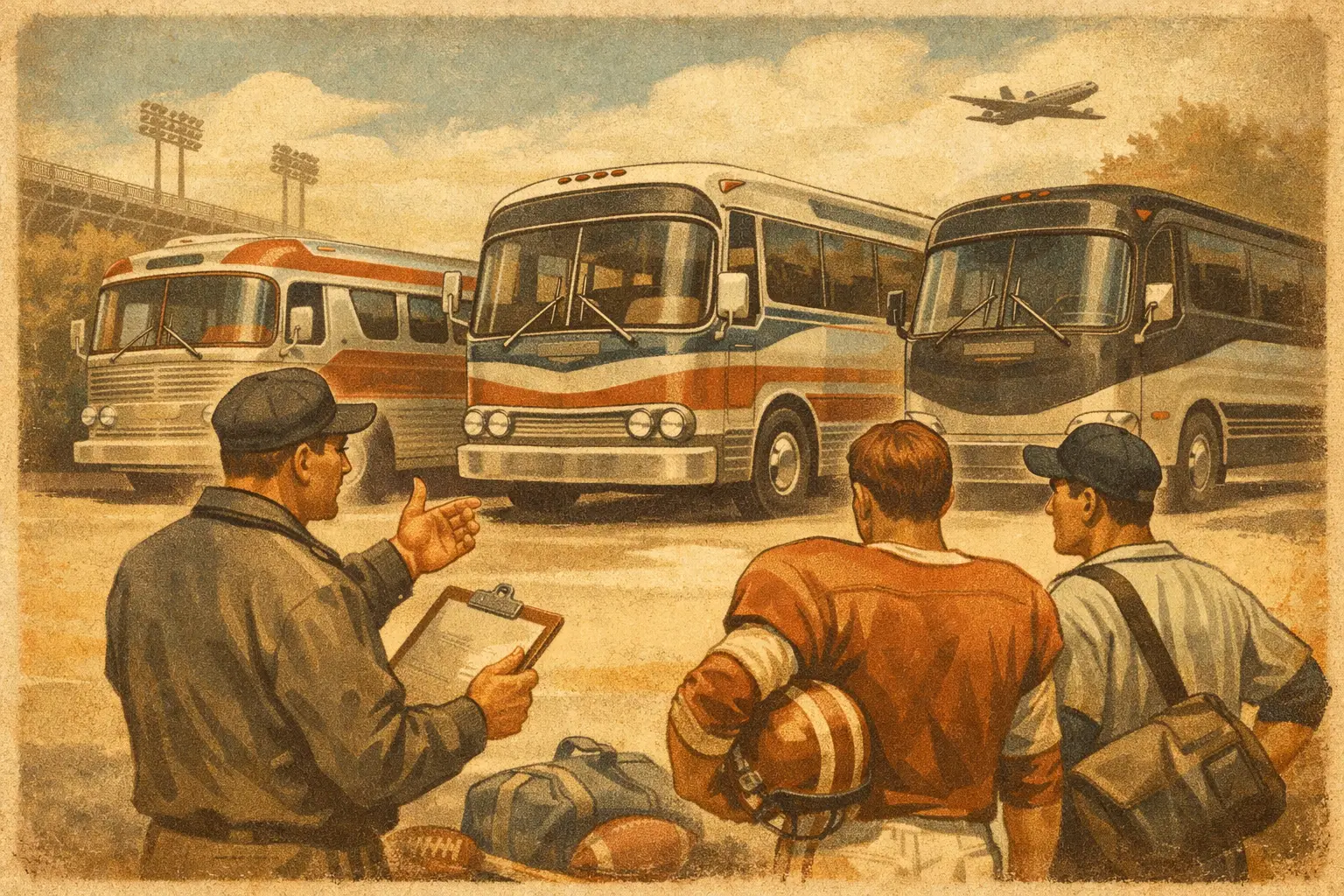
A late bus does more than disrupt a schedule. It changes warm-up routines, compresses pregame prep, rattles coaches, and leaves athletes starting the day behind. That is why sports team travel buses are not just about moving people from one address to another. They are part of game-day operations.
For athletic directors, coaches, team managers, and school administrators, the right transportation plan protects more than arrival time. It supports player readiness, keeps equipment organized, reduces stress on staff, and gives parents and leadership confidence that the trip is being handled professionally. When the schedule is tight and the group is large, transportation mistakes are expensive.
Why sports team travel buses matter more than people think
Team travel has a different standard than general group transportation. Athletes are often traveling with uniforms, bags, medical kits, coolers, training tools, and coaching staff who need to stay focused on the event ahead. On some trips, players need room to stretch out, rest, review strategy, or simply avoid arriving stiff after a long ride.
A dependable charter setup helps with all of that. A clean, modern vehicle sets the tone before the team even reaches the venue. A professional driver who knows the route and respects the timeline helps keep the day on track. Reliable pickup and drop-off planning can also prevent common event-day problems like venue congestion, scattered arrivals, or confusion around equipment unloading.
This is especially true for tournaments, playoffs, multi-school competitions, and overnight travel. The more moving parts involved, the more transportation becomes a performance factor.
What to look for in sports team travel buses
The first decision is usually size, but capacity alone is not enough. A bus that technically seats the group may still be the wrong fit if athletes are traveling with oversized gear or if the roster includes coaches, trainers, and support staff.
A full-size motorcoach is often the best option for larger rosters and longer distances because it gives teams room for both passengers and luggage. For smaller teams, support staff, or short regional trips, a minibus may be the better choice if the equipment load is light. If there are VIP movements involved, such as transporting coaching staff, recruiters, or school leadership separately, a sprinter van or executive vehicle can also make sense.
Comfort matters, but so does trip length. For a quick local transfer, teams may not need the same onboard space they would want for a full-day road trip. For longer runs across New England, seat comfort, climate control, storage capacity, and overall ride quality become much more important.
There is also the question of schedule flexibility. Some teams need one straightforward round trip. Others need a bus on standby for multiple games, hotel transfers, or meal stops. The right provider should be able to quote based on the actual itinerary rather than force the trip into a generic package.
Capacity should include gear, not just passengers
This is one of the most common planning mistakes. A 40-passenger group does not always fit comfortably on a 40-passenger vehicle when everyone brings duffel bags, uniforms, personal items, and sport-specific equipment. Baseball, hockey, lacrosse, football, and track teams often need more storage planning than the headcount suggests.
If your trip includes bulky items, ask early how they will be stored and whether the bus type matches the actual load. That conversation is much easier before booking than the morning of departure.
Reliability is a non-negotiable
For team travel, punctuality is not a nice extra. It is the baseline. Drivers should arrive on time, know the itinerary, and be prepared for venue-specific pickup logistics. Vehicles should be clean, professionally maintained, and ready to go when the team is.
When planners compare transportation options, price is always part of the equation. But a lower rate loses its value quickly if the bus shows up late, the vehicle is not properly sized, or communication disappears when the schedule changes.
How to match the bus to the trip
Not every sports itinerary needs the biggest coach available. The right fit depends on roster size, trip duration, destination access, and how much gear is traveling with the group.
For varsity teams heading to an all-day or overnight competition, a motorcoach is usually the strongest choice. It gives the group enough space to travel comfortably and keeps luggage and equipment better organized. For JV teams, club teams, or nearby away games, a minibus may be the practical answer if the route is shorter and storage needs are moderate.
Urban access can also affect vehicle choice. Some school campuses, downtown venues, and event sites have tighter loading areas. In those cases, the vehicle needs to fit both the team and the route. A smaller vehicle can sometimes improve loading speed and reduce access issues, even if a larger bus seemed easier on paper.
This is where working with an experienced charter provider helps. The best recommendations come from looking at the full picture – passenger count, equipment volume, timing, route conditions, and venue access.
Planning details that make game day easier
The strongest transportation plans are usually the least dramatic. That happens when the details are settled early.
Pickup windows should allow for loading, attendance checks, and last-minute delays without cutting too deeply into arrival time. Return plans should be just as clear, especially after tournaments or doubleheaders when game end times can shift. If the team is traveling to a large venue, it helps to confirm exactly where buses can load and unload so players are not crossing crowded parking areas with gear.
Communication matters too. The person booking the trip and the person managing the team day-of are not always the same. Make sure both have the trip details, contact information, and a clear understanding of departure times, stop plans, and any special instructions.
If the trip includes hotel stays, meal breaks, or multiple venues, that should all be built into the itinerary from the start. Last-minute route changes can be handled more easily when the original trip has already been planned with enough structure.
Safety expectations for sports team travel buses
For schools, youth programs, and university athletics, safety is one of the first questions and should be. Transportation providers should be able to demonstrate a professional standard through vehicle maintenance, trained drivers, and clear operating procedures.
For the planner, that means asking practical questions. Is the vehicle type appropriate for the trip? Is the company experienced with organized group transportation? Are drivers vetted and accustomed to structured schedules? Are vehicles maintained and presented professionally?
Safety and professionalism often show up in small details before the trip begins. Clear communication. Accurate quoting. Organized dispatch. Clean interiors. On-time arrivals. Those things signal whether the operation is disciplined enough to handle a high-stakes team schedule.
Budget matters, but cheap usually costs more
Every team works within budget constraints. Schools, clubs, and booster-supported programs all have spending limits, and transportation is one of several line items competing for attention. Still, the goal should be value, not just the lowest quote.
A useful quote should reflect the real trip – where the team is going, how long the vehicle is needed, how many passengers are traveling, and what kind of bus is required. Transparent pricing helps planners compare options fairly and avoid surprises later.
It also helps to think beyond the quoted number. If a reliable charter keeps the team together, avoids parking complications, reduces parent driving coordination, and gets athletes to the venue rested and on time, that has operational value. For many programs, that value is worth protecting.
When regional experience makes a difference
Teams traveling around Boston, Cambridge, New Hampshire, or Rhode Island often deal with a mix of city traffic, school loading zones, tournament venues, and weather-related timing issues. Regional familiarity can make the trip smoother, especially when game-day schedules do not leave much room for error.
That does not mean every route is complicated. It means the provider should be prepared for the routes that are. A company used to handling organized group transportation in the region will usually be better at setting realistic timing, managing pickups, and helping planners avoid avoidable delays.
Charter a Coach works with groups that need exactly that kind of trip discipline – clear scheduling, clean vehicles, professional drivers, and support that stays responsive from quote to drop-off.
Questions to ask before you book
Before reserving a bus, confirm the real headcount, including coaches and staff. Clarify how much equipment is coming. Review the full itinerary, including return timing, stop requests, and venue access. Ask what vehicle is actually best for the trip, not just what is available.
You should also confirm how the company handles updates, who your point of contact is, and what the day-of communication process looks like. Those answers tell you a lot about how the trip will run.
The best sports transportation plans are not flashy. They are organized, punctual, and built around the realities of team travel. When the bus shows up clean, on time, and properly matched to the trip, athletes and staff can focus on the game instead of the ride.