
The hair and makeup timeline runs late by 20 minutes, one groomsman drives to the wrong entrance, and the photographer is waiting on a first-look that cannot start until everyone arrives. That is usually the moment couples realize the best transportation for bridal party logistics is not about style alone. It is about keeping the day on time, keeping everyone together, and removing one more thing that can go wrong.
For most weddings, the right answer depends on three variables: group size, distance between stops, and how tightly the day is scheduled. A bridal party moving from a hotel to a church and then to a reception needs something different than a group getting ready at one estate venue with only a short ride for photos. The smartest choice is the one that fits the itinerary, not just the one that looks good in pictures.
How to choose the best transportation for bridal party travel
Start with the route, not the vehicle. If the bridal party has multiple pickup points, a downtown hotel, a ceremony with limited curb access, and a reception across town, you need transportation built for coordination. If everyone is already on-site at one venue, you may only need a short, controlled transfer for a small group.
Timing matters just as much as headcount. Wedding-day transportation is different from casual group travel because every stop affects another vendor. Hair and makeup affects photography. Photography affects ceremony timing. Ceremony timing affects cocktail hour, catering, and the reception entrance. One late vehicle can create a chain reaction that costs money and adds stress.
That is why planners often prioritize professional chauffeurs, clean vehicles, and confirmed schedules over novelty. A classic car may photograph beautifully, but it will not move 12 bridesmaids, bouquets, garment bags, and a photographer on a strict timeline. In many cases, reliability is the luxury.
Matching the vehicle to your bridal party
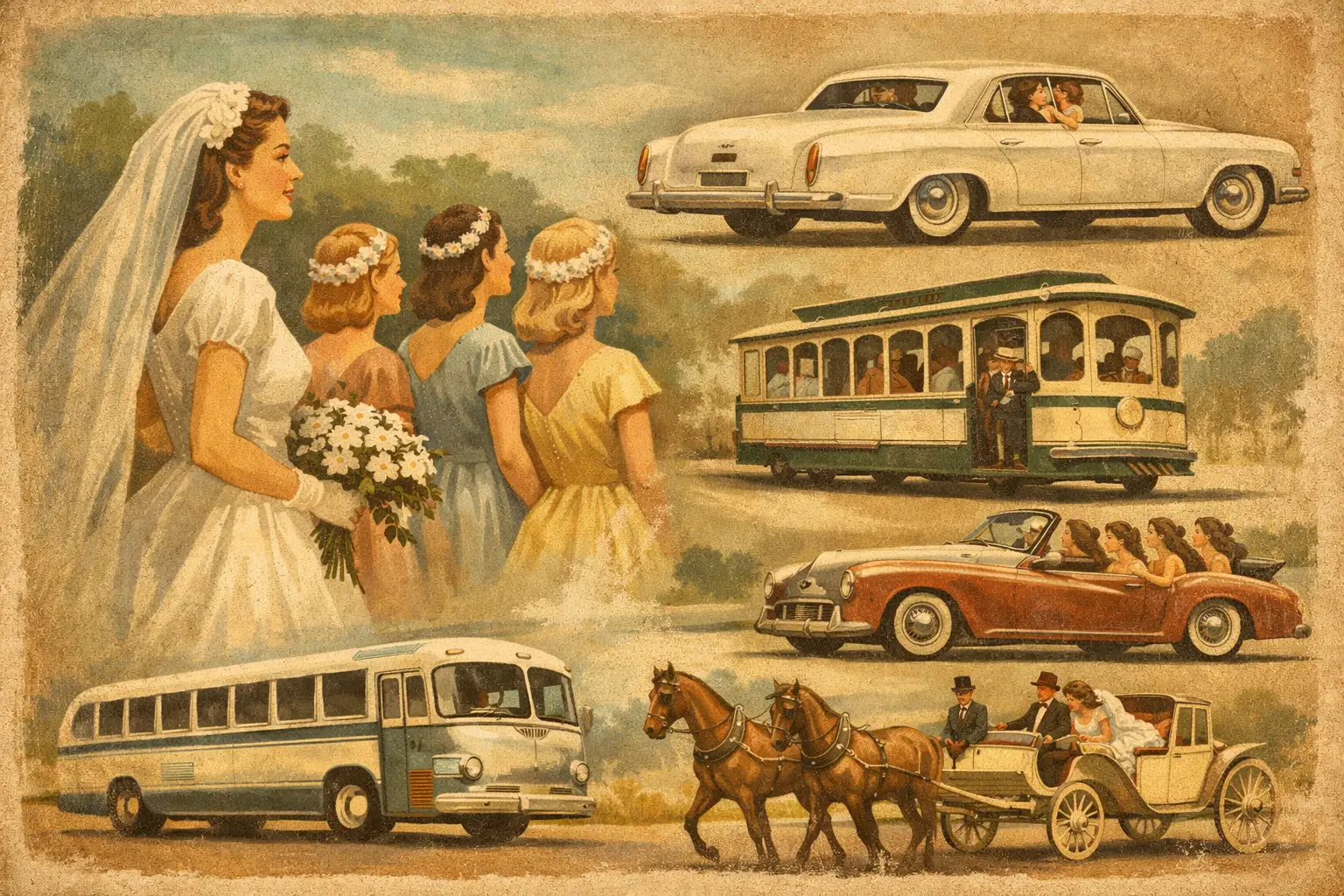
The best transportation for bridal party groups is usually one of four options: sedan or SUV service, a Mercedes Sprinter, a minibus, or a full-size motorcoach. Each works well in the right setting, and each has trade-offs.
Sedans and SUVs for small VIP movements
If the bridal party is very small, or if you want separate transportation for the couple, parents, or a maid of honor with last-minute duties, executive sedans and SUVs can be a strong fit. They feel private, polished, and easy to manage for short runs.
The limitation is obvious. Once dresses, suits, flowers, and extra passengers are involved, these vehicles fill up fast. They are best for 2 to 6 people at a time, not a full wedding party.
Mercedes Sprinters for intimate weddings
A Sprinter is often the sweet spot for smaller bridal parties. It gives the group one shared ride, keeps everyone together, and offers a more elevated feel than asking people to carpool. For weddings with 10 to 14 passengers, this is often the cleanest solution.
It is especially useful when the wedding day includes a hotel pickup, a ceremony transfer, and a later move to the reception. Everyone boards together, the chauffeur follows the schedule, and there is less room for confusion. If your group is larger than that, though, trying to squeeze into a Sprinter can create the same stress you were trying to avoid.
Minibuses for the most common bridal party setup
For many weddings, a minibus is the most practical answer. It gives enough room for a larger bridal party, allows space for personal items, and makes it easier to keep the whole group moving together. If you have bridesmaids, groomsmen, children in the wedding, and a few VIP family members all moving on the same timeline, this is often where planning gets easier.
A minibus also helps when the day includes photos at a separate location. Instead of coordinating several drivers and hoping everyone knows where to park, the group stays in one vehicle with one professional driver and one itinerary. That is a major advantage in busy areas like Boston or Cambridge, where venue access, traffic, and parking can quickly complicate a wedding schedule.
Motorcoaches when the bridal party overlaps with guest shuttles
A full-size motorcoach is usually more than a bridal party alone needs, but it makes sense in destination weddings, large wedding weekends, or events where the bridal party and close family are traveling with guests. It is also useful if the wedding includes long-distance travel between hotel blocks and venues.
The trade-off is scale. If you only need to move 12 people a short distance, a motorcoach may be more capacity than necessary. But if your wedding day involves moving 40 or more people between multiple points, the extra room and coordinated loading can be worth it.
What couples often underestimate
The vehicle itself is only half the decision. The other half is how the transportation plan supports the flow of the day.
One common mistake is assuming rideshare apps can cover the bridal party. They can work for casual outings, but weddings demand precision. Drivers can cancel, arrive at different times, get sent to the wrong entrance, or struggle with venue instructions. For a brunch with friends, that is manageable. For a ceremony start time, it is not.
Another issue is undercounting what travels with the bridal party. Dresses take space. Tuxes wrinkle. Bouquets need careful handling. Emergency kits, overnight bags, signage, and vendor items often end up in the same vehicle. A group that looks small on paper may need more room than expected.
It also helps to think about who should not be driving. The maid of honor should not be checking GPS between hair appointments. The best man should not be circling for parking before the ceremony. And nobody should be appointing a relative as the day-of shuttle captain unless that person wants the job and is comfortable handling pressure.
Building a transportation plan that actually works
The strongest bridal party transportation plans are simple, padded with extra time, and built around one point of contact. Instead of creating a loose plan and hoping everyone follows it, confirm exact pickup addresses, preferred arrival windows, venue access notes, and who has authority to adjust timing if the schedule shifts.
A realistic buffer matters. If the ceremony starts at 4:00 p.m., the transportation goal should not be a 3:58 arrival. Build in time for loading, traffic, elevators, venue entry, and the very normal wedding-day delays that happen when a boutonniere goes missing or someone needs five extra minutes.
It is also smart to decide whether the bridal party transportation ends after the ceremony or stays available through photos and the reception. Some couples only need a pre-ceremony transfer. Others want the same vehicle staged for the full sequence so nobody has to improvise later.
When style matters – and when it should not lead
Yes, the vehicle will show up in photos. Yes, the arrival experience matters. But wedding transportation works best when appearance supports the plan instead of driving it.
A polished black SUV or clean white minibus may not feel as dramatic as a specialty car, but if it arrives on time, fits the full group, and keeps the day on schedule, it is doing the real job. Guests and vendors remember whether the wedding felt organized. They rarely remember whether the bridal party rode in something flashy for eight minutes.
That is especially true for New England weddings, where traffic patterns, weather, and venue layouts can change the transportation picture fast. A dependable fleet and a professional chauffeur team usually add more value than a vehicle chosen only for novelty.
Questions to ask before you book
Before reserving transportation, ask how the company handles timing changes, where the driver will stage at each stop, how passenger counts affect vehicle recommendations, and whether the quote reflects your actual itinerary. You should also ask what happens if the wedding runs late, because many do.
The booking process should feel clear, not vague. You want confirmed trip details, transparent pricing, and confidence that the vehicle assigned actually matches your group. That is where an experienced transportation partner stands apart from a last-minute workaround.
For couples planning across Boston, Rhode Island, New Hampshire, or nearby wedding destinations, that kind of operational discipline matters. A provider with a broad fleet can match the vehicle to the day instead of forcing the day to fit one vehicle type.
Charter a Coach is one example of that approach, with options ranging from executive sedans to minibuses and motorcoaches for wedding transportation that needs to stay clean, punctual, and professionally managed.
The best transportation choice should make the bridal party feel calm, cared for, and exactly where they need to be when it matters most. If your transportation plan does that, you picked well.