A missed airport pickup can put a wedding rehearsal, corporate meeting, or student trip behind schedule before the group has even left Boston. This Logan pickup coordination example shows how a reliable airport plan turns multiple arrivals, changing flight times, luggage claims, and terminal traffic into one organized departure.
For group planners, the goal is not simply to have a vehicle waiting nearby. It is to give every traveler a clear next step, give the driver accurate information, and build enough flexibility into the schedule to handle the realities of Logan Airport. A professional pickup plan protects the itinerary, keeps guests from standing outside with bags, and avoids last-minute calls from people who are unsure where to go.
Why Logan Airport Pickups Need Coordination
Logan is a busy airport with several terminals, active curb areas, and frequent flight changes. Groups often arrive on different airlines, at different times, or with varying amounts of checked luggage. Even a group traveling on one flight may take 20 to 40 minutes to fully assemble after landing, depending on the terminal, baggage claim, and passenger needs.
That is why a flight arrival time should not be treated as the vehicle pickup time. The flight time starts the pickup process. The actual departure plan must account for deplaning, restroom stops, baggage collection, accessibility needs, and the time required for everyone to reach the designated meeting point.
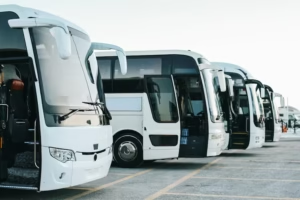
The right vehicle also affects the plan. A sedan or SUV can often serve a small executive party with a straightforward curbside pickup. A Sprinter is a strong fit for a small group traveling together. For a larger corporate delegation, wedding party, school group, or sports team, a minibus or motorcoach may be the better choice, but the driver and dispatcher need a confirmed loading plan before arrival.
A Logan Pickup Coordination Example for a Corporate Group
Consider a company bringing 32 employees to Boston for a two-day planning meeting. Twenty-four employees arrive on a morning flight at Terminal B. Eight more arrive at Terminal C 45 minutes later. The hotel check-in is not until midafternoon, but the group has a scheduled lunch and meeting space reserved downtown at 1:00 p.m.
A weak plan would schedule one 32-passenger bus at the first flight’s arrival time and ask everyone to call when they land. That leaves the driver waiting without a clear release time, creates confusion for the second group, and makes it difficult to keep the meeting on schedule.
A stronger plan starts with the full flight manifest. The transportation coordinator provides flight numbers, airline names, scheduled arrival times, passenger counts, lead traveler phone numbers, and the final destination. The group selects a minibus sized for the passengers and luggage, then establishes a planned vehicle release time based on the later arrival rather than the first touchdown.
For this example, the coordinator schedules the minibus to be ready after the second flight has had reasonable time for deplaning and baggage claim. The first group receives instructions to collect luggage and wait inside the terminal in a specified area until the group leader confirms that the vehicle is ready. The second group receives the same instructions, with the group leader serving as the single point of contact.
The driver monitors the flight information and stays in touch with dispatch. Once both flight groups have confirmed they are collected and ready, the driver proceeds to the approved pickup location and communicates the vehicle description and arrival details through the designated contact. Rather than 32 people searching for a bus at once, the group leader directs everyone to the same meeting point and leads the group out together.
This approach may require a little more planning, but it reduces curbside confusion and helps the vehicle load efficiently. It also gives the company a realistic expectation for when the group will leave the airport and reach the next stop.
Build the Pickup Plan Before Travel Day
The most dependable airport pickups are arranged with specific details, not assumptions. A transportation provider needs the itinerary early enough to match the vehicle, driver schedule, and pickup sequence to the group.
Start with a complete passenger count, including children, chaperones, VIPs, and anyone who may need assistance entering or exiting the vehicle. Then consider luggage honestly. A 40-passenger group traveling for a weekend conference with checked bags may need a different vehicle configuration than 40 local attendees carrying only backpacks.
Next, identify whether the group is arriving on one flight or several. If arrivals are spread over more than an hour, there is a practical decision to make: wait for everyone and travel together, or schedule separate pickups. Traveling together generally simplifies the destination schedule and keeps costs more predictable. Separate pickups can be worthwhile when the first group has a time-sensitive commitment or when long wait times would create an unreasonable burden.
Every plan should name one on-site leader and one backup contact. These people should have the driver’s or dispatch team’s contact process, the vehicle description, and the meeting instructions. Travelers do not all need to communicate with the driver individually. In fact, dozens of separate calls can slow down the coordination process when conditions change.
Give Travelers Clear Meeting Instructions
The message to passengers should be short, direct, and sent before departure. Tell them to keep their phones on after landing, collect their bags, and wait at the stated indoor or terminal meeting area until the group leader confirms the pickup location. Ask them not to cross roadways or leave the terminal to look for the vehicle on their own.
Use plain language. “Meet at the designated Terminal B location after you have collected your luggage” is more useful than a vague instruction to “find the bus outside.” Airport curb access and loading procedures can change, so the final location should be confirmed through the driver’s active coordination on travel day.
For international arrivals, add more buffer. Customs and immigration processing can vary significantly, and luggage delivery may take longer than expected. For a wedding group, it can also help to schedule arrivals early enough that a delay does not affect photos, rehearsals, or guest check-in.
Plan for Delays Without Losing Control
Flight delays are common, but they do not have to create a breakdown in communication. The key is to distinguish between a minor schedule change and a change that affects vehicle timing, driver availability, or the next segment of the itinerary.
Share flight details in advance so the transportation team can monitor the arrival. If a flight is substantially delayed, the group leader should contact dispatch as soon as possible, especially if travelers are on separate flights or a later pickup would overlap with another scheduled transfer. Early notice gives the operations team more options than a call after the group has landed.
It also helps to protect the first stop after the airport. If the group has a nonrefundable lunch reservation, a campus tour, or a meeting with a fixed start time, build an arrival buffer into the itinerary. Airport transfers should not be scheduled down to the minute. A 30-minute cushion can be the difference between a controlled adjustment and an entire day spent catching up.
Match the Vehicle to the Arrival Experience
The right vehicle is more than a matter of passenger capacity. It determines luggage space, boarding speed, comfort, and the overall first impression for arriving guests.
A Mercedes Sprinter can be a practical option for 10 to 14 passengers who want a private, direct transfer. Minibuses work well for airport groups of roughly 24 to 40 travelers, especially when one lead contact can keep the group organized. A full-size motorcoach can carry up to 56 passengers and is a dependable choice for large delegations, student groups, and teams, provided the luggage load and airport pickup logistics are planned in advance.
For executive travelers, sedans and SUVs can provide a more private experience. For large groups, one larger vehicle may be easier to coordinate than several smaller ones. It depends on flight schedules, luggage, destination access, and whether the group needs to make multiple stops after leaving the airport.
Keep the First Hour of the Trip Simple
After a flight, travelers are tired, hungry, and often unfamiliar with the area. Avoid adding unnecessary stops between Logan and the destination unless they are truly needed. If the group needs groceries, boxed lunches, or a quick stop before a retreat, include it in the itinerary from the start so the driver has a workable route and timeline.
Before the vehicle departs, the group leader should do a quick headcount and confirm that everyone has loaded their bags. That simple checkpoint is particularly valuable for student groups, wedding guests, and teams. Once the vehicle is moving, the driver can focus on safe, punctual travel while the organizer can turn attention to the event ahead.
Charter a Coach coordinates airport transportation around the details that matter: flight timing, passenger count, luggage, pickup communication, and the next stop on your itinerary. When you request a quote, share the full arrival plan instead of only the flight time. A well-coordinated Logan pickup gives your group a calmer start and gives you the confidence to focus on what brought everyone together.