A corporate roadshow transport example is most useful when it reflects the pressure behind the itinerary: executives cannot miss a client meeting, guests cannot be left at the airport, and one late vehicle can affect the entire day. The right transportation plan does more than move people between locations. It protects the schedule, gives travelers a comfortable place to reset between stops, and gives the event coordinator one accountable point of contact.
Consider this realistic scenario: a technology company is hosting a two-day investor and client roadshow in Greater Boston. The company needs to move 32 employees, six executives, and four out-of-town guests between Boston Logan Airport, a Cambridge hotel, a downtown presentation venue, and two client offices. Meetings begin at fixed times, the executive group needs privacy for calls, and the coordinator has little room to recover from delays.
Corporate Roadshow Transport Example: The Assignment
The group arrives in waves on a Tuesday afternoon. Four VIPs land at Logan between 1:15 and 2:00 p.m., while the larger employee group is already at the Cambridge hotel preparing presentation materials. A hosted dinner is scheduled in Boston at 6:30 p.m. The next morning includes an 8:30 a.m. client presentation downtown, an 11:45 a.m. meeting in the Seaport, and a 3:00 p.m. session back in Cambridge. Day two ends with airport departures spread across three hours.
This is not a job for a single vehicle making occasional runs. It is a coordinated transportation operation with different passenger needs, separate luggage requirements, and hard arrival times. The plan should account for loading time, security at venues, city traffic, driver breaks, and a practical buffer before every meeting.
A workable vehicle plan might look like this:
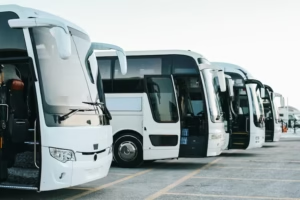
- One 40-passenger minibus for employees and visiting guests traveling on the shared schedule.
- One Mercedes Sprinter for executives who need a quieter setting and flexibility for separate arrivals or departures.
- One executive SUV assigned to airport VIP pickups and time-sensitive individual movements.
- A reserve vehicle option available if flight disruptions, a schedule change, or an added passenger group requires it.
The minibus keeps the core group together and avoids the expense and confusion of reimbursed rideshares. The Sprinter allows executives to travel without separating people across multiple cars, while still providing a more private environment for calls and last-minute preparation. The SUV covers the part of the schedule most likely to change: airport movement.
Start With the Non-Negotiable Times
Roadshow transportation should be built backward from the moments that cannot move. In this example, the 8:30 a.m. presentation is the first hard deadline. Rather than scheduling a pickup at 8:00 a.m. because the venue is nearby, the transportation coordinator schedules the group to arrive by 8:05 a.m.
That 25-minute arrival window gives presenters time to check in, use restrooms, distribute materials, test equipment, and settle before the client arrives. It also creates breathing room if traffic slows near the venue entrance. The vehicle pickup from the hotel is then set for 7:25 a.m., with passengers asked to be in the lobby by 7:15 a.m.
This distinction matters. A vehicle can arrive on time and still fail the assignment if passengers board late, luggage is not ready, or venue access takes longer than expected. A professional transportation plan includes the full chain of movement, not just the drive time shown on a map.
For each stop, the coordinator should confirm the exact street address, approved loading area, building entrance, on-site contact, and expected passenger count. Downtown Boston and Cambridge locations can have restricted curb access or limited bus staging. Knowing where the driver can legally and safely pull over prevents the last-minute search for a pickup point while attendees are waiting outside.
Build the Schedule Around Passenger Experience
The employee minibus follows a simple, visible schedule. Everyone receives the same lobby call time, vehicle description, driver contact procedure, and instruction for what to do if they miss the departure. Consistency reduces the number of messages the event coordinator has to answer during a busy day.
The executive schedule requires more discretion. On the first evening, the Sprinter takes leaders directly from the hotel to the dinner venue 20 minutes before the main group departs. After dinner, it remains nearby for a limited period rather than immediately releasing. That decision costs more than a simple one-way transfer, but it is sensible when guests may leave at different times or when a private conversation could extend the evening.
This is where roadshow planning involves trade-offs. Keeping a vehicle on standby gives the team flexibility, but increases charter time. Sending it away may reduce cost, but creates risk if the event ends early, runs late, or a VIP needs to depart unexpectedly. For a high-stakes presentation day, standby time is often the better choice.
Protect the Day With Clear Operating Details
The transportation provider and company coordinator should agree on one run sheet before the first pickup. It should show every pickup, destination, scheduled departure, target arrival, passenger lead, and vehicle assignment. It should also identify which movements are fixed and which are flexible.
For this roadshow, the plan includes three essential operating rules. First, the minibus departs at the published time. Second, the executive Sprinter can hold up to 10 minutes for a named passenger lead, but only if doing so does not compromise the next meeting. Third, all flight-related adjustments go through one designated coordinator rather than multiple travelers calling the driver directly.
Drivers should receive the itinerary in advance, including venue contacts and any access instructions. Passengers should know the vehicle number or description, particularly at Logan, where curbside activity moves quickly. The company coordinator should have a 24/7 dispatch contact for after-hours flight changes and urgent adjustments.
Clean, comfortable vehicles also serve a practical purpose during a roadshow. Between meetings, attendees may need to review notes, answer emails, charge devices, or simply reset. A well-maintained minibus or Sprinter creates a calmer transition than asking a group to coordinate separate cars in unfamiliar traffic.
Plan for the Disruptions Most Likely to Happen
The strongest itinerary does not assume every flight lands on time or every meeting ends when planned. It establishes a response before the problem appears.
If two VIP flights are delayed, the executive SUV can collect the first arrival while the Sprinter handles the second group later. If the 11:45 a.m. meeting extends to 1:00 p.m., the minibus remains at the venue or moves to a nearby approved staging location, depending on local parking rules. If one employee needs to leave for an early airport departure, the SUV or a separately scheduled sedan can handle that move without interrupting the larger group.
Not every roadshow needs a dedicated backup vehicle. A smaller team traveling between only two locations may be well served by one Sprinter and a detailed schedule. A larger event with simultaneous airport arrivals, VIP movements, and client-facing presentations benefits from separate vehicle assignments. The right level of coverage depends on group size, schedule density, luggage, and the consequences of a late arrival.
In New England, weather can also influence the plan. During winter months, build additional time into airport transfers and early morning departures. In warmer months, allow for construction, sporting events, and heavy convention traffic in Boston. The solution is not to add unnecessary hours everywhere. It is to identify the day’s most vulnerable movements and add time where it protects the program.
Give One Coordinator Control Without Giving Them More Work
The event coordinator should not have to manage every turn, parking decision, or passenger question. Their job is to oversee the experience, not operate the transportation network from a phone.
That is why a clear booking process matters. Before confirming service, provide passenger counts, flight details, venue addresses, preferred vehicle types, luggage needs, and the latest version of the agenda. Ask how long vehicles can wait, whether they can remain on standby, and how schedule changes are handled. A transparent quote should reflect the actual itinerary, including any split movements or extended vehicle time.
Charter a Coach can match the trip to the group rather than forcing the group into one vehicle type. Professional chauffeurs, modern clean vehicles, and a schedule built around real event timing help planners keep the focus where it belongs: on the clients, executives, and guests they are there to serve.
A roadshow succeeds when transportation fades into the background because every passenger is where they need to be, with time to spare. Start the planning conversation early, share the full itinerary, and leave room for the moments that rarely go exactly as planned.