A missed accessibility detail can disrupt an entire itinerary before the first passenger boards. Wheelchair bus requirements are not simply a matter of reserving a vehicle with a lift. For a wedding shuttle, student trip, corporate event, or community outing, the right plan accounts for the passenger’s mobility device, boarding location, seating needs, securement, schedule, and the experience of the driver operating the trip.
The best result is simple: every passenger can board safely, travel comfortably, and arrive on time with the group. That takes clear information early in the booking process and a transportation provider that treats accessibility as an operational requirement, not a last-minute add-on.
What Wheelchair Bus Requirements Mean in Practice
Accessibility rules and equipment standards can vary based on the vehicle type, service type, passenger needs, and applicable federal, state, and local requirements. A qualified transportation provider should confirm what applies to the specific trip. For planners, the practical question is more immediate: can this vehicle safely and reliably accommodate the people traveling?
An accessible bus generally needs a working wheelchair lift or ramp, adequate door clearance, designated wheelchair positions, and approved tie-down and occupant-restraint systems. The vehicle also needs enough interior space to position mobility devices without blocking aisles, exits, or required pathways.
That sounds straightforward, but vehicle capacity changes once wheelchair spaces are needed. A 56-passenger motorcoach, for example, may not carry 56 seated passengers when wheelchair positions are configured. The final capacity depends on the bus layout and how many wheelchair spaces the trip requires. A dependable quote should reflect the actual passenger mix rather than a maximum number printed on a fleet sheet.
Lift or Ramp Access
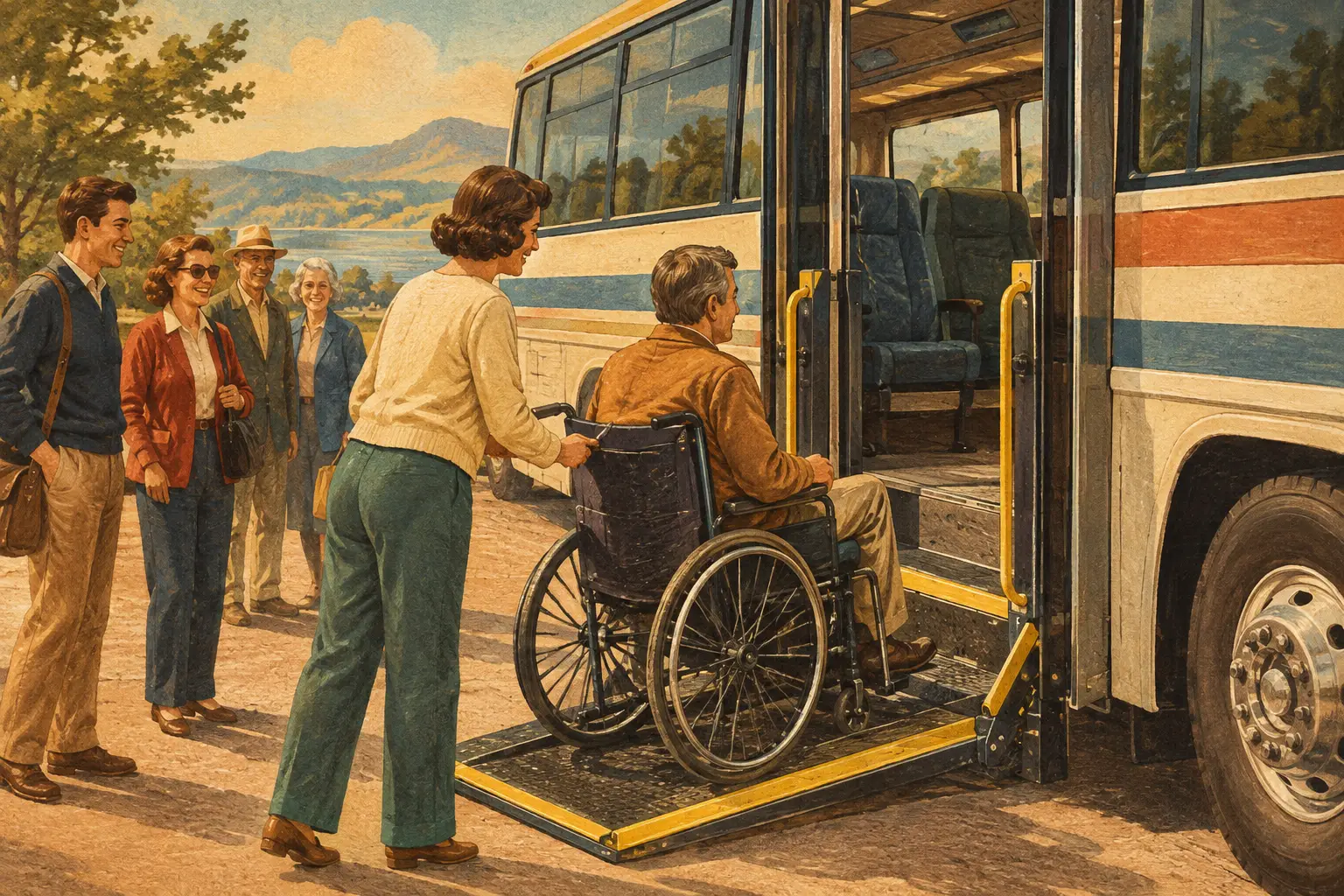
Most full-size accessible buses use a power lift that raises a passenger and mobility device from ground level to the bus floor. The lift must be properly maintained, operated by a trained driver, and suitable for the combined weight and dimensions of the passenger and device.
A ramp may be appropriate for certain vehicle types and boarding environments, but it is not automatically the better option. Steep grades, narrow sidewalks, snow, uneven pavement, and a crowded curb can make ramp boarding difficult. For New England trips, weather and pickup-site conditions deserve as much attention as the vehicle itself.
Planners should also consider dwell time. Boarding several wheelchair users takes longer than loading a group of ambulatory passengers. Build that time into the pickup schedule, especially for a ceremony departure, airport transfer, or event with a fixed start time.
Securement Is a Safety Requirement, Not a Convenience
Once onboard, a wheelchair or scooter must be positioned and secured using the vehicle’s approved system. Common setups use four-point tie-downs to secure the mobility device, along with a properly fitted lap and shoulder belt for the passenger when required. The driver should never rely on a wheelchair’s own parking brakes alone.
Not every device can be secured in exactly the same way. Power chairs, scooters, custom seating systems, and larger mobility devices may have different dimensions, weight, or attachment-point considerations. This is why a planner should not assume that any lift-equipped bus can accept every device without advance confirmation.
Provide the transportation company with the number of passengers using mobility devices and, when possible, the type, approximate size, and weight of each device. This allows the team to match the right vehicle and avoid an unsafe boarding decision at pickup.
Planning for Wheelchair-Accessible Bus Service
The most useful accessibility planning happens before the itinerary is finalized. A professional provider can advise on vehicle options, but the organizer is often the person who knows the guests, venue, schedule, and boarding locations best.
Start by identifying whether anyone will travel using a manual wheelchair, power wheelchair, mobility scooter, or other mobility aid. Do not ask passengers to transfer from their device unless that is their choice and can be done safely. The plan should respect the rider’s needs while keeping the group moving on schedule.
Next, verify the pickup and drop-off conditions. An accessible bus needs a safe place to stop, deploy its lift or ramp, and board without forcing passengers into traffic or onto unstable ground. A historic venue, downtown hotel, campus driveway, private residence, or busy event entrance may require a site-specific approach.
For trips with multiple stops, evaluate every stop, not just the first one. A bus may be able to board passengers easily at a hotel but face limited curb access at a restaurant, theater, or waterfront venue. If a site has restrictions on bus access, a smaller accessible vehicle or an adjusted loading point may be the better answer.
Seating, Companions, and Group Comfort
Accessible transportation should also preserve the social experience of group travel. When possible, reserve nearby seats for family members, caregivers, classmates, or colleagues traveling with the wheelchair user. This is particularly helpful on longer trips and for groups that include students, seniors, or guests who may need assistance.
There is a balance to manage. Keeping companions close may affect overall seating assignments, while creating wheelchair positions may reduce available seats. Addressing those trade-offs early is far easier than reshuffling a full coach at the curb.
Comfort matters beyond the wheelchair space. Consider climate control, ride duration, onboard restroom availability on larger coaches, luggage needs, and planned rest stops. A trip that technically meets accessibility requirements can still be poorly designed if it leaves passengers without enough time, space, or support.
Driver Training and Trip Execution
The vehicle is only one part of accessible service. The driver’s preparation and professionalism determine how well the plan works in real conditions.
A trained chauffeur should know how to inspect and operate the lift or ramp, position and secure mobility devices correctly, use occupant restraints, communicate respectfully with passengers, and respond when a boarding area is unsafe. They should also understand the itinerary well enough to anticipate tight turns, restricted entrances, and timing constraints.
Clear communication before the trip helps the driver arrive prepared. The reservation should document the number of wheelchair positions needed, boarding locations, passenger count, luggage expectations, and any site instructions. On a multi-day charter, the operating plan should carry through every day rather than relying on passengers to repeat their needs at each stop.
For planners, it is wise to designate one trip contact who can answer day-of questions. That person should have the driver’s dispatch instructions, know the approved pickup point, and be reachable if a venue changes access procedures. Small decisions made quickly can protect both safety and punctuality.
Questions to Ask Before You Reserve
Before confirming transportation, ask whether the proposed vehicle has a wheelchair lift or ramp, how many wheelchair positions it can accommodate, and how passenger capacity changes with those positions in use. Confirm that the provider can secure the specific types of mobility devices expected on the trip.
Ask about driver training and whether the pickup locations have been reviewed for accessible loading. If the itinerary includes an airport, a stadium, a hotel, or a large event venue, confirm the designated bus and accessible passenger pickup procedures. These locations often have separate staging rules that affect timing.
You should also discuss contingency planning. Equipment maintenance, traffic, weather, and venue access issues can affect any trip. A reliable operator has dispatch support, maintained vehicles, and a clear escalation process if conditions change. For an event planner, that operational discipline is often the difference between a calm adjustment and a visible delay.
Choosing the Right Vehicle for the Group
There is no single best accessible bus for every group. A full-size motorcoach may be the strongest choice for a long-distance trip with luggage and a larger passenger count. A minibus may work better for a local shuttle where street access is tight. For a smaller VIP movement, an accessible van or other specialized arrangement may be more practical, depending on the passenger’s needs and the available equipment.
The right choice comes from matching the vehicle to the real trip, not from selecting the largest bus or the lowest initial quote. Charter a Coach can help planners review passenger counts, mobility-device needs, pickup conditions, and timing before recommending an appropriate vehicle option.
Accessibility planning works best when it begins with one honest conversation: who is traveling, what do they need to board safely, and where does the vehicle need to operate? Answer those questions early, and your group can focus on the event ahead rather than the logistics at the curb.