
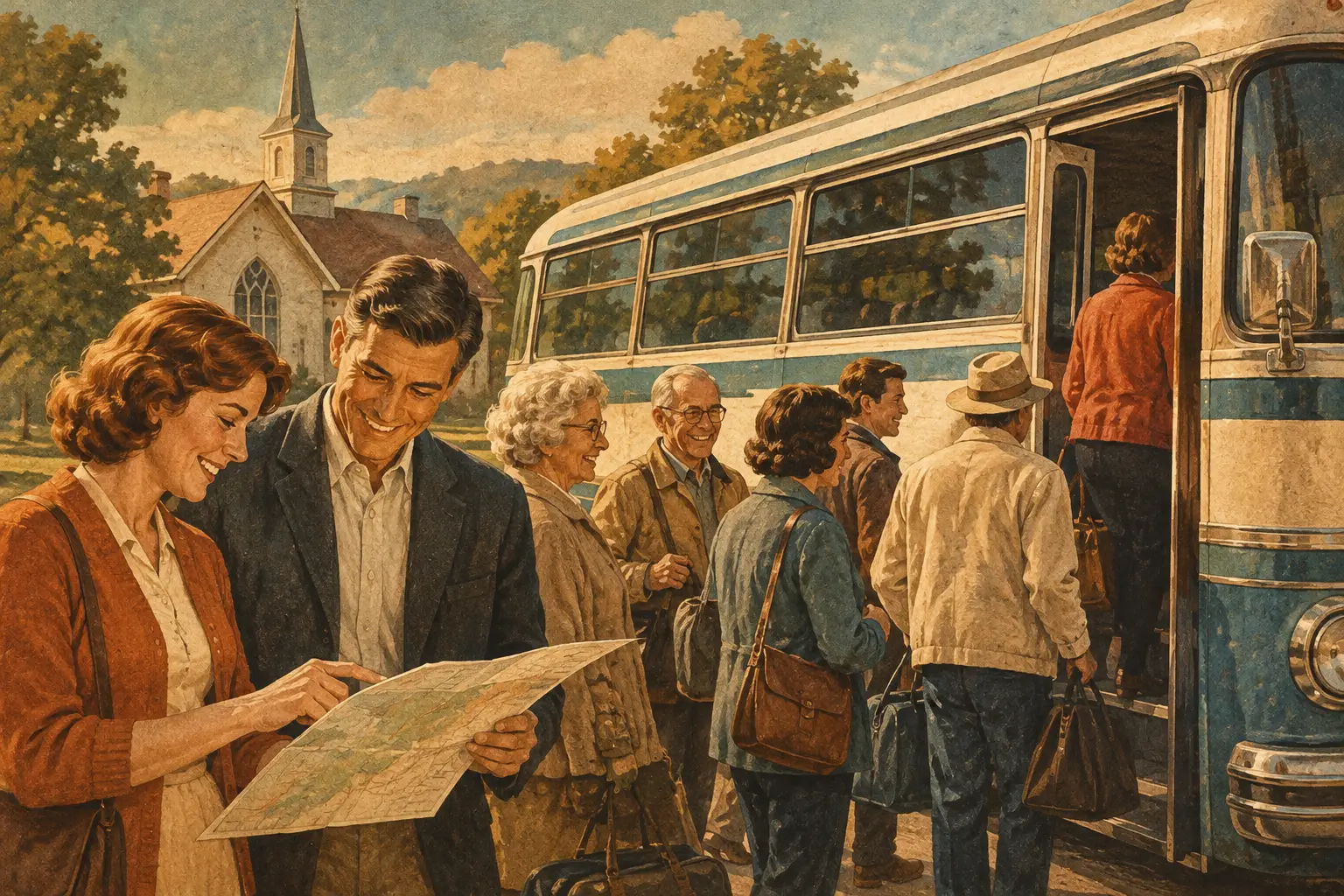
A retreat, service project, youth outing, or day trip should begin with fellowship, not a scramble over late arrivals and missing directions. Strong church group bus trip planning gives every traveler a clear meeting point, a realistic schedule, and a safe ride they can count on. It also gives the trip coordinator one dependable transportation contact instead of a dozen separate drivers and vehicles.
The best plans account for more than the destination. They consider who is traveling, where the bus can load, how long each stop will take, and what happens if traffic slows the route. With those details handled early, your group can focus on the purpose of the day.
Church Group Bus Trip Planning Starts With the Itinerary
Start with the moments that cannot move: worship service times, venue reservations, meal bookings, ticketed entry, or a scheduled volunteer shift. Work backward from the first required arrival time, then allow room for boarding, traffic, rest stops, and unloading. A bus arriving at a venue on time still needs a few minutes for passengers to gather belongings and get inside.
For a local trip, build in a pickup window rather than telling everyone the bus leaves at the exact moment they are expected to arrive. For longer New England trips, factor in highway traffic, weather, and the pace of the group. A full bus of seniors, families with young children, or students may need more time at each stop than a small adult leadership team.
Give your transportation provider a complete itinerary, including every pickup, drop-off, stop, and final return location. Include addresses, not just venue names. A church campus may have several entrances, and a large conference center may use a separate motorcoach loop. Clear instructions help the driver choose the safest, most efficient place to load the group.
Build a Schedule People Can Actually Follow
A schedule that looks efficient on paper can fail when it leaves no margin. Avoid back-to-back activities with no allowance for late boarding, restroom breaks, or a crowded parking lot. Fifteen extra minutes at the beginning of the day often protects the rest of the itinerary.
Choose one trip leader to make on-the-ground decisions and communicate directly with the driver. That person should have the driver dispatch contact, attendee count, and the day’s final itinerary. A second leader should hold the same information in case the primary coordinator is busy assisting travelers.
Match the Bus to Your Group, Not Just the Headcount
Passenger count is the starting point, but it is not the whole decision. Consider luggage, mobility needs, the trip length, and whether the group will be carrying coolers, donation supplies, musical equipment, or sports gear. A vehicle that technically seats everyone may not leave enough room for a comfortable ride or stored items.
A Mercedes Sprinter can work well for a small ministry team or airport transfer. A minibus is often a practical choice for medium-size groups heading to a regional event. For a full congregation, a large youth group, or a multi-day retreat, a 56-passenger motorcoach provides more seating, undercarriage storage, and the comfort needed for longer miles.
If anyone uses a wheelchair, walker, or other mobility aid, raise that need during the quote process. Ask about vehicle accessibility, loading procedures, and the best pickup location for the travelers involved. Do not assume a venue entrance or vehicle configuration will work without confirming it first.
Seat availability also affects group culture. If you expect families to sit together, chaperones to be spread throughout a youth group, or older guests to need front seating, do not book to the absolute maximum capacity. A little extra space can make a long day calmer for everyone.
Put Safety and Accountability Into the Travel Plan
Church trips often include people with different ages, needs, and levels of travel experience. A simple check-in process protects the group at every stop. Collect emergency contacts before departure, keep a current passenger list, and use a headcount whenever the group boards the bus.
For youth trips, assign adults to specific groups of students rather than asking one person to monitor everyone. Set clear expectations for boarding times, seat behavior, and the rule that no one leaves a stop alone. For adult groups, designate a meeting point and a departure time that is easy to understand, such as everyone seated five minutes before the scheduled pullout.
Keep the trip leader’s essential information in one place: medical or accessibility notes shared voluntarily by attendees, emergency contacts, venue contacts, and any relevant consent forms. Handle personal information discreetly and share only what a leader needs to respond appropriately.
Professional transportation matters here. A properly planned charter includes a trained, vetted chauffeur whose role is to operate the vehicle safely while your leaders care for the group. That division of responsibility is especially valuable when the road conditions, parking instructions, or route change unexpectedly.
Confirm the Details That Affect Your Quote
A transportation quote is only as accurate as the itinerary behind it. When requesting pricing, provide the travel date, passenger count, pickup time, return time, full route, and any planned waiting time. Be upfront about overnight travel, multiple pickup locations, luggage, and special vehicle requests.
Ask what is included and what may be billed separately. Depending on the trip, parking fees, tolls, driver accommodations, extended waiting time, or itinerary changes may affect the final cost. A transparent conversation early is better than trying to adjust a budget after commitments have been made.
It is also wise to ask when the reservation is secured and when final passenger numbers are needed. Church events can change as registrations come in, so understand the cancellation terms and the process for adjusting your vehicle if attendance grows. Booking early gives you the best chance of matching the right vehicle to the group, particularly during busy spring, summer, and holiday weekends.
Communicate Before the Bus Arrives
Send travelers one concise trip message a few days before departure. It should state the pickup location, arrival time, planned return time, what to bring, and who to contact if they are delayed. For overnight travel, include luggage guidance and a reminder to label bags.
On departure day, arrive before the first passenger. Check that the pickup area is clear, greet the driver, and confirm the route and planned stops. If your church uses a large or shared parking lot, reserve a visible gathering area so people are not searching for the bus at the last minute.
A few days after the trip, ask leaders and travelers what worked. Did the pickup time feel realistic? Was the meeting location easy to find? Did the vehicle size fit the group? Those answers make the next outing easier to organize and more enjoyable for everyone.
For church groups traveling in Boston, Rhode Island, New Hampshire, or beyond, Charter a Coach can help match your itinerary and passenger needs to the right vehicle. Before you request rates, take ten minutes to confirm your headcount, stops, and timing. That small planning step is often what turns a complicated group outing into a calm, on-time departure.