A delayed pickup, cramped seating, or unclear departure plan can put employees in the wrong frame of mind before a meeting even begins. The right corporate travel comfort features do more than make a ride pleasant. They help people arrive rested, prepared, and on time while giving the planner confidence that every moving part is covered.
For corporate administrators, office managers, and event coordinators, comfort should be evaluated alongside safety, capacity, and schedule reliability. A polished vehicle is valuable, but it only delivers a good experience when it arrives clean, staffed by a professional chauffeur, and matched to the group’s actual itinerary.
Start With the Comfort Features Your Trip Requires
There is no single ideal vehicle for every business trip. A six-person airport transfer has different needs than a 45-person off-site meeting, and a multi-day leadership retreat calls for more planning than a short shuttle between a hotel and conference venue.
Begin by looking at the time employees will spend in transit. For a quick local transfer, comfortable seating, climate control, luggage space, and reliable pickup times may be the priorities. For longer travel across New England, passengers may benefit from reclining seats, onboard restrooms on larger motorcoaches, Wi-Fi availability, power outlets, and enough aisle space to move comfortably.
Not every amenity is available on every vehicle, so it is smart to confirm requirements during the quoting process. Asking early prevents a common planning mistake: booking for passenger count alone and discovering too late that the group needs more luggage capacity, more room to work, or a different level of privacy.
Seating That Supports the Actual Ride Length
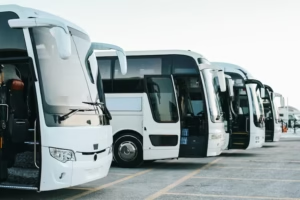
Seat comfort is often the first thing passengers notice, especially on a trip lasting more than an hour. Motorcoaches are generally the strongest choice for larger groups making longer trips because they offer more generous seating, overhead storage, and room to settle in. For a smaller team, a minibus or Mercedes Sprinter can offer a more intimate setting without putting people in a vehicle that feels oversized.
The practical question is not simply, “How many seats are available?” It is, “How will this group travel?” A vehicle at full capacity may be perfectly appropriate for a short employee shuttle. If the trip includes presentation materials, winter coats, carry-on bags, or airport luggage, a little extra capacity can make a significant difference in comfort.
Climate Control and Cleanliness Set the Baseline
Employees should not have to choose between being too warm and too cold during an important business trip. Well-maintained climate control matters throughout the year, from humid Boston summers to cold New England mornings. It is particularly important for groups traveling in business attire, attending client events, or heading directly from the vehicle into a meeting.
Cleanliness is equally fundamental. A clean, modern vehicle communicates professionalism before anyone reaches the destination. It also makes the ride more comfortable for employees who may be traveling together for several hours. When arranging transportation, ask about vehicle condition and cleaning standards rather than treating those details as assumed.
Corporate Travel Comfort Features That Keep Work Moving
Comfort features should support the purpose of the trip. For many corporate groups, that means creating an environment where passengers can review notes, answer messages, have a quiet conversation, or simply take a break before a demanding day.
Wi-Fi and onboard power can be useful for teams traveling to conferences, sales meetings, and regional offices. They are not always necessary, however. On a short ride from a hotel to an event venue, dependable timing and easy boarding may matter more than connectivity. On a two- or three-hour transfer, the ability to charge a phone or laptop can help employees use travel time more effectively.
Privacy also deserves attention. Executive sedans and SUVs are a strong fit for VIPs, visiting clients, senior leaders, or small teams discussing sensitive business matters. For larger groups, a dedicated charter vehicle keeps the team together instead of splitting employees among rideshares, personal vehicles, or multiple taxis. That creates a more controlled and professional experience from departure to arrival.
For groups with a full schedule, onboard restroom availability can be a meaningful advantage on a full-size motorcoach. It reduces the pressure to make unnecessary stops and helps protect the itinerary. That said, planned comfort breaks still make sense on longer routes. A well-run trip balances passenger needs with a realistic schedule rather than trying to eliminate every stop.
Reliable Scheduling Is a Comfort Feature, Too
The most valuable comfort feature may not be inside the vehicle at all. It is knowing the driver will be where they are supposed to be, when they are supposed to be there.
Corporate transportation often connects several fixed commitments: flight arrivals, hotel checkouts, meeting start times, dinner reservations, and return departures. One late pickup can force attendees to rush, leave a poor impression on a client, or miss part of the program. Professional scheduling, clear pickup instructions, and experienced chauffeurs help remove that uncertainty.
Build the itinerary with realistic timing. Allow time for boarding, loading luggage, airport traffic, venue access, and the walk from the drop-off point to the meeting room. At Logan Airport and other busy travel hubs, group pickup instructions should be especially clear. A chauffeur and transportation provider can only execute efficiently when the planner shares flight details, terminal information, passenger count, and the right point of contact.
A dedicated vehicle also gives planners flexibility when plans change. A delayed flight or a meeting that runs long may require a revised pickup time. While changes depend on driver availability and the confirmed reservation, having 24/7 phone support and a direct transportation partner is far more reassuring than asking every employee to solve the problem individually.
Match the Vehicle to the Group, Not Just the Budget
Price matters, but the lowest-cost option can create avoidable friction if it does not fit the trip. The right vehicle protects both comfort and productivity.
A full-size motorcoach can accommodate up to 56 passengers and works well for conferences, company outings, multi-day travel, and airport movements involving larger teams. Minibuses, generally seating 24 to 40 passengers, are practical for office shuttles, local meetings, and medium-size departments. Mercedes Sprinters are well suited for 10 to 14 travelers who want a more executive feel, while sedans and SUVs provide discreet transportation for individual leaders or small VIP groups.
Choosing a slightly larger vehicle can be worthwhile when passengers have luggage, equipment, or presentation materials. The trade-off is cost, so consider the itinerary honestly. A compact shuttle may be efficient for a short local run, while a longer airport transfer with bags may call for more space and storage.
Plan the Passenger Experience Before Departure
The most comfortable corporate trips are planned before anyone boards. Confirm the final passenger count, pickup address, pickup time, destination, luggage expectations, and return schedule. If the group is arriving on multiple flights or departing from more than one location, document those details clearly instead of relying on a last-minute text thread.
Give travelers simple instructions the day before departure. Include where to meet, when boarding begins, what vehicle to look for, and who to contact if they are running late. For larger groups, designate one onsite coordinator to communicate with the chauffeur. This keeps the driver from receiving conflicting directions and lets employees focus on the event ahead.
It also helps to think through accessibility needs, mobility concerns, and any special accommodation requests early. These details affect vehicle selection and can be difficult to solve once the trip is underway. A dependable transportation provider will use the information to build a plan that works for the full group, not only the average passenger.
Comfort Builds Confidence for Every Attendee
Employees remember how a company handles the details. A clean vehicle, professional chauffeur, comfortable seat, organized pickup, and timely arrival signal that their time matters. For clients and executive guests, those same details reflect directly on the organization hosting them.
Charter a Coach helps corporate planners coordinate vehicle options, professional chauffeurs, and itinerary-based transportation throughout New England. The goal is not to add unnecessary extras. It is to provide the right level of comfort, safety, and operational control for the people and schedule involved.
When you plan the ride with the same care you give the meeting itself, transportation becomes one less risk to manage and one more reason your group can arrive ready.