When a corporate event runs behind, transportation is often the reason. A shuttle that arrives 15 minutes late can push back registration, delay speakers, and leave attendees standing outside a venue already questioning the day. That is why knowing how to organize corporate event transportation starts with one principle: treat it like part of the event itself, not a last-minute add-on.
The best transportation plans are built around timing, passenger flow, and accountability. They do more than move people from point A to point B. They protect the schedule, support the guest experience, and give organizers fewer problems to solve on event day.
How to organize corporate event transportation from the start
The biggest mistake planners make is booking vehicles before defining the movement plan. Transportation only works when the schedule, headcount, pickup points, venue access, and passenger expectations are clear enough to build around.
Start with the event format. A single-site meeting with airport arrivals is very different from a multi-day retreat with hotel shuttles, off-site dinners, and VIP transfers. Before you request quotes or compare vehicle options, map the full transportation picture. That includes who needs a ride, when they need it, where they are starting, and how tightly those arrivals are tied to the event timeline.
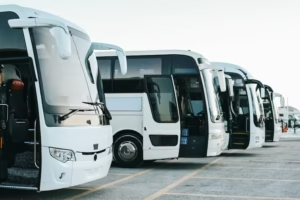
For most corporate events, there are usually several transportation layers at once. Executives may need private sedan or SUV service. General attendees may need shuttle service from a hotel block. Larger groups may require minibuses or full-size motorcoaches if everyone is traveling together from an office, convention hotel, or airport. If you try to force all of those needs into one vehicle type, you usually create either wasted spend or unnecessary complexity.
This is where planning early pays off. A right-sized fleet is more efficient than overbooking a single large vehicle or scrambling for extra capacity later.
Build the plan around people movement, not just headcount
Headcount matters, but movement matters more. A group of 120 people arriving in one wave needs a different plan than 120 people landing at an airport across six hours. The question is not just how many attendees you have. It is how they will actually travel.
Break your passenger groups into practical categories. Think in terms of VIPs, speakers, staff, exhibitors, and attendees. Each group has different expectations and different risk if transportation fails. If a keynote speaker misses the start time, that has a wider impact than one delayed guest. If your registration team cannot reach the venue before attendees, the entire check-in process suffers.
From there, match transportation to behavior. A motorcoach makes sense when you need to move a large group together on a defined schedule. A minibus is often a better fit for shorter shuttle loops or medium-size groups. A Sprinter can work well for leadership teams or smaller airport groups. Sedans and SUVs are useful when privacy, flexibility, or direct routing matters most.
This is also the point where it helps to ask whether attendees will actually use the service you are arranging. If the venue is in a congested urban area with limited parking, shuttle service may have high participation. If many guests are local and driving themselves, you may need fewer vehicles than your RSVP list suggests. Conservative planning is smart, but overestimating usage by too much can inflate the budget without improving the event.
Timing is where most transportation plans succeed or fail
If you want to know how to organize corporate event transportation well, focus on timing before anything else. Most event transportation issues are not caused by the vehicle. They come from unrealistic loading windows, vague pickup instructions, or schedules with no room for delays.
Work backward from your hard event times. If registration opens at 8:00 a.m., do not schedule the first shuttle to arrive at 7:55 a.m. Build in buffer for loading, traffic, venue access, and passenger confusion. For executive arrivals, the buffer may be smaller because the routing is more controlled. For larger groups, you need more margin.
Airport transportation deserves even more care. Flight arrivals are unpredictable, baggage claim adds time, and group assembly rarely happens as fast as people expect. If you are moving attendees from Logan or another busy airport, assume the process will take longer than the clean version on paper. It is better to have a driver waiting than to explain why your guests are waiting.
Return trips matter just as much. Many planners focus on getting everyone to the event and give less attention to the trip back. But departures can be more chaotic, especially after dinners, networking receptions, or conferences that end at different times for different groups. If you expect staggered exits, schedule transportation that reflects that reality rather than one mass departure that sounds tidy but does not match attendee behavior.
Confirm venue access before finalizing the route
Not every hotel, office campus, or event venue handles buses the same way. Some properties have dedicated coach access. Others have tight loading zones, restricted entrance times, or limited curb space. If you skip this step, a good route on paper can become a problem on-site.
Confirm where each vehicle can stage, load, and unload. Ask whether there are height restrictions, security checkpoints, or separate instructions for larger vehicles. This is especially important for downtown venues, universities, and convention-adjacent properties where traffic patterns can change quickly.
A transportation provider with regional experience can often spot these issues early, especially in high-volume markets like Boston and Cambridge where timing and curb access are not small details. They affect everything.
Communication should be simple enough to work under pressure
Even a well-built plan fails if guests do not know where to go. Transportation instructions should be short, specific, and repeated in the places attendees already check.
Send pickup times, exact locations, and contact details before the event. Avoid vague directions like “front entrance” if a property has multiple entrances. Use consistent naming for hotels, terminals, and venues so nobody is guessing. If there are separate plans for VIPs, staff, or exhibitors, label them clearly.
On event day, designate one transportation point person. This should be someone who can approve changes, answer questions quickly, and coordinate with the transportation company in real time. Too many cooks create delays. One informed contact keeps decisions moving.
It also helps to think through what passengers need to know if something changes. If traffic forces a minor delay or a pickup location has to shift, how will attendees be notified? A transportation plan is stronger when communication is built in, not improvised.
Budget for reliability, not just the lowest quote
Corporate planners are always balancing cost, but transportation is one of the areas where the cheapest option can become the most expensive mistake. A low quote does not mean much if the service is late, the vehicle is not right for the route, or communication breaks down when the schedule tightens.
Look at value through the lens of risk. Professional drivers, clean late-model vehicles, responsive dispatch, and clear scheduling are not extras. They are what keep your event on track. Transparent pricing also matters. You should understand what is included, what could trigger additional charges, and how itinerary changes are handled.
There is also a trade-off between flexibility and efficiency. A highly customized plan with multiple vehicle types and rolling pickups may improve attendee experience, but it can cost more than a simpler group move. The right answer depends on the event. An executive retreat and a staff training day do not need the same transportation structure.
Have a backup plan before you need one
Every event planner hopes the day goes exactly as scheduled. Good transportation planning assumes some part of it will not.
Build contingencies around the highest-risk points. That might mean extra buffer before a keynote, a standby vehicle for a large arrival window, or direct dispatcher access if flights shift. You do not need to overengineer everything, but you do need an answer for the most likely problems.
This is one reason many corporate teams prefer working with a provider that offers multiple vehicle categories and live support. If your attendee count changes or a route needs to be adjusted, having options matters. Charter a Coach, for example, supports everything from executive sedans to full motorcoaches, which makes it easier to align the transportation plan with the event rather than squeezing the event into one fixed setup.
The handoff matters as much as the booking
Once transportation is booked, do not assume the work is done. Final confirmations are where strong plans become dependable ones.
A few days before the event, review the itinerary line by line. Confirm passenger counts, pickup addresses, contact names, mobile numbers, arrival windows, and any special instructions for drivers. Reconfirm the venue access points and make sure internal event staff are working from the same version of the schedule.
If your event includes multiple movement periods, such as morning arrivals, afternoon off-site transfers, and evening returns, verify each segment separately. Many errors happen when one correct schedule gets copied across the day without checking whether the timing still makes sense.
Transportation should feel calm on event day. That usually means the planning was detailed, the communication was clean, and the provider was prepared to execute without hand-holding. When those pieces are in place, guests notice the event, not the logistics behind it.
The best corporate transportation plan is not the most complicated one. It is the one that gets the right people to the right place, on time, with no confusion and no drama. If you build for real passenger behavior, protect the schedule with buffer, and work with a team that treats punctuality and safety as non-negotiable, the rest of the event has a much better chance to run the way it should.