A shuttle plan usually looks simple on paper right up until 180 guests leave a venue at once, one hotel changes its check-in flow, and a driver gets boxed out by a loading zone. That is why a solid logistics guide for event shuttles starts with traffic flow, timing, and passenger behavior, not just a vehicle count.
For weddings, corporate programs, school events, and private group outings, shuttle service succeeds when it removes uncertainty. Guests should know where to stand, when to board, and how often service runs. Planners should know how many vehicles they actually need, how long each trip cycle takes, and what happens if the schedule slips. Good transportation planning protects the event timeline, keeps arrivals orderly, and reduces stress for everyone involved.
What an event shuttle plan needs to accomplish
Event transportation is not only about moving people from point A to point B. It has to support the schedule of the event itself. If guests arrive late to a ceremony, if conference attendees miss the opening session, or if students are stranded after dismissal, the transportation issue becomes an event issue.
A practical shuttle plan should do three things well. First, it needs enough capacity for peak demand, not just total headcount. Second, it needs realistic timing based on actual loading, unloading, and traffic conditions. Third, it needs clear communication so riders are not making their own guesses in a crowded parking lot.
That sounds straightforward, but the right approach depends on the event type. A wedding with staggered hotel departures works differently than a corporate offsite with a hard start time. A university movement may require stricter supervision and loading controls than a private social event. The logistics are never one-size-fits-all.
Start this logistics guide for event shuttles with rider demand
Most planning mistakes happen before routes are even discussed. The problem is assuming every invited guest will ride, or worse, assuming ridership will spread evenly across the day. In reality, event shuttles tend to experience sharp peaks.
For example, a wedding may have a light early load and then a heavy final departure from the hotel 35 to 45 minutes before the ceremony. A corporate meeting often has the opposite pattern, with nearly everyone aiming for the first arrival window and then leaving in smaller waves. A festival or community event may see steady inbound traffic but concentrated departures at closing time.
This is why headcount should be broken into usable numbers. How many people are likely to ride from each pickup point? At what time do they actually want to travel? Are there VIPs, speakers, elderly guests, or attendees with mobility needs who should not be left to the busiest wave?
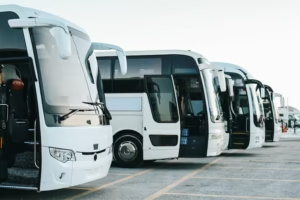
The more specific the ridership estimate, the better the vehicle plan. A 56-passenger motorcoach can be efficient for high-volume hotel moves, but a minibus or Sprinter may work better if access is tight or loads are split across smaller groups. Smaller vehicles can also reduce dwell time at stops where people board slowly. Larger coaches can cut the number of cycles needed. The trade-off is usually access versus capacity, and the right answer depends on the site.
Route planning is really site planning
The route may be short, but the site conditions can make or break the shuttle schedule. A ten-minute drive is not a ten-minute cycle if drivers need seven extra minutes to enter a property, wait for security clearance, or stage behind other vehicles.
When building routes, planners should account for pickup space, turning radius, curb access, traffic controls, and pedestrian flow. Hotels, venues, campuses, and downtown properties often have different rules for where buses can stand and for how long. If loading happens in a shared valet lane or in front of a busy entrance, the schedule needs more cushion.
This matters even more in dense areas such as Boston or Cambridge, where curb space can disappear quickly and event traffic may overlap with commuter congestion. A route that looks efficient on a map may become unreliable if the loading point is too close to a signalized bottleneck or if guests must cross active traffic to board.
Good site planning usually answers a few operational questions early. Where will each vehicle stage before boarding starts? What is the exact pickup marker guests will recognize? Is there room for multiple vehicles at once, or do they need to rotate one at a time? If weather turns, does the pickup location still work?
Build the schedule around trip cycles, not wishful timing
One of the easiest ways to under-plan event transportation is to time only the drive itself. Shuttle schedules should be built around full trip cycles. That includes staging, boarding, travel time, unloading, turnaround, and any wait time before the next trip.
If a hotel-to-venue drive takes 12 minutes, the real cycle may be closer to 35 or 40 minutes after boarding and unloading are included. If guests are carrying bags, traveling with children, or checking names against a list, that cycle can get longer fast. The tighter the boarding process, the more disciplined the schedule needs to be.
For events with a fixed start time, it is smart to work backward from the required arrival window. Decide when the last riders must reach the venue, then calculate how many cycles each vehicle can complete beforehand. This makes vehicle counts more accurate and exposes weak points early.
Padding matters, but too much padding creates its own problem. If guests are told to leave excessively early, some will ignore the recommendation and wait for a later run. That can overload the last shuttle and create frustration. The goal is realistic timing that people will actually follow.
Communication is part of shuttle logistics
A strong transportation plan can still fail if riders do not know where to go. Event shuttle communication should be simple enough that a first-time guest can understand it in a few seconds.
That usually means every rider gets the same key details: exact pickup location, departure window, estimated ride time, and instructions for return service. If service runs continuously, say that clearly. If it runs on a schedule, list the times. If the final departure is strict, make that impossible to miss.
Signage on site matters just as much as pre-event messaging. Guests tend to rely on whatever is in front of them when they are rushed, dressed for an event, or unfamiliar with the property. Clear boarding signs and a designated transportation contact can prevent the kind of confusion that delays a full vehicle.
For larger or higher-stakes programs, one point of contact should own transportation decisions during live operations. That person does not have to drive anything, but they do need authority to adjust boarding flow, escalate delays, and communicate with venue staff. Without that role, minor issues often turn into timeline problems.
Common event shuttle problems and how to prevent them
Most shuttle disruptions are predictable. They come from the same handful of planning gaps.
Underestimating peak demand is the big one. If too many people show up for the same departure, the line grows quickly and the schedule starts chasing itself. The fix is not always adding the largest vehicle possible. Sometimes it means staggering release times, adding a second pickup point, or separating VIP and general guest movements.
Another common issue is poor venue coordination. If the site team is not prepared for bus arrivals, drivers may be redirected at the last minute or forced into an unsafe loading pattern. Confirming access, staging, and contact names ahead of time prevents that.
Then there is the weather factor. Rain changes boarding speed, walking routes, and curb congestion. Cold weather can also push more guests to board earlier than planned. A reliable operator plans for those conditions instead of treating them as exceptions.
Cleanliness and driver professionalism are easy to treat as separate from logistics, but guests do not experience them separately. A late, confusing shuttle feels worse if the vehicle is not clean or the boarding process is disorganized. On-time pickups, vetted chauffeurs, and well-kept vehicles are operational details that protect the guest experience.
Choosing the right vehicle mix for the job
A true logistics guide for event shuttles should include fleet strategy, because matching the wrong vehicle to the route creates problems that scheduling alone cannot solve.
Motorcoaches are often the best fit for high-volume movements with clear access and defined loading zones. They reduce the number of total trips and can keep large guest lists manageable. Minibuses are often better when venues have tighter approach roads or when guest counts are spread across a few hotels. Sprinters and executive vehicles are useful for speakers, wedding parties, airport arrivals, or small VIP groups that need a separate schedule.
This is where an experienced transportation partner adds value. The smartest plan is not always the biggest bus at every stop. It is the combination that fits the passenger load, property access, and timing pressure of the event. That is especially true for multi-location programs across New England, where road conditions, venue layouts, and travel times can vary more than planners expect.
If you are booking event transportation, ask for a plan that reflects how people will actually move, not just how many seats are available. The best shuttle service feels calm because the logistics were handled before the first guest stepped outside.