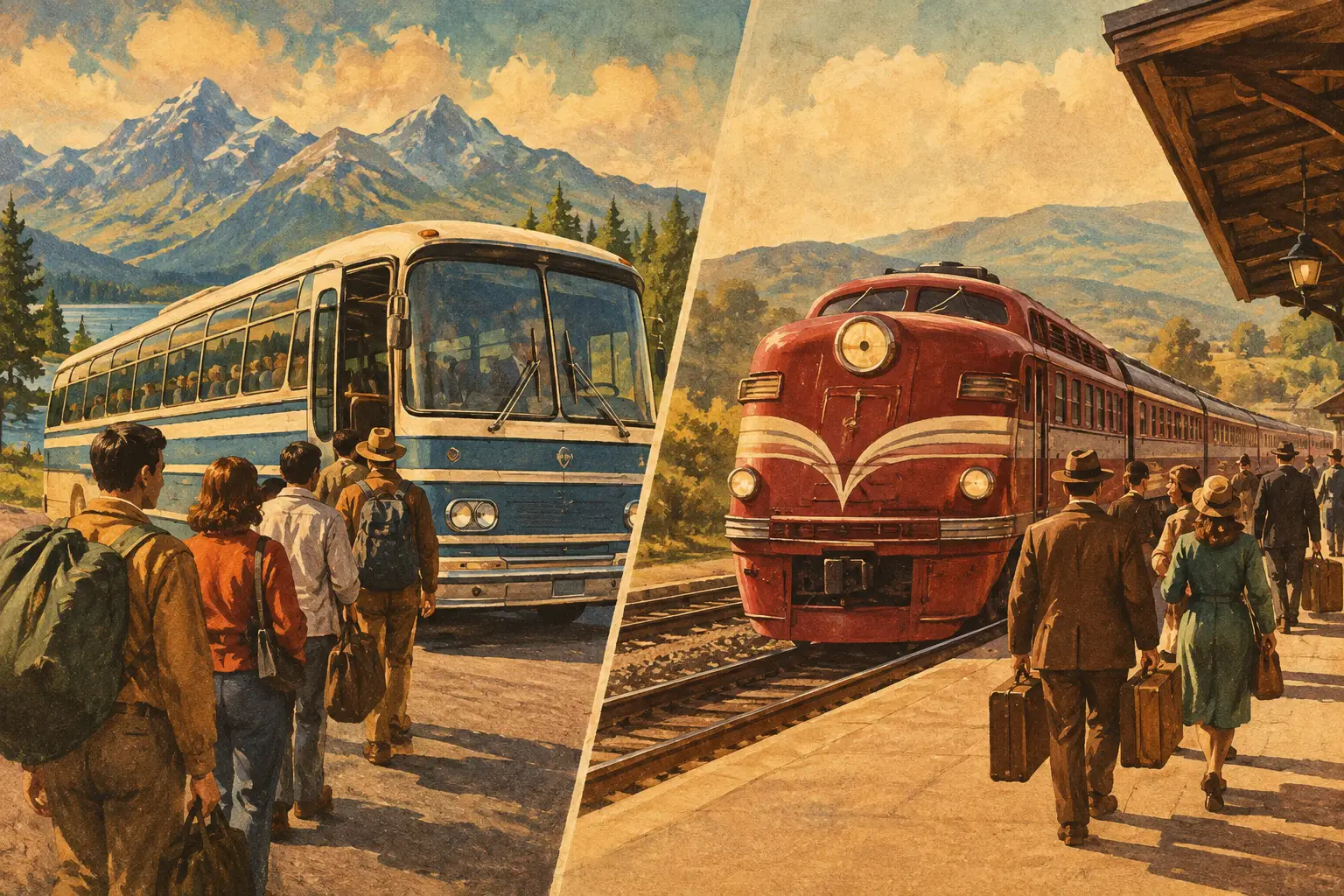
A missed connection can turn a well-planned group trip into a day of phone calls, late arrivals, and frustrated passengers. When weighing charter bus versus train travel, the best choice is rarely about which option looks easiest on a map. It is about whether the transportation plan supports your actual schedule, passenger count, luggage needs, and destination.
For groups traveling to a wedding, corporate meeting, campus event, tournament, or regional attraction, a train can be an excellent fixed-route option. A charter bus gives the planner more control from pickup through final drop-off. The right answer depends on the trip, but the differences become clear once you look beyond the ticket price.
Charter Bus Versus Train: The Operational Difference
Train travel works on the rail operator’s timetable. Your group arrives at a station, boards at a designated time, follows a set route, and exits where the line stops. That structure can be useful for straightforward city-to-city travel, particularly when passengers are traveling independently and the stations are close to both ends of the itinerary.
A charter bus operates around your itinerary instead. You choose the pickup location, departure time, stops, and final destination. For a group leaving from multiple offices, a hotel, a school, or a venue with limited parking, that control can prevent a lot of unnecessary movement before the trip even begins.
Consider a Boston corporate group heading to a retreat in New Hampshire. Train service may cover part of the route, but passengers may still need to arrange rides to the departure station and from the arrival station to the property. A motorcoach can collect the group at the office, carry luggage and presentation materials, make a planned refreshment stop, and arrive at the retreat entrance together.
That distinction matters most when timing is non-negotiable. Wedding ceremonies, conference check-ins, flight departures, athletic start times, and school schedules do not wait for a group that has been split across several cars or delayed at a transfer point.
When a Train Is the Better Choice
A train deserves serious consideration when the route is direct, the departure and arrival stations are convenient, and travelers do not need to stay together from door to door. Rail can be particularly practical for smaller groups attending an event in a major city where parking is expensive or unnecessary.
It can also be a strong choice for travelers who value the ability to walk around, visit the café car, or work independently during the ride. Some rail routes offer a comfortable alternative to driving for one-way city travel, especially when the schedule already aligns with the event.
The trade-off is flexibility. A late passenger may miss the train rather than delay it. Schedule changes, cancellations, limited group seating, and connection times are controlled by the rail carrier. Once tickets are issued, adjustments may be more complicated than updating a charter itinerary.
For groups that can tolerate those constraints, train travel can work well. It is simply less suited to trips where one planner is responsible for every guest arriving together, on time, and ready for the next part of the day.
Where a Charter Bus Delivers More Control
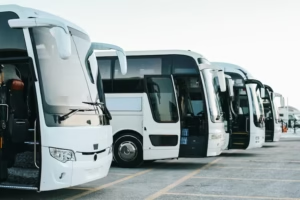
A charter bus is built for coordinated travel. Instead of issuing individual tickets and hoping everyone reaches the right platform, the group boards one vehicle under the care of a professional chauffeur. The driver handles the road, routing, and parking logistics while the organizer focuses on passengers and the event itself.
This is especially valuable for weddings and private celebrations. Guests can be transported from a hotel block to the ceremony, reception, and back again without asking anyone to navigate unfamiliar roads after dark. For corporate teams, a dedicated bus creates a single departure window, keeps attendees together, and removes reimbursement questions around mileage, parking, and rideshares.
Schools and universities often need an even higher level of coordination. A charter bus allows staff to confirm attendance at pickup, keep students in one supervised group, and carry equipment, uniforms, or overnight bags. Sports teams benefit from the same setup, particularly when a fixed rail schedule does not match game times.
Vehicle selection also gives planners room to match the service to the group. A 56-passenger motorcoach is a practical fit for large groups and long-distance travel, while a minibus can serve smaller teams, guest shuttles, or local transfers. For executive airport movements or VIP travel, a Mercedes Sprinter or chauffeured SUV may make more sense than reserving unused seats on a full coach.
Compare the Real Cost, Not Just the Fare
Train tickets are easy to price per person, which can make rail appear less expensive at first glance. But group transportation costs should be evaluated as a complete trip, not just a seat on the main leg of travel.
Ask what happens before and after the train. Will passengers need parking at the station, rideshares to the station, taxis after arrival, or additional shuttles to a hotel or venue? Are there fees for checked bags, last-minute ticket changes, or seats purchased separately after the group count grows? These costs can add up quickly, and they create more moving parts for the planner to manage.
A charter quote is based on the vehicle, itinerary, timing, mileage, and service requirements. That can make it easier to budget for the entire group movement in one place. It also allows you to account for planned stops, return service, multi-day travel, and luggage capacity before the day arrives.
A charter bus is not automatically the lowest-cost option for every trip. For a handful of travelers on a direct rail route, train tickets may be the sensible choice. As the group grows, the itinerary becomes more complex, or the arrival point moves farther from a station, dedicated transportation often provides better value and far more predictability.
Comfort, Luggage, and the Passenger Experience
Both trains and modern motorcoaches can offer a comfortable ride, but the experience is different. Train passengers may have more freedom to move through the cars, yet the group may be seated apart and responsible for managing belongings through stations, platforms, and transfers.
On a charter coach, the group travels in a shared, reserved environment. Passengers can settle into comfortable seating, store larger bags in the luggage bays, and travel without the stress of finding seats together. For a long day, that simplicity is meaningful. There is no rush to gather everyone on a platform, no uncertainty about whether enough overhead storage remains, and no need to split the group between train cars.
Clean vehicles and professional drivers also matter. A dependable transportation plan should feel organized from the first pickup. When passengers step onto a well-maintained vehicle and know who is driving them, the trip starts with confidence rather than confusion.
Reliability Is About More Than the Departure Time
Train schedules can be reliable, but they are still subject to factors outside a group’s control, including service disruptions, track work, weather, and missed connections. A charter bus also operates in real-world traffic and weather, so no responsible provider should promise that every road condition disappears.
The advantage is active trip management. A professional chauffeur can follow the agreed itinerary, select appropriate routing, coordinate planned stops, and bring the entire group directly to the destination. If conditions change, the group has one transportation partner and one vehicle plan rather than dozens of travelers making separate decisions.
For time-sensitive trips, build a realistic buffer regardless of the transportation mode. Confirm passenger counts early, communicate the pickup time clearly, and plan for luggage loading, event check-in, and traffic near busy venues. The best transportation choice is the one that leaves room for the parts of travel that rarely move as quickly as expected.
Choose Based on the Day You Need to Run
Choose a train when your group is small, the route is direct, station locations work well, and travelers can manage their own arrival and departure details. Choose a charter bus when the group needs a single pickup plan, direct service, flexible timing, space for luggage, and a coordinated arrival.
For planners, the deciding question is simple: do you need transportation, or do you need the trip managed? Charter a Coach helps groups build transportation around the event, with vehicle options and professional chauffeurs suited to local and long-distance New England travel. Get charter rates early, confirm availability, and give your group one clear plan to follow.
The most successful trip is not the one with the lowest starting fare. It is the one where every passenger arrives safely, comfortably, and on schedule with no one left wondering how they will get to the next stop.