
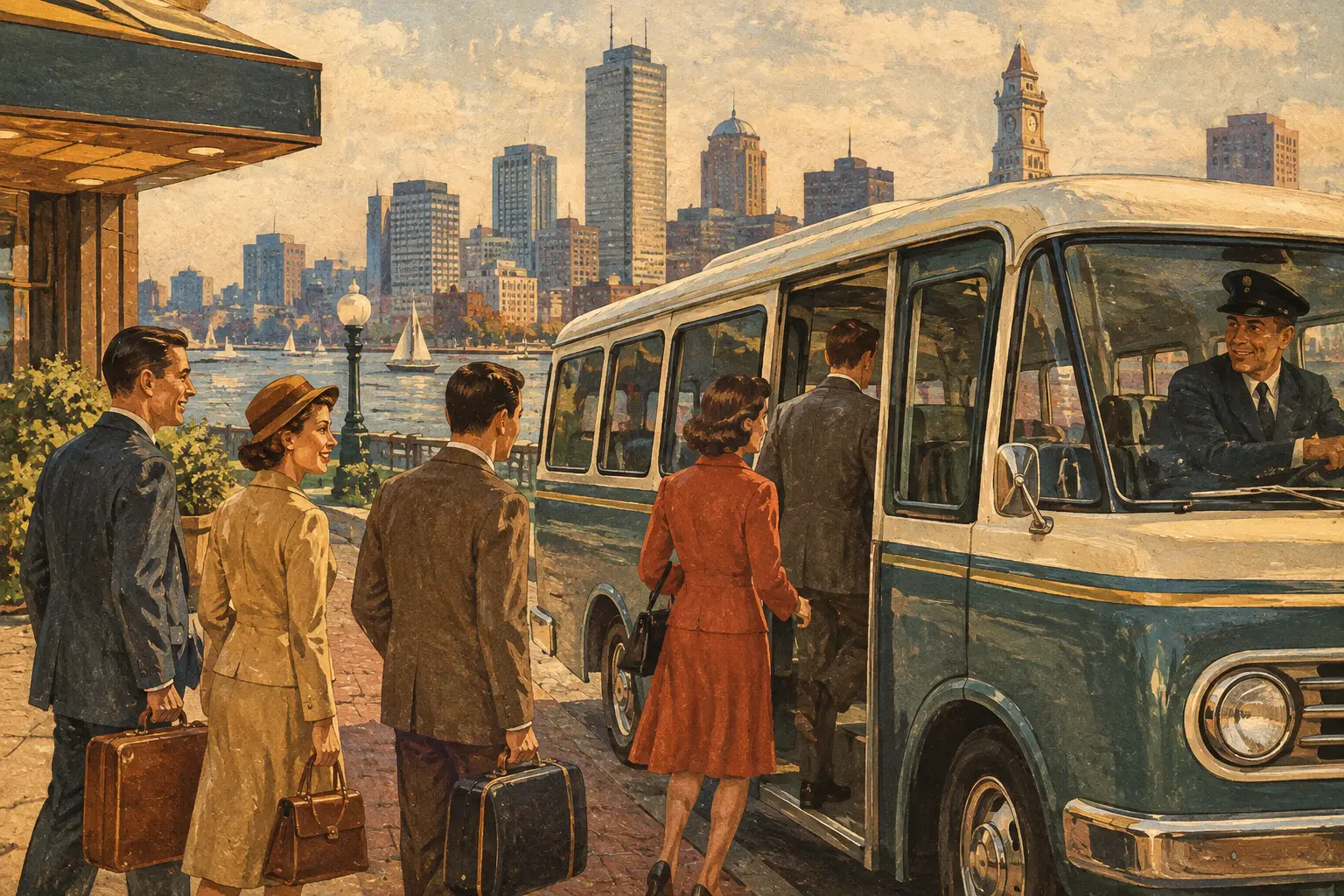
A hotel block can make lodging simple, but it does not automatically solve transportation. Boston hotel shuttles give guests, employees, attendees, and VIPs one clear way to get where they need to be without missed turns, parking searches, or a stream of last-minute rideshare questions.
For a planner, the goal is not simply moving people from point A to point B. It is protecting the event schedule. Whether guests are traveling from a Back Bay hotel to a wedding venue, arriving at Logan for a corporate meeting, or heading from Cambridge accommodations to a group dinner, a well-planned shuttle keeps the day organized and gives everyone a more confident experience.
When Boston Hotel Shuttles Make Sense
Hotel shuttle service is especially useful when a group is staying in one or more hotels but gathering elsewhere. Weddings are a familiar example: guests may not know the city, venues may have limited parking, and the reception timeline cannot wait for late arrivals. A scheduled shuttle gives guests a designated pickup location, a clear departure time, and a safe ride back after the celebration.
Corporate groups have different pressures, but the logistics are just as real. A conference hotel may be several miles from an off-site meeting, team activity, dinner, or client visit. Coordinated transportation keeps the group together, reduces late starts, and avoids the expense and confusion of reimbursing individual rides. It also makes a stronger impression on visiting employees and clients.
Airport movements are another common use case. When several travelers arrive at Logan Airport within a defined window, a private shuttle can consolidate pickups and bring the group directly to its hotel. The same approach works for departures, particularly when a group has early flights, luggage, and little room for error.
A shuttle is not always necessary. A small group staying within walking distance of its destination may be better served by executive SUVs or no arranged transportation at all. The right choice depends on passenger count, luggage, route complexity, mobility needs, event timing, and the consequences of people arriving late.
Start With the Schedule, Not the Vehicle
The most dependable transportation plans begin with an itinerary. Before selecting a minibus, motorcoach, Sprinter, or SUV, identify every required movement: hotel pickups, venue arrivals, return trips, airport transfers, and any separate VIP transportation.
A useful schedule accounts for more than drive time. In Boston, loading a group outside a busy hotel, getting through downtown traffic, and accessing a venue can take longer than a map estimate suggests. Build in time for guests to come down from their rooms, board with bags or formal attire, and depart before the event starts. For a wedding, that may mean setting the final hotel departure 20 to 30 minutes earlier than the minimum travel calculation. For a corporate program, it may mean staging vehicles before a meeting ends so the next transition stays on time.
Pickup windows should be specific. “Shuttle available from 4:00 to 5:00” can work for a casual event, but it creates uncertainty for a ceremony, airport departure, or timed reservation. If guests must arrive by a certain time, provide a departure time and communicate that the vehicle leaves promptly. A second run can help when guests have different flight times or when a larger hotel block needs staggered service.
Plan the return trip with the same care
Return transportation is where many plans become too loose. Guests may leave at different times, a reception may run late, or an event venue may require vehicles to load in a designated area. Establish the final pickup location, the scheduled departure times, and who has authority to adjust the plan on event day.
For weddings and social events, multiple return loops often give guests the best balance of flexibility and safety. For a business group, one departure immediately after the program may be more efficient. There is no one-size-fits-all approach, but there should always be a clear plan.
Match the Vehicle to the Actual Group
Choosing the right vehicle is about capacity, comfort, and the shape of the itinerary. Booking too small can lead to overcrowding, extra vehicles, or guests left behind. Booking too large may not be the best use of the transportation budget, particularly for a short transfer or a small executive group.
A Mercedes Sprinter is often a strong fit for 10 to 14 passengers traveling with light luggage, such as a leadership team, wedding party, or airport arrival group. Executive sedans and SUVs are appropriate for individual executives or small VIP movements where privacy and direct service matter most.
For groups in the 24-to-40-passenger range, a minibus can be an efficient hotel shuttle solution. It gives guests a comfortable, coordinated ride while remaining practical for many city streets and hotel loading areas. Full-size motorcoaches can carry up to 56 passengers and are a better choice for large wedding blocks, conventions, university groups, and multi-hotel pickup routes.
Luggage changes the equation. A vehicle that seats a group comfortably for a dinner transfer may not have the right storage configuration for airport travelers with suitcases. Share expected luggage volume during the quoting process, along with any equipment, strollers, presentation materials, sports gear, or mobility devices that will travel with the group.
Details That Prevent Day-Of Problems
Reliable transportation depends on information being shared early. The hotel name alone is not always enough. Large properties can have separate entrances, loading zones, valet lanes, and restrictions on where buses may wait. Confirm the preferred pickup point with the hotel and make sure the transportation provider has the full address, contact name, and event-day instructions.
The same applies to venues. Some locations require buses to approach from a particular street, use a service entrance, or park off-site between runs. A professional driver can handle the driving, but the plan works best when route requirements and loading procedures are known in advance.
Provide a single transportation contact who can make real-time decisions. This person should have the driver or dispatch contact information, know the final passenger count, and be able to answer practical questions such as whether to hold briefly for a delayed guest or proceed on schedule. For larger events, assign a hotel-side coordinator to help direct guests at boarding time.
Guest communication should be simple and repeated. Include shuttle times and pickup locations on the event website, itinerary, email reminders, or welcome materials. State whether seats are first come, first served or reserved for a defined group. For airport arrivals, share instructions for what travelers should do after collecting luggage and how to reach the group coordinator if their flight is delayed.
Safety, Cleanliness, and Professional Service Matter
A hotel shuttle is part of the guest experience. A clean vehicle, a professional chauffeur, and an on-time arrival send a clear message that the event has been planned with care. Those details matter when employees are representing their company, when families are trusting transportation after a wedding reception, and when schools or organizations are responsible for student and community travel.
Safety should never be treated as an add-on. Work with a provider that uses qualified, vetted drivers and maintains vehicles to a professional standard. Ask how schedule changes, airport delays, and after-hours movements are handled. A low quote is not automatically the best value if it leaves the group without reliable communication or support when plans change.
At Charter a Coach, group transportation is quoted around the actual itinerary, passenger count, and service requirements. That approach helps planners choose the right vehicle and schedule rather than trying to force a group into a fixed-route service that does not match the event.
Questions to Answer Before You Request a Quote
The fastest way to receive an accurate quote is to have the operational details ready. Know the date, approximate passenger count, hotel and destination addresses, pickup and return times, and whether the group will have luggage. Also identify the service type: one-way transfer, continuous shuttle loops, airport arrivals, a multi-day program, or a combination of movements.
Be candid about timing constraints. If a ceremony starts at 5:00 p.m., if an executive must make a flight, or if a venue has a strict loading deadline, say so. The transportation plan can then include appropriate buffer time and vehicle staging. It is far easier to build a dependable schedule before the reservation is confirmed than to repair one after guests are already waiting in a hotel lobby.
For groups with several pickup locations, ask whether consolidating at one hotel can simplify the route. It may reduce cost and help keep everyone on the same timeline. In other cases, separate pickups are worth it because they improve attendance and eliminate unnecessary transfers. The right answer depends on your group, not a generic shuttle template.
A hotel shuttle should make guests feel looked after before the event even begins. Give them clear instructions, a comfortable vehicle, and a driver who arrives ready. When transportation is planned around the real schedule, your group can focus on the purpose of the trip instead of wondering how it will get there.