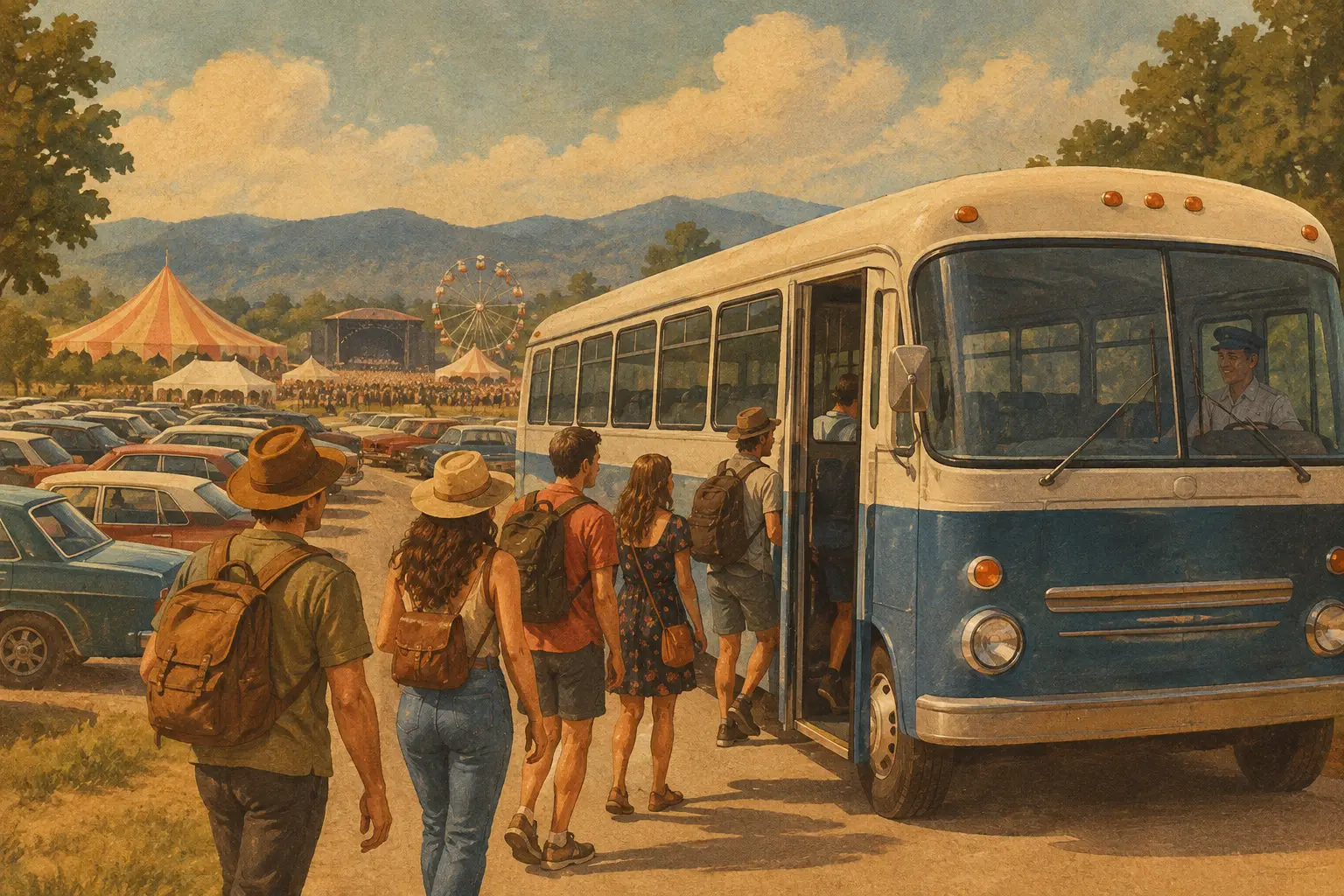
A festival can have great performers, strong vendors, and a packed schedule, yet still leave guests frustrated before they reach the gate. The reason is often the parking lot. Knowing how to manage festival parking shuttles means treating arrival and departure as part of the event experience, not an afterthought once tickets are sold.
For planners, the stakes are practical. Long waits create late arrivals, unsafe pedestrian movement, traffic backups, and overwhelmed event staff. A well-run shuttle operation gives guests a clear place to park, a predictable ride to the entrance, and a safe trip back at the end of the night.
Start With the Guest Journey, Not the Vehicle Count
The right number of buses depends on more than total attendance. Begin by mapping the guest journey from the road to the festival entrance. Identify where vehicles will enter and exit, where guests will park, how far they must travel to the gate, and whether the path is safe for pedestrians after dark.
Then separate attendees into travel groups. General parking guests, VIPs, volunteers, artists, vendors, and staff may need different pickup locations or service windows. Combining everyone into one shuttle line can look simpler on paper, but it often creates confusion and delays when credentials, gear, or arrival times differ.
Your arrival curve matters as much as attendance. A 5,000-person festival with staggered programming may have manageable demand across several hours. A concert with a single headliner, however, may receive most guests in a narrow 60-to-90-minute window. Plan vehicle capacity around peak arrivals and peak departures, not the average number of riders per hour.
Build a Shuttle Route That Keeps Traffic Moving
A shuttle route should be short, repeatable, and easy for drivers to understand. Whenever possible, use a one-way loop: buses enter the lot, load or unload, travel directly to the venue, then return without crossing pedestrian traffic or fighting outbound vehicles.
Avoid routing buses through the same lanes used by arriving cars. A single stalled vehicle, left turn, or confused guest can slow every bus behind it. If the site allows it, create a dedicated shuttle lane with cones, signs, and staff at key decision points.
Choose loading zones with safety in mind
The best pickup zone is not always the closest point to the gate. It needs enough space for buses to pull in and out, guests to queue without blocking traffic, and staff to supervise boarding. It should also be well lit and clearly marked before the first guest arrives.
At larger events, separate the loading area into lanes by destination or rider type. For example, one lane can serve general parking, another can serve accessible transportation, and a third can be reserved for staff or VIP shuttles. Clear signs should match the language used on tickets, parking passes, event maps, and pre-event emails.
Keep the final walking distance reasonable, but do not sacrifice a safe bus operation for a few saved steps. A protected path from the shuttle stop to the entrance is usually better than dropping passengers near vehicle congestion.
Match the Fleet to Demand and Site Conditions
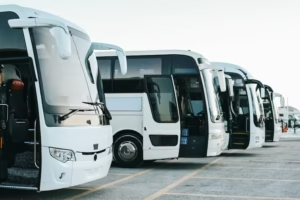
Vehicle selection affects both wait times and how easily the operation can run on-site. Full-size motorcoaches can carry up to 56 passengers and work well for high-volume routes with wide roads, stable loading areas, and a longer distance between parking and the venue. Minibuses, typically seating 24 to 40 passengers, are often a better fit for tighter lots, smaller events, and routes with frequent turns.
Mercedes Sprinters can be useful for VIP transport, artist movements, staff runs, or accessible backup service where a large coach is unnecessary. Sedans and SUVs may make sense for individual executives or performers, but they should not replace a high-capacity shuttle plan for general attendees.
Do not select a vehicle based on passenger capacity alone. Consider turning radius, road width, overhead clearance, pavement condition, and whether buses can stage without blocking emergency access. A larger bus reduces the number of trips, but a smaller vehicle may move more reliably through a constrained site.
For a busy event, reserve enough capacity to handle the peak plus a cushion for late arrivals, unexpected traffic, and passengers who need a second trip after forgetting items in their cars. The lowest vehicle count is rarely the least expensive choice if it leads to overtime, guest complaints, or a delayed program start.
Set a Service Schedule Guests Can Understand
Shuttle schedules should be simple enough to explain in one sentence. For many festivals, continuous service works better than promising exact departure times. Tell guests that shuttles begin at a specific time, run continuously during the arrival window, and continue after the final performance until the lot is cleared.
If service intervals are necessary, publish realistic ones. A stated 10-minute frequency can quickly lose credibility if loading takes longer, traffic builds at the entrance, or buses need time to turn around. Build schedules from actual round-trip time, including loading, unloading, traffic delays, and driver breaks.
For departure, expect demand to surge. Guests tend to leave at the same time after a headliner, fireworks show, or closing announcement. Stage vehicles before the program ends, open multiple loading lanes if possible, and assign staff to fill buses efficiently. Empty seats cost time when hundreds of guests are waiting.
Put One Person in Charge of Live Operations
A parking shuttle plan needs a single transportation lead with the authority to make on-site decisions. That person should coordinate with the venue, parking operator, security team, police detail if applicable, and shuttle provider. They should know who can adjust traffic patterns, call for an extra vehicle, close a lane, or pause loading during an emergency.
Before gates open, hold a short operations briefing with every key lead. Confirm radio channels or phone contacts, driver check-in procedures, vehicle staging locations, break coverage, emergency routes, and weather plans. Give drivers a written route map and clear instructions about approved stops. Verbal directions alone are too easy to misinterpret during a hectic load-in.
A useful operational dashboard can be as simple as tracking buses in service, buses staged, estimated wait time, parking lot fill level, and any active incidents. The goal is not paperwork. It is fast, informed decisions before a small delay becomes a visible problem.
Communicate Before Guests Ask Questions
Most shuttle confusion can be prevented before attendees leave home. Parking instructions should state the lot address, the shuttle pickup point, operating hours, accessibility information, prohibited drop-off areas, and what guests should expect after the show.
Use the same names for lots and shuttle stops everywhere. If a parking pass says “North Field,” event staff, signs, drivers, and guest communications should also say “North Field.” Inconsistent naming leads to passengers boarding the wrong shuttle or walking to the wrong location.
On-site, post signs early enough for drivers to make decisions without stopping. Use large, simple wording and position staff at the points where guests naturally hesitate: the parking entrance, the first walk from the lot, the shuttle queue, and the venue-side return stop. After dark, lighting and reflective signage are operational necessities, not cosmetic details.
Plan for Weather, Accessibility, and the Last 30 Minutes
New England events can face rain, heat, wind, mud, and quick temperature changes in the same season. Protect queues with tents where possible, provide a stable walking surface, and prepare alternate loading locations if fields become unusable. A weather response should include who makes the call, how guests are notified, and where vehicles will be repositioned.
Accessible transportation deserves its own plan. Confirm accessible parking, curb or ramp access, mobility-device space, a direct route to the gate, and a contact person for guests who need assistance. Do not assume the general queue works for every passenger.
The final 30 minutes of the festival deserve special attention. Keep enough staff and vehicles in place until riders are cleared, not merely until the advertised end time. Guests leaving with children, mobility needs, or limited phone battery should never be left wondering whether the last shuttle has already gone.
A dependable transportation partner can help turn a site plan into an operating plan, matching vehicles to your attendance, route conditions, and service windows. For festivals in Boston and across the region, Charter a Coach can coordinate professional drivers and clean, properly sized vehicles around the schedule your event requires. The best result is simple: guests remember the music, the food, and the atmosphere, not the wait in the parking lot.