A campus shuttle that arrives 15 minutes late can do more than inconvenience riders. It can delay class changes, leave prospective families waiting at the wrong entrance, or put an entire event schedule behind. Knowing how to arrange campus transportation means building a plan that works under real conditions: changing passenger counts, limited loading zones, weather, accessibility needs, and a campus calendar that rarely stays quiet.
For university administrators, student-life teams, athletics departments, and event planners, transportation should feel organized from the first pickup to the final drop-off. The goal is not simply to reserve a bus. It is to give students, staff, and visitors a safe, clean, on-time ride while keeping one person in control of the moving pieces.
Start With the Movement, Not the Vehicle
The right vehicle is determined by the trip plan, not by what happens to be available. Before requesting a quote, map out who is traveling, where they need to be, and when they must arrive. A campus tour for admitted students has different requirements than a late-night shuttle from a satellite parking lot. A team headed to an away game has different luggage needs than faculty traveling from Boston Logan to a conference.
Start with passenger counts, but do not stop there. Ask whether riders will carry backpacks, sports equipment, presentation materials, luggage, mobility devices, or event supplies. Consider whether the group will board all at once or in waves. A vehicle that fits every passenger on paper may not be the practical choice if aisles are crowded with bags or loading takes too long.
Your route matters just as much. Identify every pickup point, drop-off location, scheduled stop, and timing window. Include the exact building entrance or approved bus zone rather than only a campus address. Large campuses often have restricted roads, one-way loops, pedestrian-heavy corridors, and loading zones that are unavailable during peak periods. Clear location details help the driver arrive prepared and reduce last-minute calls.
How to Arrange Campus Transportation Around Your Schedule
Build the transportation schedule backward from the event’s non-negotiable start time. If orientation begins at 9:00 a.m., riders should not be scheduled to arrive at 9:00. Allow time for unloading, walking to the venue, security check-in, finding seats, and the normal uncertainty of a busy campus morning.
A practical schedule includes a planned arrival time, a loading time, and a buffer. The amount of buffer depends on the route. A short shuttle within a contained campus may need less flexibility than a multi-stop transfer through Boston traffic or a longer trip across New England. Weather, construction, major sporting events, move-in weekends, and graduation can all change travel conditions significantly.
For recurring service, avoid creating a timetable based only on the best-case drive time. Test the route during the same hours riders will use it. A route that takes 12 minutes at midday may take 25 minutes during class changes. Reliable transportation is built on realistic timing, not optimistic timing.
Assign One Transportation Lead
A single point of contact prevents confusion when a driver needs direction or a schedule changes. This person should have the final itinerary, the driver’s contact information, campus operations contacts, and authority to make time-sensitive decisions.
The transportation lead does not need to manage every rider. Their job is to keep the operation moving. They should know where the vehicle is expected to stage, who is checking riders in if needed, what to do if a passenger is missing, and how the group will receive updates. For larger events, assign an on-site lead at each major pickup location as well.
Match Vehicle Size to the Actual Trip
Campus transportation is more reliable when vehicles match passenger volume and trip conditions. Oversizing can increase cost unnecessarily, while undersizing can create missed pickups, overcrowding, or unplanned second runs.
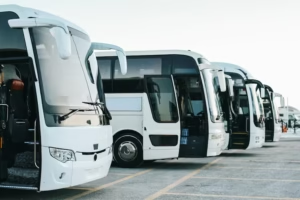
For smaller leadership groups, visiting speakers, or airport transfers, an executive sedan, SUV, or Mercedes Sprinter may provide the right balance of comfort and flexibility. A minibus is often a strong fit for campus tours, departmental outings, and shuttle loops with roughly 24 to 40 passengers. For large student groups, athletic travel, commencement transportation, or major conferences, a full-size motorcoach can carry up to 56 passengers with room for longer-distance travel.
When comparing options, focus on these operational questions:
- How many riders are expected at the busiest pickup, not just across the full day?
- Will passengers bring luggage, equipment, or materials that need storage?
- Does the route require frequent turns, tight curb access, or a larger vehicle staging area?
- Is the trip a short shuttle loop, a city-to-city transfer, or a multi-day charter?
If attendance is uncertain, plan for the likely high point rather than the average. It is usually easier to use a right-sized vehicle with a little extra capacity than to solve an overflow problem after riders are already waiting.
Plan Pickup Locations That Drivers Can Actually Use
A convenient pickup point is not always a workable pickup point. Campus entrances may be blocked by delivery vehicles, rideshare traffic, construction fencing, or pedestrian volume. Before service begins, confirm where the vehicle can legally stop, how long it can remain there, and whether the driver has enough room to pull in and depart safely.
For major events, use designated loading zones whenever possible. If multiple buses are arriving, assign them a staging sequence instead of asking them all to wait at the same curb. This is especially important during move-in, commencement, concerts, and athletics events, when a congested entrance can quickly become a safety issue.
Riders also need precise instructions. “Meet at the student center” is too broad on many campuses. Communicate the building side, nearest landmark, departure time, and whether the bus will wait for late arrivals. Send the information early, then repeat it shortly before travel. Clear rider communication reduces no-shows and keeps departures on schedule.
Put Safety and Accessibility Into the Original Plan
Safety is not a line item to add after the itinerary is complete. Select a provider with professional, vetted drivers and a well-maintained fleet. Drivers should receive a clear itinerary and have accurate contact information before arrival. Vehicles should be clean, inspected, and appropriate for the group and route.
Accessibility should be discussed during booking, not addressed at the curb. Ask riders in advance whether they need wheelchair-accessible transportation, extra boarding time, or other accommodations. Confirm those needs with the transportation provider and build them into the schedule. A thoughtful plan makes every rider feel considered without creating an avoidable delay.
For student groups, establish simple expectations before departure. Share boarding procedures, attendance requirements, behavior rules, and emergency contacts. For longer trips, determine who is responsible for headcounts at each stop. These details are especially useful for field trips, athletic teams, and off-campus activities where groups may split up temporarily.
Confirm the Details Before Travel Day
The final confirmation is where a solid plan becomes a dependable operation. Reconfirm the date, vehicle type, passenger count, pickup and drop-off addresses, departure times, contact names, and special instructions. If the itinerary includes several stops, put them in the order they will occur and verify any changes with all relevant parties.
Give the driver the information needed to succeed, but keep communications practical. A campus map with approved access points, parking instructions, a venue contact, and staging directions is more useful than a long chain of emails. If there are road closures or a major campus event, share that information as soon as it is known.
A professional transportation partner should also provide responsive support when plans change. Flights run late, guest counts rise, and events move because of weather. The best response depends on the circumstances, but having a provider that can clearly explain available options helps planners make informed decisions under pressure. Charter a Coach supports planned campus itineraries with custom vehicle matching, professional chauffeurs, and 24/7 phone support when timing matters.
Make the Return Trip as Deliberate as the Arrival
Return transportation is often where otherwise well-run events lose control. Guests leave at different times, a game runs long, or an evening program ends with everyone heading for the curb at once. Set a clear return departure time, pickup location, and boarding process before the event starts.
For events with uncertain end times, discuss the likely schedule range during booking. A flexible standby arrangement may be appropriate for some programs, while a fixed departure time is better for others. The right choice depends on the budget, the number of riders, and how much schedule uncertainty the group can absorb.
Campus transportation works best when it is treated as part of the event experience, not an afterthought. Give riders clear instructions, give drivers usable details, and leave enough time for the conditions you cannot control. When the vehicle pulls up clean, prepared, and on time, your campus can focus on the people and purpose waiting at the destination.