A field trip can fall apart before the first student boards. The museum may be ready, the permission slips may be signed, and the lesson plan may be solid, but if the transportation plan is loose, the entire day starts behind schedule. That is why knowing how to plan school field trip buses matters as much as choosing the destination.
For school administrators, teachers, and activity coordinators, bus planning is really schedule protection. It affects student safety, head counts, arrival windows, loading supervision, and how calm or chaotic the day feels. A good plan keeps the trip on time and gives staff room to focus on students instead of chasing logistics.
How to plan school field trip buses from the start
The best bus plans begin with three numbers: passenger count, schedule, and distance. If any one of those is uncertain, pricing and vehicle recommendations can shift quickly. Start by confirming how many students, staff, and chaperones are actually traveling, not just invited.
That count helps determine whether you need a full-size motorcoach, a minibus, or a combination of vehicles. A common planning mistake is booking too tightly and assuming every seat can go to a student. In reality, you may need to account for teachers, aides, equipment, coolers, or reserved seating for accessibility needs. If the trip includes musical instruments, athletic gear, or classroom projects, luggage space matters just as much as seat count.
Your schedule comes next. A transportation provider will need the pickup address, destination, preferred departure time, return time, and any stops along the way. If the day includes more than one venue, build the itinerary in order and be realistic about loading and unloading time. Ten minutes may be enough for a small group, but not for 50 students getting organized in a school parking lot.
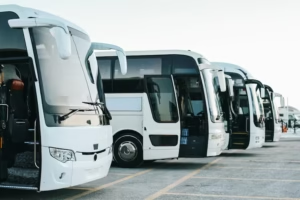
Distance changes the vehicle conversation too. For a short local trip, a minibus may be a practical fit if the group size supports it. For longer regional travel, a larger motorcoach often makes the day easier on students and staff because it offers more space and a smoother experience over several hours. The right answer depends on the route, the age of the students, and how structured the day needs to be.
Match the bus to the trip, not just the headcount
It is tempting to choose transportation based on the cheapest vehicle that technically fits the group. That can work for some short trips, but it is not always the most reliable choice for a school outing. Comfort, storage, supervision, and timing all affect whether the trip runs well.
If you are transporting a larger class or grade, a motorcoach can simplify operations by keeping the group together on one vehicle and reducing the need for split supervision. If your group is smaller, a minibus or sprinter-style option may make more sense, especially when access at the destination is tight or the route includes city streets and limited parking.
Think through the student experience too. Younger students may need quicker supervision at stops. Older students traveling farther may benefit from a more spacious ride. If the trip involves formal attire, presentation materials, or sensitive equipment, cleaner, more modern vehicles with professional drivers can make a real difference in how the day starts and ends.
There is also a trade-off between flexibility and simplicity. Multiple smaller vehicles can help with staggered groups or separate pickup points, but they create more moving parts. One larger vehicle can be easier to manage, though it requires accurate attendance and tighter loading discipline.
Questions to answer before you request a quote
Before you contact a transportation provider, make sure you have the basics in hand. You do not need every detail finalized, but you should be close on passenger count, timing, and pickup instructions. That helps you get a more accurate quote and a better vehicle recommendation.
You should also know whether the bus needs to stay with your group during the event or return only for pickup later. A wait-and-return itinerary is different from a drop-off and later retrieval. The same goes for multi-day trips, rotating campus shuttles, and events with several stops.
If your school has specific vendor requirements, ask internally before booking. Some districts require certificates of insurance, approved vendor status, driver credential documentation, or purchase order procedures. Handling that paperwork early avoids last-minute delays.
Build the schedule with buffer time
The most dependable field trip transportation plans leave room for real life. Students run late. Attendance changes at the last minute. Venue check-in takes longer than expected. Traffic near schools, museums, stadiums, or downtown areas can slow a route that looked simple on paper.
A practical rule is to build buffer time at every transition point: boarding, arrival, lunch departure, and final pickup. You do not need to overpad the day, but you do need enough time to keep one small delay from affecting everything after it.
Arrival windows matter especially when the destination uses timed entry. If your class misses a reserved tour slot, the educational value of the day can suffer fast. Reliable transportation helps, but a smart itinerary does part of that work. Aim to arrive early enough for bathroom breaks, group assembly, and a final head count before admission.
For schools in busier parts of New England, route timing deserves extra attention. A trip from Cambridge into Boston, for example, may look short in mileage and still require careful planning because of traffic, loading zones, and curb access. The same applies to regional destinations where highway travel is predictable until the last few miles.
Safety planning should be visible, not assumed
When schools book transportation, safety is not a marketing point. It is the baseline. But schools still need to ask clear questions and document expectations.
Start with the provider’s operating standards. You want professional, vetted drivers, clean vehicles, and a company that treats punctuality as non-negotiable. For school trips, reliability is part of safety. A late pickup can compress the schedule and create rushed decisions throughout the day.
It also helps to assign internal roles before the trip. Decide who handles attendance, who boards first, who carries emergency contacts, and who communicates with the driver if the schedule changes. That keeps the day organized and reduces confusion when students are moving in groups.
If your trip includes students with mobility needs, medical considerations, or behavioral support plans, raise those details during booking, not the day before departure. The earlier the transportation company understands the requirements, the easier it is to match the right vehicle and plan boarding correctly.
How to plan school field trip buses with fewer surprises
The smoothest trips usually come from over-communicating the practical details. Confirm exactly where the bus can stage, where students should line up, and who the on-site contact will be. If your school has a bus loop, faculty lot, or restricted entrance, spell that out in writing.
Do the same for the destination. Some venues have designated bus parking. Others allow only quick drop-off windows and require the driver to relocate. If the group needs pickup from a different entrance at the end of the day, note that upfront.
Weather can change the plan as well. Rain affects loading speed, walking routes, and where students gather after the event. You do not need a full contingency manual for every trip, but you should know your rain pickup location and how you will communicate changes.
Keep communication simple on trip day
Field trip transportation does not need constant updates if the plan is strong. It does need one clear chain of communication. The driver should know the lead school contact, and the school team should know who can reach dispatch if needed.
Avoid having five adults give separate directions. One point person should handle timing updates, stop changes, and destination coordination. That protects accuracy and keeps the driver focused on safe operation.
It is also worth sending a final confirmation to school staff the day before departure. Include departure time, student arrival time, dress guidance, meal plan, bus assignment if more than one vehicle is booked, and return expectations. Clear instructions reduce late arrivals and last-minute confusion in the parking lot.
For many schools, working with an experienced transportation partner makes this part easier because the process is already structured around trip details, vehicle matching, and schedule confirmation. Charter a Coach, for example, emphasizes custom itineraries, professional drivers, and transparent quoting, which aligns well with how schools need to manage risk and timing.
The best bus plan is the one everyone can follow
A school field trip does not need a complicated transportation plan. It needs an accurate one. When the vehicle fits the group, the timing includes buffer, and the communication is clear, the bus becomes one less thing to worry about.
That gives teachers and administrators what they actually need on trip day: a clean, on-time vehicle, a professional driver, and a schedule that stays under control. Start there, and the rest of the day has a much better chance of going right.