
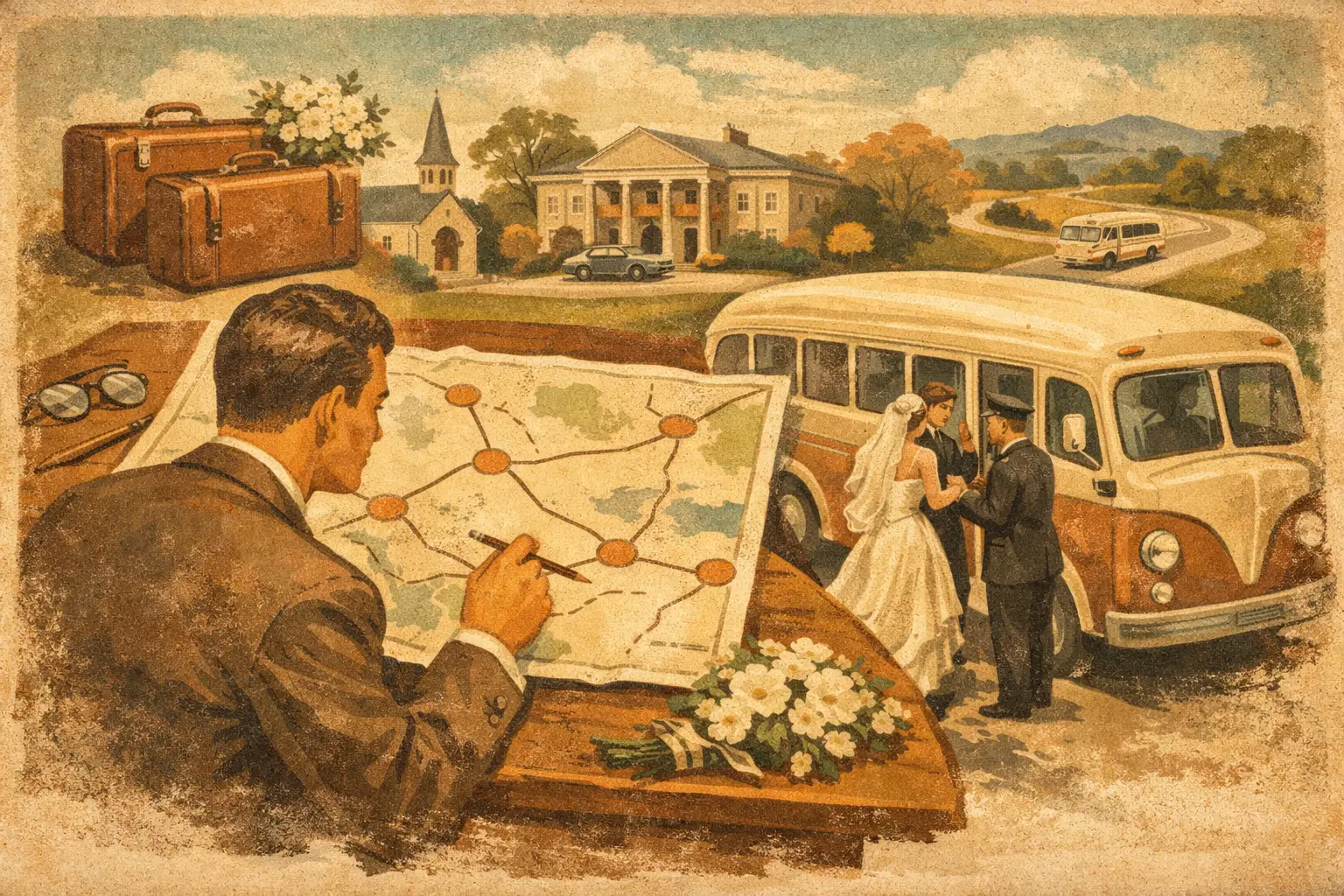
The fastest way to throw off a wedding timeline is to assume guests will somehow figure out transportation on their own. If you’re wondering how to plan wedding shuttle routes, the real job is not just booking a vehicle. It is building a schedule that gets people to the right place, at the right time, without confusion, delays, or missed moments.
For most weddings, shuttle planning sits right at the intersection of hospitality and logistics. Guests remember whether they arrived relaxed or rushed. They remember whether the ride back felt easy or chaotic. A good shuttle plan protects the ceremony start time, reduces parking pressure, and gives everyone one less thing to manage on a day that already moves quickly.
How to Plan Wedding Shuttle Routes Without Guesswork
Start with the actual guest movement, not the vehicle. That means mapping where people are coming from, when they need to arrive, and which groups truly need transportation. A common mistake is planning one generic route for everyone, even when the guest list is split between hotel blocks, local guests driving themselves, and family members with separate schedules.
The cleanest approach is to break the day into movements. Usually that means hotel to ceremony, ceremony to reception if those locations differ, and reception back to hotels at the end of the night. If you’re hosting a welcome party, after-party, or next-day brunch, those may need their own transportation plan too. Once you see the wedding as a series of transfers rather than one big shuttle service, route planning becomes much easier.
Count passengers conservatively. Do not assume every invited guest will use the shuttle, but do not undercount either. Hotel block guests are more likely to ride, especially for destination weddings, urban venues with limited parking, or events where alcohol is a major factor. Local guests may prefer to drive. Wedding party members and close family often have separate transportation needs because their timing is different from the general guest schedule.
Start With Your Route Map, Then Build the Schedule
Every good shuttle route starts with a simple map of origin points and event locations. In many weddings, the route begins at one or two hotels. In others, especially across Boston, Cambridge, or older New England venues with tight parking and narrow roads, it may make more sense to use one centralized pickup point instead of multiple hotel stops.
More stops sound convenient, but they often create delay. Each added stop increases loading time, introduces the chance of no-shows, and makes the schedule harder to hold. If two hotels are five minutes apart, separate pickups may work. If they are spread across different traffic patterns, one central hotel or nearby lot is usually more reliable.
From there, work backward from your ceremony time. Guests should generally arrive 30 to 45 minutes before the ceremony starts. That buffer matters. It accounts for traffic, slower boarding, venue access, and the reality that people do not load as quickly as planners hope. If your ceremony starts at 5:00 p.m., a shuttle arrival closer to 4:15 or 4:20 is usually safer than 4:40.
Then look at the full trip time, not just the drive. A 20-minute ride may become 35 minutes once boarding, unloading, traffic signals, and venue entrance congestion are included. This is where experienced transportation coordination matters. Reliable timing is built on operational reality, not map-app optimism.
Build in Buffer Time Where Delays Actually Happen
Not every part of a route carries the same risk. Hotel pickups can run late because guests trickle down slowly. Ceremony exits can run late because photos go long. Reception departures often bunch up because everyone wants to leave at once after the last song.
That means your buffer should sit where the delays are most likely. Add extra time before the ceremony. Add extra vehicles or staggered departures after the reception if the guest count is high. If your venue has a single entrance, valet congestion, or limited coach access, account for that early instead of discovering it on the wedding day.
Match the Vehicle to the Route and the Guest Mix
The best vehicle is not always the biggest one. It is the one that fits the route, boarding pattern, and passenger count with enough room for comfort and timing control.
For smaller hotel blocks or VIP family movements, a Sprinter van or executive vehicle may be the right fit. For mid-size guest groups, a minibus often gives you better flexibility. For larger weddings, a full-size motorcoach may be the most efficient choice, especially when parking is limited and you want to reduce the number of separate trips.
There is a trade-off. One large vehicle can simplify coordination, but if it runs late, a bigger portion of your guests is affected. Multiple smaller shuttles create more flexibility, but they also require tighter dispatching and clearer communication. The right answer depends on your guest count, venue access, and how much schedule risk you want concentrated in one vehicle.
If older roads, coastal venues, inns, or historic properties are part of the plan, ask early about access limitations. Some sites look easy on paper but have tight turns, restricted loading zones, or limited staging space. Route planning should reflect what vehicles can realistically enter and where guests can safely board.
Make Pickup Instructions Impossible to Misread
Even the best route fails if guests do not know where to stand. Your pickup instructions should be painfully clear. Not just the hotel name, but the exact entrance, side street, porte-cochere, or parking area. The same goes for return service after the reception.
Avoid vague language like “shuttle leaves from the hotel lobby” unless the boarding point is truly obvious. Large hotels often have multiple entrances. Resorts may have separate guest towers. Urban properties may use a side entrance for larger vehicles. Guests need exact pickup details in their invitation suite, wedding website, and day-of signage if possible.
Timing language matters too. Tell guests when the shuttle departs, not when boarding begins, unless both are listed clearly. If the vehicle leaves at 4:00 p.m., say that directly. This helps protect punctuality and reduces the expectation that transportation will wait for late arrivals.
Plan the Return Routes With the Same Care as Arrival
Couples often spend most of their energy on getting guests to the ceremony and treat the ride back as an afterthought. That is where frustration tends to show up.
At the end of the night, guests leave in waves. Older relatives may want an earlier departure. Younger guests may stay until the end. If you schedule one return time only, someone will be unhappy. For many weddings, two or three return departures work better than one final sweep.
A common setup is an early shuttle about 30 to 45 minutes before the reception ends, then a final departure at the close of the event. If the guest count is large or the reception is heavy on dancing and drinks, adding another midpoint run can keep loading smoother and reduce crowding.
Confirm Venue Rules Before Finalizing the Route
Venues can shape shuttle routes more than couples expect. Some require buses to arrive through a service entrance. Some limit vehicle size. Others have strict pickup windows or noise restrictions late at night.
Do not assume the ceremony and reception staff have already coordinated transportation access. Ask direct questions. Where should vehicles stage? How early can they arrive? Is there room for a motorcoach to wait onsite, or must it drop and return later? Are there separate pickup points for end-of-night departures?
These details matter because they affect not just route timing but overall cost and service reliability. A vehicle that must leave property and return later needs a different schedule than one that can remain nearby. Clear planning prevents last-minute changes that put pressure on the timeline.
Give Your Transportation Partner One Final, Clean Version
Once your route plan is set, keep all transportation details in one master document. Include passenger estimates, pickup addresses, exact times, venue contacts, planner contacts, and any special notes about accessibility, elderly guests, or separate wedding party transportation.
This is where a logistics-first transportation company adds real value. Clean vehicles and professional chauffeurs matter, but so does disciplined scheduling, responsive communication, and the ability to adjust if the wedding day runs a few minutes off plan. If you’re working across multiple New England locations or managing a venue with parking limitations, that operational support becomes even more important.
If you want the route plan to hold, assign one person other than the couple to manage day-of shuttle communication. Usually that is the planner, coordinator, or a trusted family point person. Drivers should have one clear contact, not six different guests texting with conflicting updates.
Wedding transportation does not need to be complicated, but it does need to be intentional. The best shuttle routes feel almost invisible to guests because everything runs on time, the pickup points make sense, and nobody has to guess what happens next. That kind of calm does not happen by accident. It comes from planning the route around real people, real timing, and real-world delays before the first guest ever steps onboard.