A school trip can go off schedule in minutes if transportation is treated like an afterthought. School trip charter bus safety starts long before students load their bags or teachers take attendance. It begins with the company you hire, the vehicle assigned to the trip, the driver behind the wheel, and the plan everyone follows when timing changes, weather shifts, or a pickup runs long.
For school administrators, athletic directors, teachers, and parent coordinators, safety is not a single box to check. It is a chain of decisions. If one part is weak, the entire trip feels harder to manage. If each part is handled well, the ride becomes what it should be – organized, predictable, and one less thing to worry about.
What school trip charter bus safety really depends on
The safest trip is usually the one that feels the least chaotic. That is not accidental. It comes from booking a professional charter provider that treats routing, driver screening, vehicle maintenance, and communication as operating standards, not sales language.
A clean vehicle matters, but cleanliness alone does not tell you much about safety. What matters more is whether the bus company has professional, vetted drivers, a disciplined maintenance process, and a real dispatch structure behind the trip. If the bus is late, the route changes, or a school needs an updated ETA, there should be someone available to respond quickly and clearly.
This is where planners sometimes get tripped up. Price matters, especially for schools working within fixed budgets, but the lowest quote is not always the best value. A lower rate can come with older equipment, thinner support, or less flexibility if the itinerary changes. For student travel, reliability and safety protocols should carry more weight than a small difference in cost.
How to evaluate a charter company for school trip charter bus safety
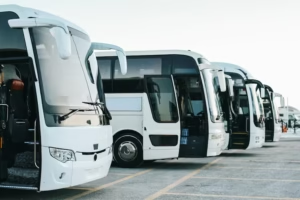
Start with the operator, not the vehicle photo. Ask practical questions that reveal how the trip will actually be managed.
A school should know whether drivers are properly licensed for the vehicle class, whether they are screened and trained, and how the company handles hours-of-service compliance for longer days or multi-day trips. You should also ask about maintenance practices, replacement planning if a vehicle issue occurs, and who your point of contact will be during travel.
Good providers answer these questions directly. They do not dodge details or hide behind vague promises. They can explain what kind of bus fits your group, how pickup timing should be structured, and where loading can happen safely at your campus or venue.
It also helps to look at how organized the quoting and booking process feels. A company that asks for passenger count, itinerary details, timing, and stop information up front is usually building a better trip plan. That kind of operational discipline often translates into a smoother day on the road.
The driver matters as much as the bus
Parents often focus on the vehicle, but school trip charter bus safety depends just as heavily on the person operating it. A professional driver does more than drive from point A to point B. They manage timing, navigate large-vehicle access, monitor safe loading conditions, and keep the ride steady and controlled.
For schools, that means the best driver is not simply experienced. It is someone used to group transportation, comfortable with student travel, and backed by a company that respects scheduling limits and legal driving requirements. A great bus with an overextended or poorly supported driver is still a risk.
Planning details that improve student safety
Even a strong carrier needs a strong itinerary. Many field trip issues happen because the trip schedule is too loose in some places and too tight in others. That creates rushed loading, confusion at pickup, and unnecessary pressure on staff and drivers.
Build in realistic timing for arrival, student headcounts, restroom breaks, venue access, and traffic. If you are traveling through busy corridors in Boston or moving between cities during peak commuter hours, leave room for delay instead of hoping for a perfect run. A schedule that looks efficient on paper can become unsafe if it forces people to hurry at every stop.
Schools should also decide in advance who is responsible for transportation communication. One trip leader should manage timing updates with the charter company. One person should oversee student counts before departure. One person should handle parent communication if a return time changes. Clear roles reduce confusion when something unexpected happens.
Pickup and drop-off procedures deserve more attention
The highest-risk moments on many trips are not highway miles. They are loading zones, parking lots, and curbside pickups where students, staff, other vehicles, and pedestrians all converge.
Choose pickup locations with enough space for the bus to enter and exit cleanly. Avoid forcing students to cross active traffic lanes if possible. For destinations, confirm whether buses have a designated unloading area or if they must stage off-site. That detail can affect supervision needs more than many planners realize.
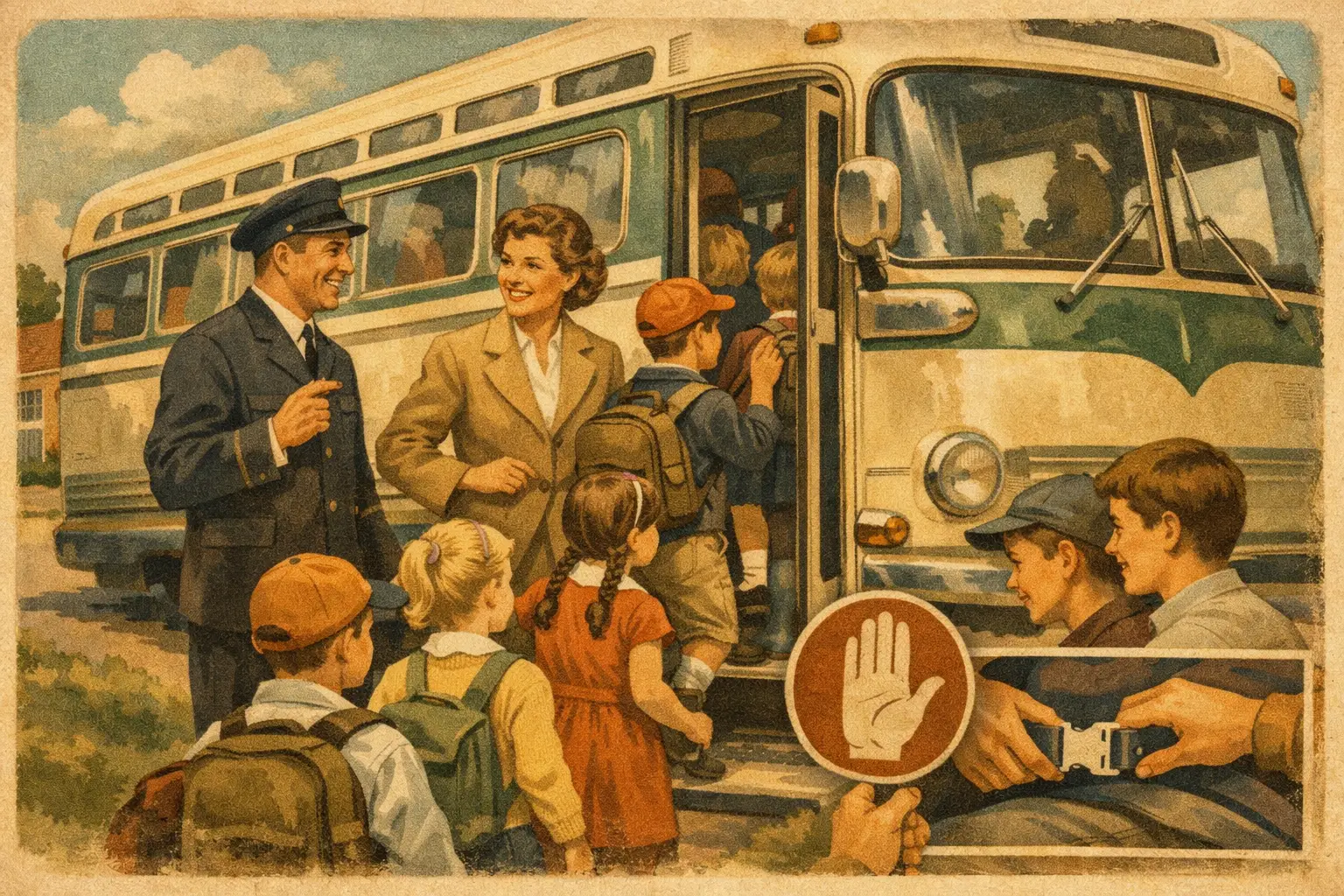
For younger students especially, schools should set expectations before departure. Students need to know when they can stand, when they should remain seated, how loading will work, and who to approach if they need help. The bus ride itself should not be left to improvisation.
Vehicle size, trip type, and safety trade-offs
Not every school trip needs the largest coach available. The right vehicle depends on passenger count, trip length, luggage needs, and access at the destination.
A full-size motorcoach can be a strong fit for longer trips, athletic travel, and larger groups because it offers capacity, comfort, and undercarriage storage. A minibus may be more practical for shorter local trips, tighter urban routes, or smaller student groups. The important point is matching the bus to the actual trip, not simply choosing the cheapest or biggest option.
There are trade-offs. Larger buses may offer more space and a smoother experience for all-day travel, but certain campuses, museums, or historic areas can be easier to access with smaller vehicles. A professional transportation partner should help schools think through those details early, before arrival instructions become a last-minute problem.
Weather, long-distance travel, and overnight trips
New England school travel comes with variables. Rain, snow, early sunsets, and regional traffic patterns can affect route timing and arrival procedures fast. That does not mean trips should be avoided. It means transportation planning should reflect real conditions.
For longer travel days, ask how the route will be structured and whether driver scheduling supports the itinerary. For overnight or multi-day trips, clarity becomes even more important. Schools should confirm hotel access, parking arrangements, luggage handling expectations, and daily departure times in advance.
This is one reason many schools prefer working with an experienced regional provider such as Charter a Coach. Local knowledge helps, especially when pickup logistics, venue access, or city traffic can change the flow of the day.
Questions schools should answer before departure
Before the bus arrives, the school team should be able to answer a few basic questions without guessing. Who is the lead contact for the trip? What is the exact loading location and time? How many students and chaperones are riding? What is the plan if the group leaves the venue later than expected? Where will parents receive updates if timing changes?
If those answers are not clear, the trip is not ready. Transportation problems often show up first as communication problems.
Schools should also make sure emergency contacts, student rosters, and any relevant medical or supervision notes are easy for trip leaders to access. The charter company does not replace school oversight, and the school does not replace transportation expertise. The safest outcome comes when both sides know their role.
What parents and administrators should look for
If you are approving transportation rather than booking it yourself, ask simple, direct questions. Who is the carrier? What vehicle is being used? Is the driver professionally licensed and vetted? Is there a clear itinerary and support contact during travel? Those questions are not excessive. They are basic due diligence.
Confidence usually comes from specificity. A provider that can explain the trip plan, the vehicle match, and the communication process is usually a better partner than one that only repeats that safety is a priority.
School transportation should feel controlled, not improvised. When the right bus, driver, and plan come together, students arrive safely, staff stay focused on the purpose of the trip, and administrators protect both schedules and trust. That is the standard worth booking for.