A ski trip can fall apart before the first chairlift opens. One late pickup, too little room for equipment, or a coach stuck waiting at the wrong lodge entrance can put the entire group behind schedule. This Vermont ski charter guide helps planners build a transportation plan that keeps passengers warm, organized, and ready to ski.
For corporate outings, student groups, family reunions, clubs, and private weekend trips, the goal is not simply getting to the mountain. It is making sure every traveler arrives together, every bag has a place, and the return ride is just as dependable after a long day on the slopes.
Start Your Vermont Ski Charter Guide With the Itinerary
A ski charter works best when transportation is planned around the mountain schedule, not just the departure address. Begin with the resort, the date, the total passenger count, and whether the trip is a day excursion or an overnight stay. Then account for every stop: pickup locations, breakfast stops, rental-shop visits, hotel check-in, lift access, and the ride home.
Vermont ski destinations can involve mountain roads, limited parking, and busy arrival windows on weekends and holidays. A 9:00 a.m. lift opening does not mean a 9:00 a.m. arrival is acceptable. Your group may need time to unload, collect tickets, store bags, visit the rental desk, and walk from the designated motorcoach drop-off area.
Build in a meaningful arrival buffer, especially for Saturday travel, holiday weekends, and storm forecasts. For a group that needs to be geared up by 9:00 a.m., planning to arrive 45 to 60 minutes earlier is often more realistic. A professional transportation provider can help review routing and pickup timing, but the planner should share the complete itinerary before the trip is quoted.
Confirm the Resort’s Group Vehicle Procedures
Before reserving transportation, contact the resort, hotel, or vacation rental to confirm where a bus can enter, load, unload, idle, and park. Some properties have separate entrances for large vehicles. Others may require motorcoaches to park off-site after drop-off or may have restrictions during peak snowfall.
Ask whether overnight parking is available if your trip includes lodging. Also confirm the best pickup point for the return. “Meet at the base lodge” can create confusion when a resort has several lodges, multiple access roads, and hundreds of tired skiers leaving at once. Name the exact building, entrance, and meeting time in the trip plan.
Choose the Right Vehicle for Ski Equipment
Passenger count matters, but it is not the only factor in vehicle selection. Ski boots, helmets, duffel bags, coolers, and winter coats all take up room. A group of 20 travelers carrying skis and overnight luggage has different needs than 20 passengers making a same-day trip with rentals waiting at the resort.
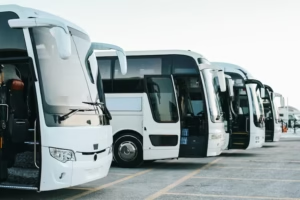
A full-size motorcoach is often the most practical choice for large ski groups. With seating for up to 56 passengers and undercarriage luggage bays, it gives groups room to separate people from equipment. It also offers a more comfortable long-distance ride, which matters when the return trip includes wet gear, tired guests, and winter traffic.
For smaller groups, a minibus may be a strong fit, particularly for day trips with light luggage or groups that are renting equipment at the mountain. Mercedes Sprinters work well for smaller private parties, but planners should be realistic about cargo capacity. A vehicle that seats the right number of people may not have the right amount of space for everyone’s gear.
When requesting a quote, provide more than the headcount. Share whether travelers are bringing skis or snowboards, whether they have overnight bags, and whether equipment will be rented on-site. This allows the transportation team to match the vehicle to the actual trip rather than the minimum seating requirement.
Plan for Winter Conditions, Not Ideal Conditions
Mountain weather can change quickly. A clear forecast at the pickup location does not guarantee dry roads near the resort. Snow, freezing rain, wind, and reduced visibility can affect drive times, loading procedures, and the safest route.
The right response is not to schedule every minute more tightly. It is to create a plan with room for normal winter variables. Choose an earlier pickup than you would for a summer outing, avoid building nonessential stops into the route, and make sure travelers know that departure time means seated and ready to leave.
Professional drivers should handle the driving decisions, including safe speeds and route adjustments. Your role as the organizer is to set clear expectations with passengers. Ask everyone to arrive early, pack efficiently, and keep essential medication, phones, wallets, and a dry layer in the cabin rather than buried in luggage storage.
For school, university, and youth group travel, designate an on-board trip leader and a backup contact. For corporate or private groups, a single transportation point person prevents drivers from receiving conflicting instructions from multiple passengers.
Make Pickup and Return Logistics Easy
A single pickup location is usually the most efficient option. It reduces late arrivals, shortens the route, and makes it easier to account for every passenger. If your group needs multiple pickups, list them in the order that creates the least backtracking and allow adequate time at each stop.
Return transportation deserves the same attention as the morning departure. Skiers often finish at different times, change clothes slowly, or stop for food and drinks after the lifts close. Set a firm meeting time and explain that the vehicle cannot remain indefinitely at a crowded resort loading area.
A useful approach is to set two times: a gear-down time and a vehicle departure time. For example, passengers may be asked to return skis and boards by 3:45 p.m., meet at the bus by 4:15 p.m., and depart at 4:30 p.m. That simple structure protects the itinerary without making the end of the day feel rushed.
If the group plans an après-ski dinner, schedule it intentionally rather than treating it as an open-ended stop. A confirmed restaurant reservation, passenger count, and departure time help keep the driver’s duty schedule and the group’s return travel on track.
What to Include When Requesting Charter Rates
Clear trip details lead to clearer pricing and fewer last-minute adjustments. A transportation provider will need the trip date, passenger count, pickup address, destination, and expected hours of service. For ski travel, add the equipment plan, lodging details, and every planned stop.
It also helps to identify the decision-maker and provide a mobile number that will be active on the day of travel. If plans change because of weather, road closures, or a delayed flight into Boston, fast communication can make a major difference.
Ask how the quote handles anticipated waiting time, overnight service, parking, tolls, and driver accommodations when applicable. Transparent pricing is especially valuable for multi-day ski trips, where the lowest initial number may not reflect the full itinerary. A dependable quote should be based on your actual schedule, not a vague estimate of the route.
Charter a Coach can help groups departing from Boston, New Hampshire, and nearby New England pickup points organize vehicle options around passenger count, route, and winter travel needs. The best time to check availability is well before popular ski weekends, when larger vehicles and preferred pickup times can book quickly.
Give Passengers a Simple Travel Brief
The day before departure, send one concise message with the pickup address, arrival time, departure time, driver or trip-leader contact, resort address, return meeting location, and packing reminders. Remind travelers to label their bags and keep valuables with them.
Passengers should also know the expectations for wet gear and cabin cleanliness. Bring a small bag for boots or damp clothing, avoid blocking aisles with personal items, and respect the vehicle’s food and beverage policies. These details help maintain a clean, comfortable ride for everyone.
A well-planned ski charter gives your group something valuable before the first run: confidence that the logistics are handled. Set the schedule early, choose a vehicle with honest equipment capacity, leave room for winter conditions, and give every passenger one clear plan to follow.