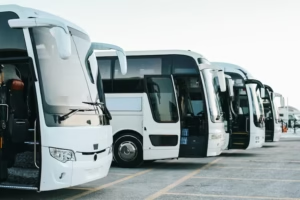
A full 56-seat motorcoach can solve the hardest part of group travel before the first passenger boards: keeping everyone on the same schedule. For wedding planners, corporate coordinators, school staff, and trip organizers, this 56 passenger motorcoach review focuses on the details that affect the actual day of travel – capacity, comfort, safety, luggage, routing, and the planning questions that prevent avoidable delays.
A motorcoach is often the right answer when moving a large group in multiple cars would create parking problems, late arrivals, or too much uncertainty. It is not the right choice for every itinerary, however. The best vehicle is the one that fits the passenger count, venue access, trip distance, and schedule without paying for more capacity than you need.
What a 56-Passenger Motorcoach Does Well
A 56-passenger motorcoach is built for coordinated transportation at scale. It is a strong fit for airport transfers, company meetings, athletic travel, college tours, conferences, multi-day trips, and wedding guest transportation. Instead of managing dozens of arrivals, one planner has one pickup time, one professional driver, and one shared itinerary.
That coordination matters most when timing has consequences. A wedding ceremony cannot wait for guests searching for parking. A corporate event loses momentum when attendees arrive in waves. A school or team trip requires clear accountability at every stop. With a single motorcoach, the group departs together, arrives together, and has a clear point of contact throughout the trip.
The ride itself is designed for highway travel. Full-size motorcoaches typically offer high-back reclining seats, climate control, overhead storage, onboard restrooms, and room for luggage below the cabin. Specific amenities can vary by vehicle, so confirm your needs during booking rather than assuming every coach has the same configuration.
Capacity Is More Than a Seat Count
The number 56 describes the maximum seated capacity, not necessarily the ideal headcount for every trip. A group of 50 to 56 adults can travel comfortably on one coach for many itineraries, especially when everyone carries standard personal bags or uses the undercarriage luggage bays.
But capacity planning changes when the group brings bulky equipment, oversized instruments, sports gear, strollers, presentation materials, or extra luggage for a multi-day stay. The passenger cabin should remain clear for a safer, more comfortable ride. If baggage volume is substantial, the right answer may be a second luggage vehicle, a different fleet combination, or an adjusted passenger count.
You should also account for chaperones, tour leaders, coordinators, and any driver relief requirements on longer programs. A professional transportation provider will ask about the full manifest, pickup locations, luggage, and itinerary rather than quoting a coach based only on a rough headcount. That planning protects the experience for everyone onboard.
When a Full-Size Coach Is the Better Choice
A 56-passenger coach earns its place when most or all seats will be filled, when the group is traveling a meaningful distance, or when keeping everyone together matters more than flexibility. It is especially practical for a Boston airport group transfer, an out-of-town wedding shuttle, or a regional event where parking is limited.
For a smaller group, a minibus or Sprinter may be a better operational and budget fit. A half-full motorcoach still provides comfort, but it may not be the most efficient option. Vehicle selection should be based on the trip, not just the appeal of having the largest bus available.
56 Passenger Motorcoach Review: Comfort on Real Trips
Comfort is not a luxury detail when passengers will be traveling for several hours. It affects whether guests arrive rested, whether employees can prepare for a meeting, and whether students remain settled between stops. The high seating position and wide coach layout provide a calmer ride than most groups experience when split among vans and personal vehicles.
For long-distance travel, onboard restrooms reduce the need for unplanned stops. That can keep a carefully built schedule intact, though planned rest and meal breaks are still smart for longer routes. Climate control is equally valuable in New England, where a morning pickup can be cold and an afternoon return can be unexpectedly warm.
A few practical trade-offs are worth acknowledging. A motorcoach needs more room to turn, load, and park than a smaller shuttle. Historic downtowns, narrow roads, tight hotel drives, and residential venues can require a designated pickup point a short walk away. That is not a service failure – it is route planning. Reviewing access in advance allows the driver and planner to choose a safe, efficient location rather than making a last-minute decision at the curb.
Safety and Reliability Should Lead the Decision
A clean coach and comfortable seats matter, but they are not the foundation of a successful charter. Safe operation, qualified drivers, vehicle maintenance, and realistic scheduling are the essentials. The provider should understand pickup windows, passenger loading time, traffic patterns, driver hours, venue rules, and the route to each stop.
Experienced chauffeurs bring more than driving skill. They manage the pace of loading, identify safe places to stop, handle unfamiliar venues professionally, and keep the trip moving without rushing passengers. For group leaders, that removes a major source of day-of stress.
Reliability also depends on the information provided before the trip. Share flight details for airport service, contact numbers for onsite coordinators, the exact entrance or loading zone, and any timing that cannot move. If the group has multiple pickups, build in enough time for each boarding stop. A schedule that looks efficient on paper can fail quickly if it ignores luggage loading, hotel elevators, event dismissal traffic, or a large group crossing a busy street.
Charter a Coach approaches motorcoach planning as a logistics service, not simply a vehicle reservation. Clear trip details, professionally vetted drivers, modern clean vehicles, and responsive support give organizers greater control over the parts of group travel that tend to go wrong.
Questions to Settle Before You Reserve
Before booking, confirm the final passenger estimate and whether that count includes children, chaperones, coordinators, and vendors. Then discuss luggage honestly. A day-trip backpack is different from a week of suitcases, and a team with equipment has different needs than a corporate group with carry-ons.
Next, walk through the itinerary from the driver’s perspective. Where can the coach legally and safely load? Is there room to turn around? Does the venue require advance coach parking arrangements? Are there time-sensitive arrivals, such as a ceremony, flight, campus tour, or cruise departure? These details shape both the quote and the operating plan.
Finally, ask what is included in your trip quote and what may change the cost. Multi-day travel, tolls, parking, driver accommodations, extended wait time, additional stops, and late schedule changes can all affect pricing. Transparent answers before the reservation are far better than surprises after the trip begins.
The Verdict for Large-Group Transportation
A 56-passenger motorcoach is a dependable choice for large groups that need to travel together, carry standard luggage, and arrive on a controlled schedule. It offers meaningful advantages in comfort, coordination, and passenger experience, particularly for longer New England routes and high-stakes events.
Its value depends on fit. If your passenger count is close to capacity and your route can accommodate a full-size coach, it is difficult to match the efficiency of moving the entire group with one professional driver. If your group is smaller or your destination has restricted access, a different vehicle may serve you better. Start with the itinerary, confirm the real passenger and luggage count, and choose the vehicle that gives your group the calmest, safest trip from pickup to final drop-off.