A conference can begin with a polished welcome desk, a full agenda, and a great venue, then still feel disorganized if attendees are stranded at the airport or arrive after the opening session. Learning how to coordinate conference arrivals means treating transportation as part of the event program, not a last-minute detail. When every pickup has an owner, a schedule, and a backup plan, guests arrive calm, informed, and ready to participate.
For corporate meetings, association conferences, university events, and multi-day retreats, the goal is not to make every traveler follow the same route. It is to give each arrival group a dependable path from airport, hotel, rail station, or parking location to the right place at the right time.
Start With an Arrival Map, Not a Vehicle Request
The most useful first step is gathering arrival information before you choose transportation. A headcount alone will not tell you whether you need one motorcoach, several staggered shuttles, or a mix of group vehicles and private airport pickups.
Build an arrival map that includes the event venue, host hotel or hotels, primary airport, secondary transportation hubs, and planned meal or registration locations. In the Boston area, for example, Logan Airport arrivals may be spread across terminals and airlines, while the conference venue may be in the city, Cambridge, or outside the downtown core. That distance, traffic pattern, and terminal pickup process should shape the schedule.
For each traveler or delegation, collect flight number, arrival time, airline, terminal, hotel, mobile number, and whether checked luggage is expected. Ask attendees to provide this information by a firm deadline. Flights change, but an incomplete manifest makes it much harder to adjust intelligently.
Do not schedule based only on the flight’s posted landing time. Allow time for deplaning, walking through the terminal, baggage claim, restroom stops, and locating the designated meeting point. For domestic arrivals with checked bags, a 45- to 60-minute buffer is often more realistic than a 20-minute one. International groups, large delegations, and peak travel periods may need substantially more time.
Group Arrivals Into Practical Waves
Trying to provide a dedicated vehicle for every flight can add cost and create confusion. Waiting too long to fill a larger vehicle can frustrate attendees. The right answer depends on the size of the group, the event budget, the VIP profile, and how close together flights arrive.
Sort arrivals into waves, usually by 60- to 90-minute windows. A group of attendees arriving within that window can share a shuttle to the hotel or venue, provided the earliest arrivals are not waiting excessively. Make the pickup window clear in advance. Say, for example, that the 2:00 p.m. airport shuttle departs at 2:45 p.m. from the assigned meeting point, rather than telling guests transportation is available “in the afternoon.”
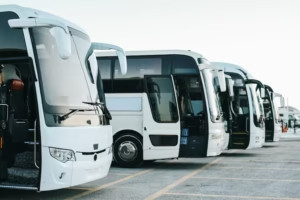
Use a mixed transportation plan when the attendee profile calls for it. A 56-passenger motorcoach is a strong fit for a large arrival wave, while a 24- to 40-passenger minibus can handle smaller groups or repeated hotel-to-venue runs. Mercedes Sprinters work well for executive teams, speakers, or groups with varied flight times. Sedans and SUVs can be appropriate for keynote speakers and VIPs whose schedule cannot depend on a shared departure.
This approach keeps costs controlled without treating every guest experience the same. A keynote speaker delayed in baggage claim has different transportation needs than 30 attendees arriving for a reception later that evening.
How to Coordinate Conference Arrivals With a Clear Run Sheet
A transportation run sheet turns a general plan into an operating plan. It should be available to your event lead, hotel contact, transportation provider, registration team, and any staff assigned to meet arrivals.
For each movement, document the vehicle type, capacity, pickup location, scheduled departure time, destination, on-site contact, driver instructions, and passenger list or expected count. Include flight numbers for airport groups, but do not rely on them as the only source of truth. Your team should confirm major delays and cancellations as the travel day approaches.
A useful run sheet answers questions before they become calls: Where should attendees meet? What happens if their flight is late? Who has authority to release a vehicle? Which entrance should the driver use? Where can the vehicle stage if the venue does not allow curbside waiting?
At a busy convention hotel, these details matter. A coach may need a scheduled loading window, a specific driveway, or an off-site staging location. Coordinate with the venue’s events team well in advance, especially when several conferences, weddings, or sporting events are using the same property.
Assign One Transportation Decision-Maker
Too many contacts can slow down an otherwise solid plan. Assign one primary transportation lead who can make real-time decisions, such as releasing a shuttle, adding a stop, or moving delayed travelers to a later departure. Name a backup with the same authority.
That person should have direct phone access to the transportation provider and a current copy of the run sheet. They should also know your priorities. If an opening session cannot start without a board delegation, that group may receive a private transfer. If the agenda can proceed without a few late arrivals, hold the shared shuttle only up to the stated limit.
Give Attendees Instructions They Can Use Under Pressure
Travel-day communication should be short, specific, and repeated. People reading a message after a delayed flight do not need a long welcome letter. They need to know where to go, who to call, and when the vehicle leaves.
Send arrival instructions about one week before the conference, again 24 to 48 hours before travel, and on the morning of arrival if your attendee platform allows it. Include the pickup location in plain language, the scheduled departure window, the on-site contact number, and a clear late-arrival procedure.
Avoid vague instructions such as “meet outside baggage claim.” Airports have multiple exits, terminals, levels, and restrictions on commercial vehicle pickups. Give travelers a terminal-specific meeting point whenever possible. If the pickup point changes based on terminal or traffic conditions, explain exactly how they will receive the update.
It also helps to tell guests what not to do. Ask them not to leave the designated area to look for a vehicle and not to assume a shuttle will wait indefinitely. This is not about being rigid. It protects the experience for everyone already on board and keeps the overall conference schedule intact.
Plan for Delays Before They Happen
Weather, air traffic control, baggage delays, and road congestion are normal risks in conference travel. A dependable arrival plan does not promise that none of these will happen. It establishes what happens next.
Set a hold policy for every shared departure. For instance, a shuttle may wait up to 15 minutes beyond its stated departure time if delayed passengers can be confirmed and the delay will not compromise another pickup. After that, travelers move to the next scheduled shuttle or an approved alternate vehicle. Share this policy with attendees so it feels fair rather than arbitrary.
Build time between airport waves when you can. A vehicle that is scheduled to leave the airport at 3:00 p.m., unload at a hotel, and return for a 3:45 p.m. pickup has little room for traffic, luggage, or loading delays. A more realistic schedule protects driver hours, passenger comfort, and on-time performance.
Keep a small contingency budget for transportation changes. It may cover an additional airport transfer, an extra late-night shuttle, or a separate vehicle for a speaker. That reserve can prevent one travel disruption from becoming a problem for the entire event.
Confirm the Details That Affect Safety and Timing
Transportation planning is also passenger care. Provide accurate passenger counts, luggage estimates, accessibility needs, child seat requirements where applicable, and special pickup instructions before the trip. Do not assume every guest can navigate stairs, carry bags long distances, or stand outside in poor weather.
Ask drivers to receive final manifests and contact details through the approved transportation channel, rather than sharing sensitive attendee information broadly. Confirm that the vehicle size accounts for luggage as well as people. A full coach with airline-sized carry-ons is very different from a group arriving with trade-show materials, golf bags, or several days of conference luggage.
Work with a professional provider that can match vehicle capacity to the itinerary, use trained chauffeurs, and provide responsive support if travel plans change. Charter a Coach helps New England planners coordinate airport transfers, hotel shuttles, and conference movements with clean vehicles, professional drivers, and scheduling built around the actual event timeline.
A well-run arrival plan is rarely noticed by attendees, and that is exactly the point. They step off the plane, find clear instructions, board the right vehicle, and arrive where they need to be with time to spare. That quiet reliability sets the tone for the conference before the first name badge is printed.