
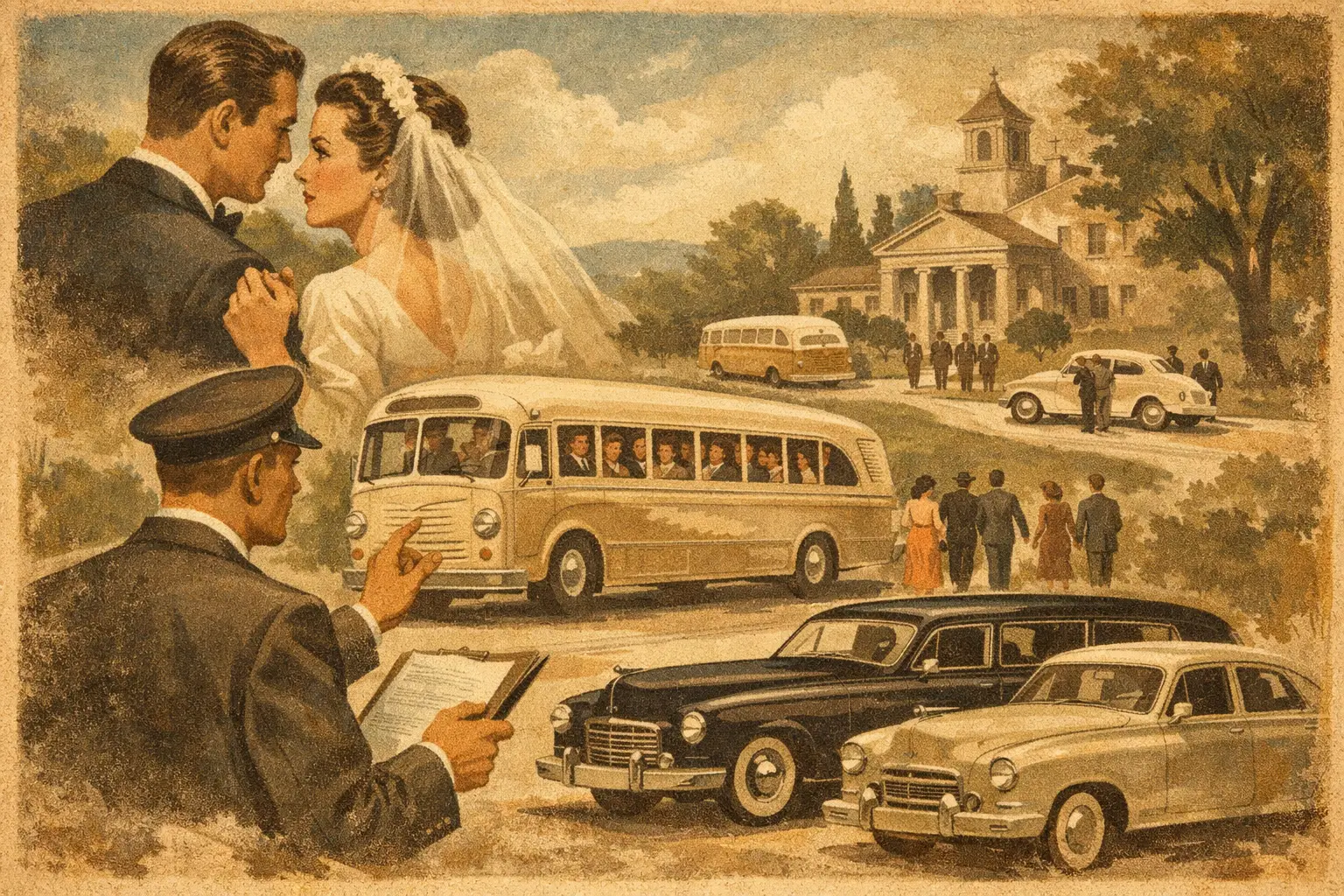
The transportation plan usually feels simple until the first text comes in: Which hotel is my pickup at? That is the moment most couples realize how much rideshares, parking limits, and late arrivals can affect the day. If you are figuring out how to coordinate wedding guest transportation, the goal is not just getting people from one place to another. It is protecting the timeline, keeping guests comfortable, and removing avoidable stress.
For most weddings, transportation works best when it is treated like part of the event schedule, not an extra line item. Ceremony start times, hotel checkout windows, cocktail hour, venue access rules, and late-night departures all affect what vehicles you need and when they should move. The more clearly those pieces connect, the smoother the day feels for everyone involved.
How to coordinate wedding guest transportation without guesswork
Start with the actual movements guests need to make. Some weddings only need a shuttle from one hotel to the venue and back. Others need multiple hotel loops, airport pickups for family, separate transportation for the wedding party, and a late-night return schedule. Before you request quotes or reserve vehicles, map the day in plain language.
Write down where guests are staying, when they need to arrive, how long the drive takes, and whether there are limits on parking or drop-off access. A venue in downtown Boston may have very different loading constraints than a countryside property in New Hampshire or Rhode Island. If your ceremony and reception are at different sites, that creates another transfer point to manage. Once you see the full picture, the right transportation plan becomes much easier to build.
Guest count matters, but pickup patterns matter just as much. Fifty guests leaving from one hotel can often be handled more efficiently than thirty guests split across three hotels. Consolidating pickup points usually saves money and reduces confusion. If couples give guests too many transportation choices, guests tend to miss instructions, board the wrong vehicle, or assume they can catch the next shuttle without delay.
Build the plan around timing, not just headcount
The biggest wedding transportation mistake is backward planning. Couples often start by choosing a vehicle size and only later think about timing. In practice, timing drives almost every decision.
A good rule is to work backward from when guests must be seated, not when the ceremony begins. If the ceremony starts at 5:00 p.m., guests may need to arrive by 4:30 p.m. depending on venue layout, check-in flow, or whether they need time to walk from the drop-off area. Then factor in traffic, loading time at the hotel, and a buffer for guests who are late to the lobby. That 20-minute drive may need a shuttle departure at 3:45 p.m., not 4:10 p.m.
This is especially true for weddings in busy urban corridors or regional destination areas where traffic can change quickly. Friday evenings, holiday weekends, and peak foliage or summer travel periods in New England all affect drive times. A reliable transportation schedule leaves room for real conditions, not best-case estimates.
Return service needs the same level of attention. Some groups leave right after dinner. Others stay through the last dance. Instead of assuming one end-of-night departure works for everyone, many weddings benefit from staggered returns. That could mean one early shuttle for older guests and families with children, followed by one or two later departures. It depends on your guest mix and budget, but flexibility at the end of the night often improves the guest experience.
Choose vehicles that fit the route and the crowd
Not every wedding needs a full-size motorcoach. The right fit depends on passenger count, road access, and the tone of the event. A motorcoach is efficient for large hotel blocks and longer routes. A minibus works well for medium-sized groups or tighter venue access. Sprinters, sedans, and SUVs make sense for VIP family members, the couple, or smaller movement schedules that need more privacy.
The route matters as much as capacity. Some historic venues, coastal properties, and private estates have tight driveways or limited turning space. That can make a smaller vehicle more practical even if a larger bus looks better on paper. A transportation provider should ask these questions early, because the wrong vehicle can create delays before guests even step out.
Comfort also matters more than couples sometimes expect. Guests notice whether the vehicle is clean, climate-controlled, and professionally operated. If people are traveling 30 minutes or more, a well-maintained vehicle with a professional driver does not feel like a luxury add-on. It feels like part of good event hosting.
Create one clear pickup plan guests can actually follow
Even the best transportation schedule fails if guest communication is vague. Guests need one simple version of the plan, with no room for interpretation.
That means every rider should know the pickup location, departure time, return options, and whether transportation is reserved for specific groups or open to all invited guests. Use the hotel name, exact pickup spot, and a real departure time. Avoid phrases like shuttle available before ceremony or transportation provided after reception. Those statements sound helpful, but they leave too many questions unanswered.
If you have guests staying at multiple hotels, choose a primary pickup point whenever possible and communicate that early. If transportation is only running from one or two host hotels, say that clearly on the wedding website and in pre-event messages. It is better for guests to know the plan weeks ahead than to make assumptions the day of the wedding.
A simple schedule shared with the wedding party, family point people, planner, and venue is just as important. Everyone involved should be working from the same timeline. When details are scattered across text messages and email threads, mistakes multiply fast.
Assign one transportation point person
Couples should not be answering shuttle questions in formalwear. Assign one transportation contact who can handle issues on the day of the event. This can be a planner, coordinator, family member, or trusted friend who is organized and responsive.
That person should have the full itinerary, vehicle counts, pickup locations, driver contact procedure, and a guest-facing version of the schedule. They do not need to manage every movement minute by minute, but they should know what happens if a guest misses the first shuttle, if weather changes the loading area, or if the venue asks for an adjusted arrival pattern.
If you are working with a transportation company, make sure your point person knows how after-hours support works. Responsive communication matters most when something changes in real time.
Budget for the parts people forget
Transportation budgets often get squeezed because couples compare rates before they compare logistics. The lowest number is not always the best value if the schedule is too tight, the vehicle count is wrong, or there is no contingency built in.
When reviewing options, look beyond the base trip. Ask whether your quote accounts for wait time, multiple pickups, late-night returns, overtime risk, and route complexity. A simple out-and-back shuttle is very different from a multi-stop wedding weekend schedule. Transparent pricing helps you understand what is included before the day gets busy.
It also helps to be honest about guest behavior. If your crowd is punctual and staying mostly at one hotel, the plan can stay lean. If guests are spread out, unfamiliar with the area, or likely to run late, you may need more cushion. That may mean another vehicle, a longer service window, or an additional return trip. Paying for that structure upfront is often less expensive than dealing with delays and confusion on the wedding day.
What a reliable wedding shuttle plan looks like
A strong plan usually has a few things in common. It starts with confirmed guest counts tied to actual pickup locations, not rough assumptions. It includes departure times with built-in buffer. It matches the vehicle type to both passenger volume and venue access. And it gives guests clear instructions early enough that nobody is guessing.
For example, a practical setup might include one minibus running from a host hotel to the ceremony venue, one Sprinter for immediate family or wedding party timing, and two return departures after the reception. That is not the only right formula, but it shows how transportation can be built around experience and timing instead of guesswork.
For couples planning in Boston, Cambridge, or across the broader New England region, local road patterns and venue access can make a major difference in how aggressive or conservative the schedule should be. That is why working with an experienced provider matters. Charter a Coach approaches wedding transportation the same way it handles any high-stakes group movement: clean vehicles, professional drivers, clear scheduling, and on-time execution.
The best transportation plan is the one guests barely notice because everything runs on time. If your people arrive relaxed, know where to go, and get back safely at the end of the night, you did not just move a crowd. You gave the day the support it needed to stay on track.