
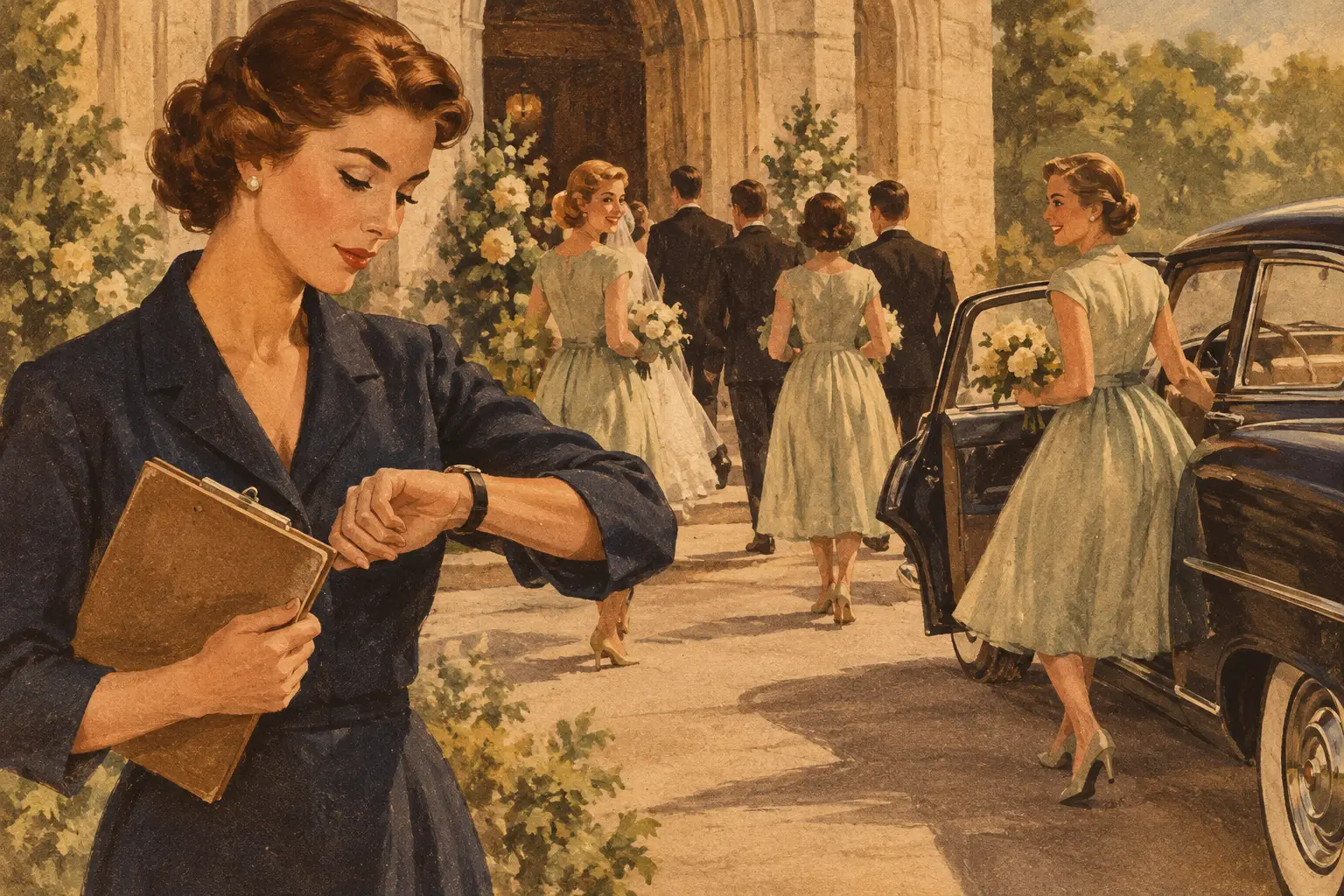
A wedding timeline can look perfectly organized on paper and still fall apart at 10:15 a.m. when one bridesmaid is circling for parking, two groomsmen are waiting on a rideshare, and the photographer is ready to begin. To coordinate bridal party arrivals, treat transportation as part of the wedding-day schedule, not a last-minute favor. Clear pickup times, the right vehicle plan, and one reliable point of contact keep the people closest to you where they need to be without adding stress to the morning.
Build the Arrival Plan Around the First Must-Happen Moment
Start with the first moment that cannot move. That may be hair and makeup, a first look, pre-ceremony photos, or a venue access window. Work backward from that time rather than setting pickups based on when people say they would like to leave.
For example, if photos begin at 1:00 p.m., the full bridal party may need to be dressed and on site by 12:30. If the venue is 25 minutes from the hotel, allow time for loading, traffic, unloading, restroom stops, and a cushion for the unexpected. A 35- to 45-minute transportation window is often more realistic than simply adding the drive time.
The bridal party and the couple do not always need the same arrival time. The wedding party getting ready with the couple may need an early morning shuttle, while other attendants can arrive later for photos. Separating these movements can reduce waiting time, but only if the plan remains easy to understand. When in doubt, fewer pickup points and clearer instructions are better than a complicated schedule that depends on everyone being exactly on time.
Coordinate Bridal Party Arrivals With One Written Schedule
Verbal plans get distorted quickly in a busy wedding week. Send one written transportation schedule to every rider several days before the wedding, then resend it the evening before. Include the pickup address, pickup time, vehicle description, destination, and the name and phone number of the designated transportation contact.
Be specific about what pickup time means. If the vehicle departs at 10:30 a.m., tell the group to be outside and ready at 10:20. A driver should not be forced to choose between leaving a late passenger behind and making every other rider late. That ten-minute ready time gives the group a fair expectation and protects the schedule.
Use one point person for driver communication. This is often the planner, maid of honor, best man, parent, or a trusted coordinator. It should not be the couple, who will already be managing photos, attire, family questions, and nerves. The contact should have the final itinerary and know who is expected on each vehicle.
A group text can help with quick reminders, but it should not replace the official schedule. Messages get buried, phones lose battery, and a casual chat can create conflicting instructions. Keep the schedule in a simple, easy-to-screenshot format and tell everyone that it is the source of truth.
Plan for the People Who Will Run Late
Someone may forget shoes, need a medication stop, or misread the hotel lobby location. Build enough buffer that one small issue does not disrupt the whole group. For a local transfer, 15 extra minutes may be enough. For a longer trip between a Boston hotel and a venue outside the city, allow more time for traffic, roadwork, and event-day congestion.
There is also a practical trade-off: waiting for every late passenger can create a larger problem than arranging a separate ride for one person. Decide in advance who can authorize a hold, how long the vehicle can wait, and what happens if someone misses departure. Clear decisions before the wedding prevent uncomfortable calls in the moment.
Match the Vehicle to the Movement, Not Just the Headcount
The most economical vehicle is not always the best wedding-day choice. A party of 12 may technically fit in a Sprinter, but formalwear, garment bags, makeup kits, flowers, and personal items take up space. If the bridal party needs to travel with dresses, suits, or photography equipment, a larger vehicle can make loading easier and help everyone arrive looking composed.
For smaller VIP movements, executive sedans or SUVs can work well for the couple, parents, or an officiant. Mercedes Sprinters are useful for a compact wedding party or transfers between a hotel and venue. Minibuses are a strong option for groups of roughly 24 to 40, while a motorcoach can carry up to 56 passengers when the wedding party, immediate family, and key guests are moving together.
Think about the destination as well. Some historic venues, downtown hotels, and coastal properties have tight driveways or limited loading zones. A large coach may be ideal for a hotel shuttle but unsuitable for a narrow venue entrance. Share venue access instructions, loading locations, and any time restrictions with your transportation provider before the day of the wedding.
Cleanliness matters here too. White dresses, light-colored suits, and professionally styled hair do not pair well with an unprepared vehicle. Confirm that vehicles will be clean, climate-controlled, and ready before the first pickup. Professional chauffeurs also bring value beyond driving: they manage timing, loading, route decisions, and safe passenger movement so the wedding party can focus on the day ahead.
Separate Getting-Ready Transportation From Ceremony Transportation
Many couples make the mistake of booking a single vehicle and assuming it can cover every need. That can work for a small, local wedding with a flexible schedule. It becomes risky when the bridal party is split across locations, the couple needs a private first-look transfer, or the vehicle must leave immediately to begin guest shuttle service.
Map each movement separately: getting ready to photos, photos to ceremony, ceremony to reception, and any end-of-night return trips. Then identify which rides can use the same vehicle and which overlap. A vehicle carrying the wedding party cannot also be at the hotel picking up guests at the same time.
This is especially important when the reception is in a different location from the ceremony. If the wedding party needs to leave for portraits while guests are being directed toward cocktail hour, assign transportation that allows both groups to move on schedule. A professional transportation partner can help identify these overlaps before they turn into a day-of scramble.
Confirm the Details That Affect Timing
The best itinerary includes more than addresses. Give your transportation provider the exact hotel entrance, venue gate, loading zone, and contact person for each stop. If a venue requires buses to use a particular entrance or prohibits arrivals during another event’s departure window, include that information in writing.
Confirm passenger counts 7 to 10 days before the wedding and again when the final wedding party list is settled. Ask riders to notify the transportation contact directly if their plans change. This avoids a driver receiving multiple, inconsistent requests from well-meaning family members.
Also consider luggage and special items. Will anyone bring overnight bags to the reception? Are there bouquets, signage, garment bags, mobility devices, or coolers? These details affect vehicle selection and loading time. A few minutes spent documenting them can save a rushed, awkward pickup later.
For wedding parties traveling from Logan Airport or arriving from different hotels, staggered arrival times may call for separate transfers. It costs more than one consolidated ride, but it may be the right decision if it prevents the couple or photographer from losing an hour waiting on delayed flights. The right plan depends on the schedule, budget, and how much flexibility the day can absorb.
Keep the Day Calm With Professional Accountability
A dependable transportation plan gives every person one less decision to make. Riders know where to stand, when to be ready, and who to contact. The driver has accurate directions and a realistic schedule. The couple is not checking a location-sharing app while trying to enjoy the morning.
When booking, look for transparent timing, professional vetted drivers, clean modern vehicles, and support that is reachable if plans change. Charter a Coach can build wedding transportation around your actual itinerary, whether that means a private bridal party transfer, a hotel-to-venue shuttle, or coordinated movement across multiple wedding locations.
Before the rehearsal dinner ends, send the final pickup reminder, charge your phone, and hand transportation questions to your designated contact. Then let the plan do its job: get your people there safely, on time, and ready to celebrate with you.